Intel Core Ultra 7 270K Plus Review - New Surprise: The King of Mid-Range Gaming CPUs
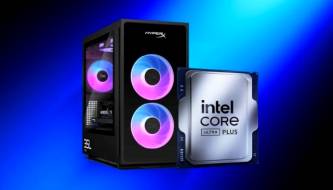
If you're looking for a powerful all-around gaming CPU but don't want to spend too much money, the new Intel Core Ultra 7 270K Plus is a pretty attractive option.
Essentially, it's just a clock speed-tuned version of the not-so-impressive Core Ultra 265K, but those tweaks make a big difference. Not only is it Intel's fastest gaming CPU ever, but it also competes quite well with AMD's best products, while delivering powerful multi-core performance.
AMD's latest X3D chips still dominate our top gaming CPU rankings for pure gaming performance, but the Ultra 7 270K Plus comes very close to and significantly outperforms them in multi-core tasks. It's also quite power-efficient relative to its performance, and competitively priced, making it an undeniable new price/performance winner.
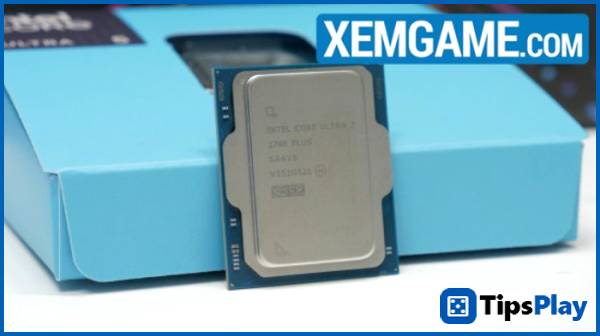
The Intel Core Ultra 7 270K Plus and its cheaper counterpart, the Core Ultra 5 250K Plus, are the only two new CPUs in Intel's latest 200S Plus lineup. They differ from products like the Core Ultra 7 265K primarily in their faster internal clock speeds, resulting in significantly better gaming performance. However, Intel has made things more complicated than necessary.
Although Intel claims the 270K Plus is its fastest CPU ever and has the same number of cores as the 285K, Intel gave it a lower model number and performed all the performance comparisons with the 265K itself during the chip's launch.

However, the most important thing is that you get a total of 24 cores in this chip, including 8 high-performance P cores and 16 lower-performance E cores. This is equivalent to 285K and 4 more E cores than 265K. Meanwhile, competing AMD chips only have a maximum of 16 cores in the 9950X3D and 9950X, although each of these cores can handle two threads simultaneously, making them appear to be 32-core chips.
However, considering the main competitors of the 270K Plus, the AMD Ryzen 7 9700X offers comparable eight cores (16 threads), while the leading gaming performance products, the 9800X3D and 9850X3D, also have eight cores but are $170 and $200 more expensive than the 270K Plus, respectively.
Regarding the aforementioned clock speed increase, the 270K Plus's maximum turbo boost speed is actually slightly lower than the 285K, at 5.5GHz compared to 5.7GHz, and comparable to the 265K. However, Intel has increased the clock speed of all P cores in the 270K Plus to 300MHz, meaning it can maintain higher clock speeds across a wider range of tasks.
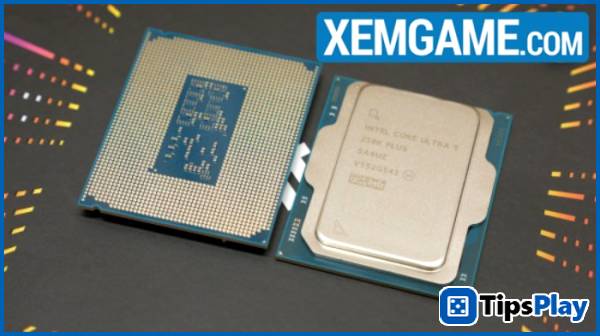
Furthermore, there aren't many noteworthy new features in these chips. They still use the LGA 1851 socket, so they can fit into any existing Z890 or B890 motherboard (provided you update the BIOS). The maximum power consumption remains 125W, the same as the 265K and 285K, so you'll need a sufficiently powerful cooler, but the chip doesn't get as hot or power-hungry as the 14900K.
Intel has also slightly increased maximum memory speed compatibility, with this chip officially rated to work with DDR5 at up to 7,200 MT/s, up from 6,400 MT/s of previous 200-series processors.
Update 25 March 2026
Lesley Montoya
Lesley Montoya is an expert in game development, as well as a collaborative, multi-stage process for creating video games, including planning, design, programming, visuals, and testing.