Nvidia's technology, which generates six times faster dynamic frames per second, will launch on March 31st.
DLSS frame generation technology has long been controversial, but with Dynamic Mode DLSS 4.5, Nvidia may finally have found the right direction.
Nvidia's DLSS 4.5 Dynamic Multi-Frame Generation technology finally has an official release date. Nvidia announced today that this new feature will be available from March 31st. In addition to unlocking the ability to add five extra frames per rendered frame – up to 6x frames per second – this latest version of frame generation also allows the system to use frames only when necessary.
This dynamic framing mode finally feels like what framing should have felt like all along. Choose your target frame rate, and it will only use the frames necessary to achieve that rate, instead of constantly generating unnecessary AI frames.
Like previous versions of Nvidia's DLSS Multi-Frame Generation, this new mode is only available on RTX 4000 series graphics cards and above, but that still allows most of the best graphics cards currently available to utilize this feature.
The reason this new mode is so important is because frame generation has always been problematic for many users. It can increase input latency, effectively reduce the base frame rate (the speed at which your PC generates the 'real' frames used to create the AI ??frames), and once enabled, it simply generates additional AI frames brute-force.
For example, you might have a 240Hz monitor and your system might run games at around 120fps most of the time, but occasionally drop to 60fps. With multi-frame generation set to, say, 4x, you can ensure your PC reaches 240fps when the base frame rate drops to 60fps, but then your PC will also spend most of the time unnecessarily quadrupling the base 120fps frame rate to 480fps. And throughout that process, you might notice the small input lag that multi-frame generation can cause.
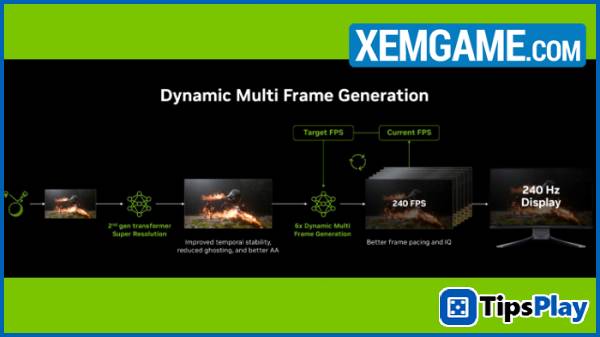
With the dynamic frame rate feature, you can set a frame rate limit of 240Hz and ensure that when the game reaches 120fps or higher, it only produces a maximum of one extra frame. This helps minimize unnecessary extra work and input lag, as lag increases the more extra frames you produce.
Furthermore, if that example game isn't a highly competitive game requiring extremely fast frame rates, you can aim for a frame rate of 120fps and play without frame drops most of the time, only occasionally triggering this feature to smooth out any frame rate drops.
To enable Dynamic Multi-Frame Generation when the feature launches, you can use the Nvidia app. Simply go to DLSS Override, select Custom preset, and choose the new mode from the Frame Generation dropdown menu.
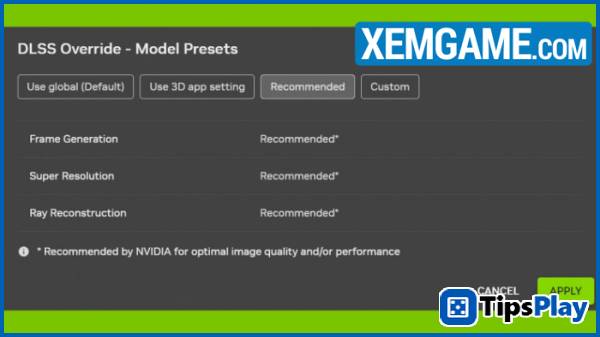
You can also use this method to activate the second important feature of DLSS 4.5, which is the new resolution upscaling model. Like previous improvements to DLSS resolution upscaling capabilities, this feature aims to further improve image quality using a new second-generation AI transformation model. Similar to the first-generation DLSS transformation model, it compensates for this improved image quality with slightly lower performance than previous DLSS resolution upscaling models, but overall the results are well worth it.
Update 25 March 2026
Samuel Daniel
Samuel Daniel is a senior technology analyst, a high-level expert responsible for evaluating complex technical systems and providing strategic recommendations to improve organizational efficiency and productivity.