Top 5 FPS Games to Make You Smarter
Discover 5 FPS games that sharpen logic, reflexes, and decision-making. Shift your perspective: gaming isn't just play—it's a high-octane workout for your brain.
Can FPS Games Actually Make You Smarter?
For a long time, First-Person Shooters (FPS) were dismissed as "mindless" entertainment—all twitch reflexes and no substance. However, as the industry evolves, modern FPS titles have become sophisticated cognitive arenas. To win, "aiming" is no longer enough; you must think fast, analyze shifting variables, and execute precision decisions under extreme pressure.
In fact, when approached with intention, playing FPS games can significantly enhance critical cognitive functions: logical reasoning, spatial memory, sustained focus, and complex problem-solving.
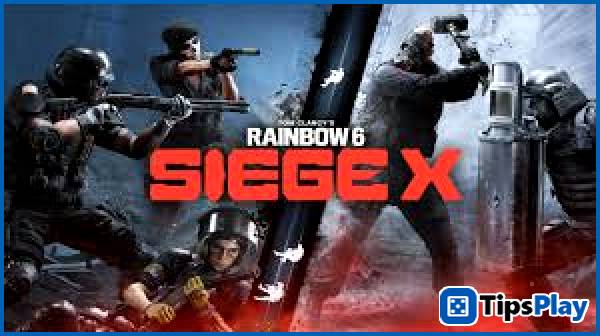
1. Tom Clancy's Rainbow Six Siege: Tactical Analysis
Rainbow Six Siege is arguably the most tactical FPS on the market today. Unlike traditional "run-and-gun" shooters, this game demands that you think several steps ahead before ever pulling the trigger.
- Strategic Destruction: The game's hallmark is its fully destructible environment. Breaching a wall or setting a trap isn't just an action; it's a calculated risk. Players must constantly ask: "If I open this line of sight, how will the enemy rotate? Where is my leverage? What is the risk?"
- Spatial Awareness: Navigating multi-layered, intricate maps requires high-level mental mapping. Memorizing hatches, flanking routes, and vertical angles sharpens your spatial intelligence—a skill that translates directly to better navigation and structural thinking in the real world.
2. Valorant: Decision-Making Under Fire
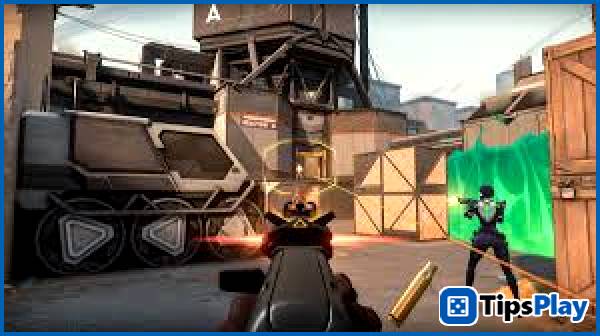
Valorant blends precise gunplay with unique character abilities, creating a chaotic environment with infinite variables. This forces the brain into a state of constant adaptation.
- Clutch Decision-Making: In "clutch" moments—where you might face three opponents alone—you have mere milliseconds to choose: Aggress? Defend? Rotate? Your brain learns to filter out "noise" and focus on the highest-impact variables, a prime exercise for executive brain function.
- Resource Management: With its in-game economy, Valorant mirrors real-world financial planning. You and your team must manage "Creds," deciding when to save and when to invest. It's a lesson in teamwork, communication, and long-term resource strategy.
3. Portal 2: Mastering 3D Logic and Geometry
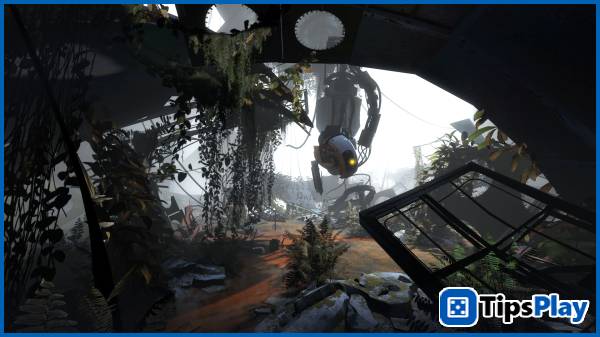
Portal 2 is a unique hybrid that swaps bullets for "portals." While it looks like an FPS, it functions as a rigorous IQ test.
- Non-Linear Thinking: The game forces you to operate in a non-linear, 3-dimensional space. By placing portals on floors and ceilings, you must visualize your momentum, falling angles, and exit trajectories. This dramatically boosts spatial reasoning.
- Iterative Problem Solving: Solving a chamber requires observation, experimentation, and constant adjustment. It fosters a "growth mindset"—teaching you to view failure as data and to patiently engineer the optimal solution.
4. Kerbal Space Program: Engineering and Physics
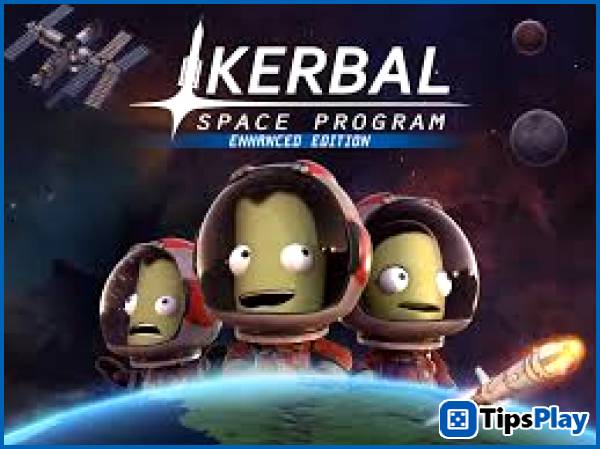
While not a "pure" FPS, Kerbal Space Program (KSP) offers a direct-control experience that puts you in the shoes of an aerospace engineer.
- Applied Physics: You aren't just reading about thrust, gravity, and orbital mechanics; you are feeling them. KSP takes dry theoretical physics and turns it into a hands-on experiment.
- Precision and Calculation: A tiny miscalculation in fuel-to-weight ratio can result in a mission-ending explosion. This cultivates a disciplined approach to logic and teaches players to learn from catastrophic failure—essential traits for any STEM-related field.
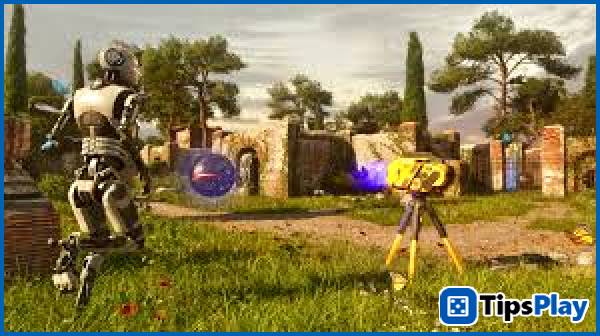
5. The Talos Principle: Critical Thinking and Deep Focus
The Talos Principle is a philosophical journey wrapped in a puzzle-shooter. It doesn't just challenge your logic; it challenges your worldview.
- Challenging Assumptions: Many puzzles require you to "break" your initial assumptions to find the solution. This develops critical thinking—the ability to look at a problem from multiple angles and question the status quo.
- Developing Deep Focus: In an age of digital distraction, the complex puzzles here require "Deep Work." Spending 45 minutes focused on a single, intricate problem is a powerful way to reclaim your attention span and improve mental endurance.
Conclusion: Is Playing FPS a Waste of Time?
The answer depends entirely on how you play. If you play mindlessly, the benefits are slim. But if you play actively—analyzing your mistakes, strategizing with your team, and deconstructing map layouts—an FPS becomes a high-performance training tool.
Each game on this list targets a different facet of intelligence: from tactical analysis and reflexes to system thinking and logic. Next time you boot up, don't just play to win. Ask yourself why a certain move worked. When you switch from "playing" to "analyzing," you are officially leveling up your brain.
Update 07 April 2026
Kareem Winters
Kareem Winters is an AI integration expert, a strategic process of embedding artificial intelligence technologies—such as machine learning (ML), natural language processing (NLP), and computer vision—directly into an organization's existing systems, applications, and workflows.