Marathon ? Game Review
Marathon feels like a game that never had the 'right time' for a proper release, due to too many unfortunate circumstances.
At the time this game was announced in May 2023 (shortly after Bungie was acquired by Sony in a deal worth $4.6 billion), Bungie's Destiny 2 was entering its sixth year, and instead of being stable and powerful, it was stumbling after the Lightfall expansion received a barrage of criticism from players.
Furthermore, a significant number of Destiny 2 players have also complained about Marathon taking away development resources for the game, causing the release date of the next expansion, Shadows and Order, to be postponed indefinitely.
Bungie's internal affairs were in turmoil at the time, with key members like Luke Smith, Joe Blackburn, and Mark Noseworthy leaving the studio one after another, alongside a major layoff at the end of 2024, with nearly a fifth of the studio's staff departing.
As if things weren't already difficult enough, Marathon also faced a plagiarism scandal involving an independent artist named Fern Hooks/4nt1r43L, leading to Art Director Joseph Cross resigning and leaving the company in the middle of game development.
As if internal enemies weren't enough, external enemies also directed a great deal of negativity towards Marathon , as the game was announced very close to the time when another Sony game "disaster," Concord, had to shut down after only 11 days of release, burning through over $200 million and becoming a laughing stock in the gaming industry. The community immediately drew parallels between Marathon's situation and Concord's !
So, amidst all the storms and difficulties the game has gone through, will Marathon be tough enough to withstand the negative wave from the community? Can the "magic of Bungie" save Marathon , just as Destiny 1 was once resurrected from the dead?
Join tipsplay.net in uncovering the answers by deciphering the mysteries of the New Cascadia colony!
YOU WILL LIKE
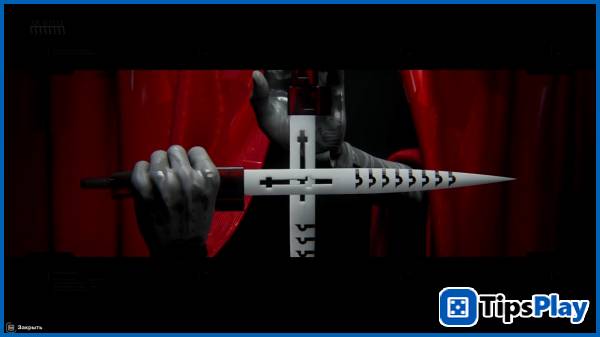
A new horizon… in the distant universe
One thing that fans always look forward to with new games or content developed by Bungie is the way the company builds incredibly unique and impressive visual and audio experiences, and Marathon is no exception.
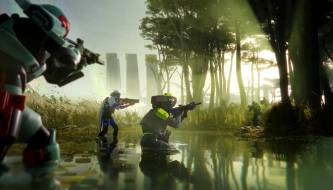
If there's one thing Marathon does right from the start, it's making you realize you're standing in a world with a very unique artistic style: extreme capitalism expressed through flat, high-contrast colors that are both vibrant and chillingly cold, contrasting with a dazzling and lively natural environment.
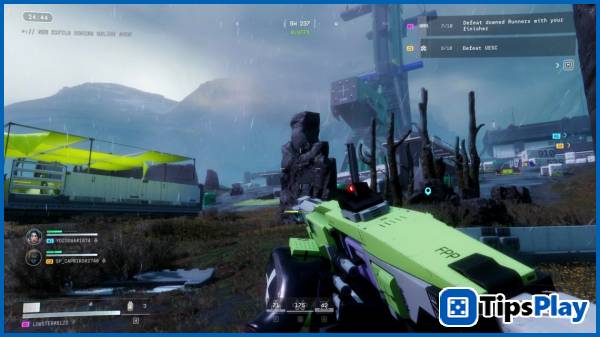
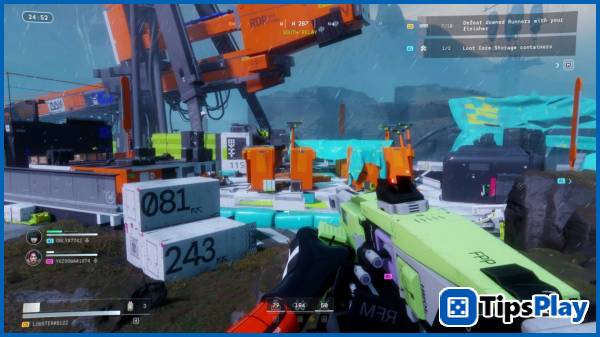
Marathon 's three main maps — Perimeter , Outpost , and Dire Marsh —are all set in the same area of ??the New Cascadia colony and share a eerily consistent visual theme: the image of a future commercialized to the extreme. Corporate logos and brands are printed, pasted, and engraved on every building, every piece of equipment, every corner of the colony, alongside scattered instructions for using state-of-the-art equipment, as if even a deserted place cannot escape the 'mark' of the forces that created it.
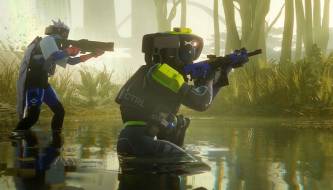
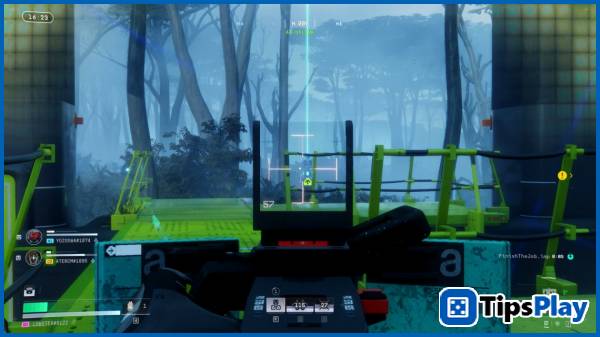
Perhaps it's the modern but somewhat makeshift facilities and bases of NuCaloric and Traxus on Perimeter , abandoned as if they were left behind in the blink of an eye. Or the cold, densely packed Outpost of UESC, so suffocating. Or Dire Marsh, with its artificial food fields gleaming under simulated sunlight but left uncultivated for centuries, the CyberAcme machines still running smoothly without a human operator, all surrounding a mysterious gravity rift that sits prominently in the swamp like an unanswered question.
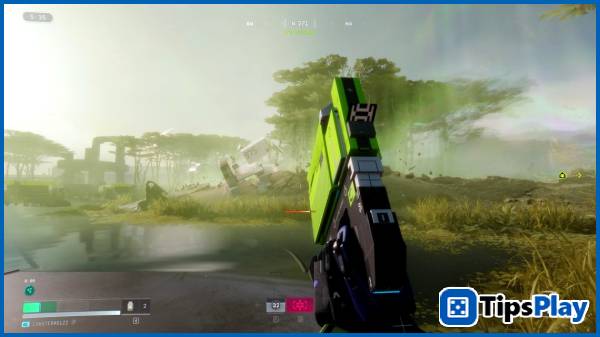
That's what makes New Cascadia so uniquely terrifying: not because the corporations are dead, but because they're still alive, whispering their schemes and tricks into the player's ear through every contract they offer. And the real horror comes when the player realizes that even these powerful forces don't truly understand what caused such an expensive and modern colony to disappear completely.
Not only is Marathon visually stunning, but it's also incredibly immersive in terms of sound.
With survival and struggle at the core of the experience, Marathon builds a very clear and purposeful soundscape.
The game's background sound remains vibrant, with rustling leaves, the low hum of machinery, and crisp, clear sounds of equipment and weapons. But the real strength lies in the vital sounds: the alarm sounds of UESC soldiers detecting players, the footsteps and clanging of equipment from other Runners echoing from afar – or the sounds signaling clear events such as UESC soldiers storming and sealing off a building during a Lockdown event, or another player calling for a new supply through the Supply Drop ports scattered throughout the Dire Marsh and Perimeter.
Not only is Marathon visually stunning, but it's also incredibly immersive in terms of sound.
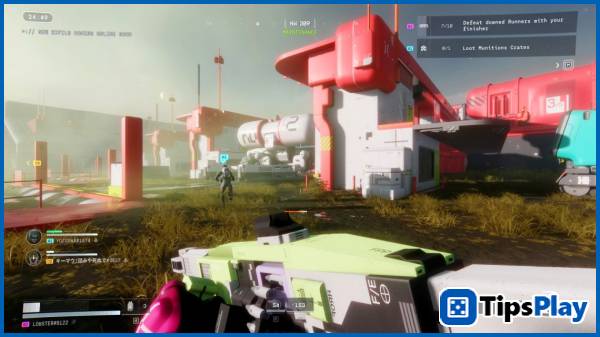
In a game where a moment of carelessness can mean losing everything you've accumulated, the ability to "read" the battlefield by ear becomes a skill just as important as aiming.
However, that exciting visual and audio experience doesn't stop at just the player rolling around on Tau Ceti IV. Marathon also uses those very elements to depict six forces vying for influence in this desolate wasteland: the construction company Traxus, the technology corporation CyberAcme, the food corporation NuCaloric, the fanatical assassin organization Arachne, the revolutionary alliance MIDA, and the biotechnology corporation Sekiguchi Genetics.
Each faction is portrayed through distinct cutscenes, with a distinctly characteristic voice-over style that deliberately emphasizes the inhumanity of each organization in very different ways, from a cold, corporate tone to chilling fanaticism, to revolutionary fervor concealing equally ruthless machinations beneath the surface.
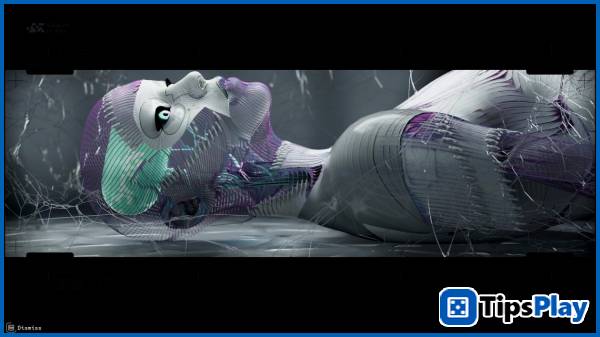
All of this is enveloped by music composed by Ryan Lott of the band Son Lux. The music he brings to Marathon feels both strange and haunting, blending cool electronic melodies with emotionally explosive moments, accurately reflecting the modern, familiar world of gaming, yet fraught with metaphysical threats.
Combined with a storyline brimming with mystery that gradually unfolds through contracts and scattered pieces of information throughout New Cascadia, listening to these forces tell their stories becomes one of the most compelling reasons to return to the battlefield.
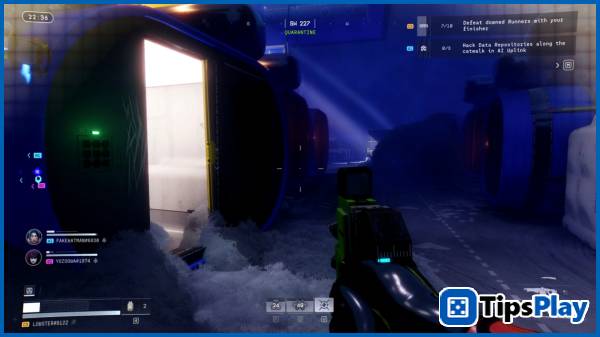
Maximize profits!
Marathon 's gameplay is essentially familiar to anyone who's ever heard of the survival shooter (extraction shooter) genre: players land on a level, collect rare items, complete contracts, and then find an escape point before being eliminated by other players or UESC forces. Dying means losing all your equipment – ??that's the unwritten rule of this genre, and Marathon is no exception.
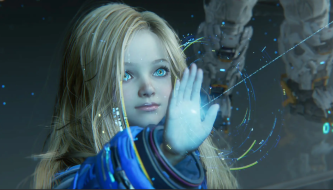
What sets Marathon apart from the rest of the genre is its 'Runner Shell' system: integrating the best elements of the Hero Shooter genre into the loot-based shooter genre (although these Runner Shells function more like Destiny character classes ).
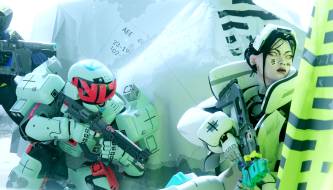
The game launches with 7 Shells, each representing a distinct play style: from Destroyer, who attacks directly with energy shields and missiles; Vandal, who is mobile with double jumps, bursts of speed, and knocks back enemies with a devastating energy blast; Recon, who detects enemies with sound waves; Assassin, who disrupts enemy vision and stealthily approaches with invisibility; Triage, who heals and revives teammates from a distance; Thief, who focuses on identifying and collecting good loot; to Rook, a special Shell for lone wolf players who want to jump into an ongoing battle with random loot without fear of losing anything.
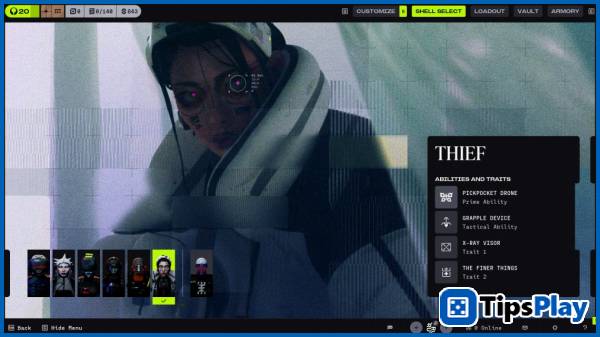
Each Shell can be further customized through Cores and Implants, meaning that two players choosing the same Shell can still have completely different playstyles. It could be a Vandal constantly accelerating without fear of 'overload', or focusing on energy shots, or a Triage prioritizing self-enhancement over teammates; the character building possibilities in Marathon seem endless.
It is this very diversity that builds pressure in a unique way. Should you enter that building upon hearing unfamiliar footsteps? Is the ambusher an Assassin lurking somewhere, or a Vandal with the ability to close the distance in an instant? Every second of hesitation has its price, and this is what keeps the seemingly simple gameplay loop of Marathon fresh after hundreds, even thousands of runs.
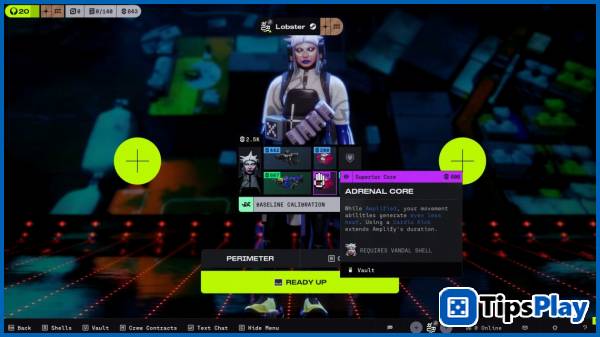
Besides Shell, weapons are also an equally important tactical element. Marathon launches with 28 guns spanning eight different types, from pistols, submachine guns, assault rifles, machine guns, sniper rifles, precision-guided weapons to Railguns, all using five distinct ammunition types: light and heavy rounds for conventional kinetic weapons, MIPS specifically for shotguns and heavy sniper rifles, and Volt Battery and Volt Cell for energy weapons.
This division creates real tactical pressure: carrying two guns of the same type of ammunition means both will run out at the same time, and scarce ammunition sources like MIPS or Volt Cell are always highly contested by players on the battlefield.
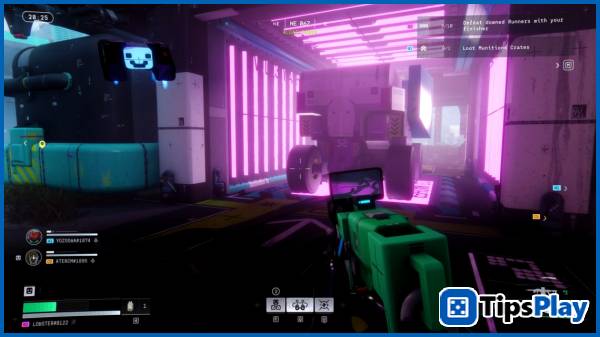
The noteworthy aspect lies not only in the aforementioned diversity, but also in the ability to adjust and enhance performance through a system of accessories, from chips to scopes… making the discovery of the same gun but with higher rarity truly make a significant difference in combat. This is further emphasized by Bungie's consistent approach to designing the firing feel, with each gun having its own weight, recoil, and sound, making weapon upgrades not just "numbers on paper" but a clear sensation in every shot.
Bringing it all together is a system of contracts from six factions. Each faction assigns the player unique tasks, from eliminating targets and gathering data to special contracts that propel the storyline forward. Completing contracts not only grants equipment and experience, but also unlocks permanent upgrades that remain unchanged when the game 'resets' the player's entire progress every three months.
With its multi-layered gameplay and immense depth from the foundation, combined with systems outside of the 'runs' on Tau Ceti IV, especially the 'contracts' with their quick and rapidly rotating rewards, and Rook's role as a lifeline for players who have run out of resources, Marathon solves a very inherent problem of the survival shooter genre: 'gear fear'.
Marathon is an incredibly addictive game loop, with depth and plenty of exciting rewards for those who 'dare' to stick with it long-term.
Players are no longer 'stuck' in the mindset of guarding their equipment as an irreplaceable asset, because losing items doesn't really put players at a huge disadvantage compared to other Runners; instead, it 'temporarily' puts them in a state that can be recovered through various means.
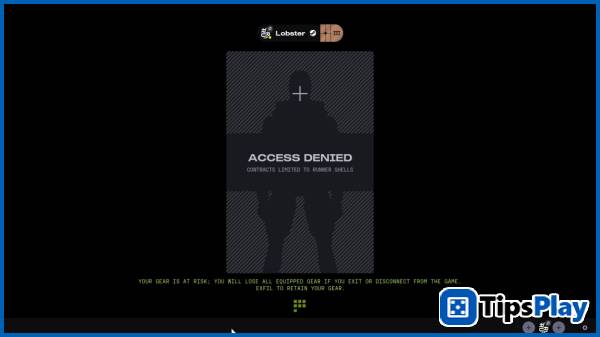
Players can use a lower-cost and more specialized 'loadout' to complete the contract, or simply use free options like Sponsored Kits or Rooks to rebuild their inventory.
All of this combines to create an incredibly addictive, deep, and rewarding gameplay loop for those who 'dare' to stick with Marathon for the long term .
YOU WILL HATE
Strong enough to stand on its own two feet, but not strong enough to spread its influence.
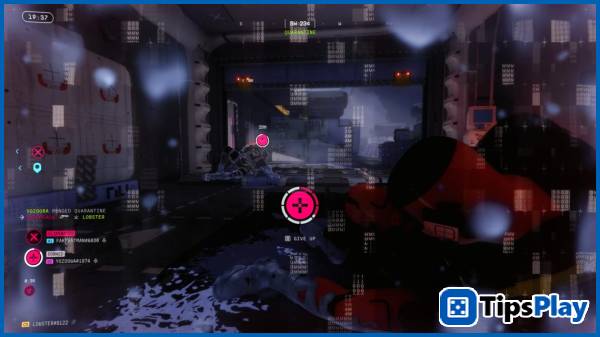
All the aforementioned advantages are enough to make Marathon the best loot-based shooter game on the market right now. But with games of this genre, good mechanics alone aren't enough; the rest comes from building a community and establishing a large player base – and in this respect, Bungie is still far behind titles like ARC Raiders or Escape from Tarkov .
Of course, the 'malice' from the community, and the loss of faith in Bungie among Halo and Destiny fans in recent years, has impacted the Marathon community to some extent . But if we had to point out a core problem, Marathon is simply a game that 'doesn't do a good job of guiding new players.'
Marathon boasts a complex system, immense depth, and a fierce PvP culture. The game demands that players understand the mechanics, read the situation, and accept risks almost from the very first 'run'.
But Bungie's way of throwing players into the experience is too abrupt. There's not enough space to learn, not enough 'buffer' to get acquainted. New players are thrown straight into an environment where they have to figure out how the game works on their own, while also facing seasoned players returning to 'easy' levels like Perimeter to hunt easier targets, or to rebuild their gear after a failed Outpost or Cryo Archive run.
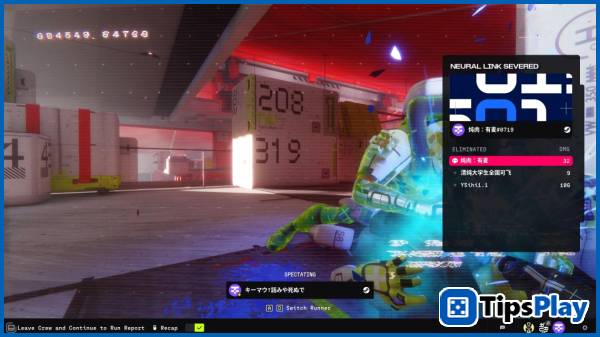
The result is an unpleasant cycle for novices. New players have to accept disadvantages for a long time, rely on Sponsored Kits, constantly lose gear, and carry the very "gear fear" that the game only begins to address later. Only when the reward stream from contracts and factions becomes more stable do they have a chance to enter the rhythm of gameplay that Marathon aims for. But not everyone makes it to that point. A significant number leave very early.
The problem is further exacerbated by the interface and how the game interacts with the player. Marathon has too many menus, arranged in an unintuitive way, while important mechanics are vaguely explained, causing players to give up before even understanding what the game is asking them to do.
Bungie throws players into the experience too abruptly. There's not enough space to learn, not enough 'buffer' to get used to it.
Update 23 April 2026
Isabella Humphrey
Isabella Humphrey is a Senior Game Analyst. This position is a high-level professional who acts as a bridge between raw data and game design to drive game success. Unlike lower-level positions that focus solely on basic reporting, a senior analyst proactively shapes data strategy, predicts player behavior, and directly influences core business decisions.