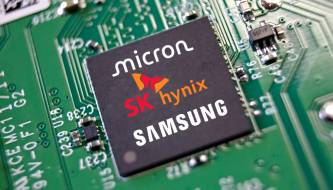
Former Samsung employee sentenced to 7 years in prison for leaking DRAM secrets to a Chinese company.
Over 600 stolen chip manufacturing processes helped CXMT shorten development time, causing billions of dollars in losses for Samsung.
A new development has emerged in an industrial espionage case involving the semiconductor industry as a South Korean court officially sentenced a former Samsung employee for leaking technological secrets to China. The case has not only shaken the tech world but also raised concerns about security in chip manufacturing – considered the backbone of the digital economy.
According to the latest ruling, defendant Jeon, 56, has been sentenced to seven years in prison for violating the Industrial Technology Protection Act. He previously worked at Samsung and was accused of stealing over 600 DRAM manufacturing processes – one of South Korea's core strategic technologies. This information was allegedly then transferred to ChangXin Memory Technologies (CXMT), a rising memory manufacturer in China.

The court ruled that Jeon's actions had leaked "national core technology," potentially causing trillions of dollars in damage to South Korea. Notably, access to manufacturing know-how significantly shortened CXMT's development time, enabling the early commercialization of 10nm DRAM and even HBM2 memory – a crucial step in the fiercely competitive global semiconductor industry.
According to published documents, Samsung invested approximately 1.6 trillion won (equivalent to $1.08 billion) over five years to develop 10nm DRAM technology. However, these efforts risk being 'neutralized' as technical secrets are leaked. Jeon is alleged to have manually documented and passed on this information during his time at CXMT, in exchange for a fee of up to 2.9 billion won (approximately $2 million), along with stock options and other incentives.
The prosecution emphasized that the theft of intellectual property contributed to CXMT's rapid growth. Beyond direct technological losses, Samsung also faced indirect losses as customers switched to products from its Chinese competitor – a factor considered a "fatal blow" in the market share competition.
However, the court also considered several mitigating factors, including Jeon's low salary at Samsung at the time of the crime, before handing down the final sentence. Even so, the sentence was considered harsh, reflecting South Korea's firm stance on protecting national intellectual property.

The incident occurred amidst significant volatility in the global memory market. Increased demand from the AI ??sector led major players to focus on producing HBM (High-Based Memory), resulting in a shortage of traditional DRAM (Deep-Based Memory). This forced many technology companies, such as HP, Asus, and Dell, to consider sourcing from China.
Although ChangXin Memory Technologies remains on the US watchlist due to concerns related to the military, the company has not been completely banned. This means that CXMT's influence in the global supply chain could continue to grow.
This case once again highlights the importance of protecting core technologies in the semiconductor industry, especially as competition between nations intensifies. In the AI ??era, where memory chips play a crucial role, any security vulnerability could have unpredictable consequences on a global scale.
Update 28 April 2026
David Pac
David Pac is a senior IT professional who designs the overall technical vision and structure of a project, transforming business requirements into viable software/system solutions.