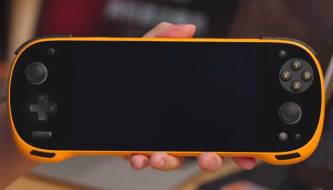
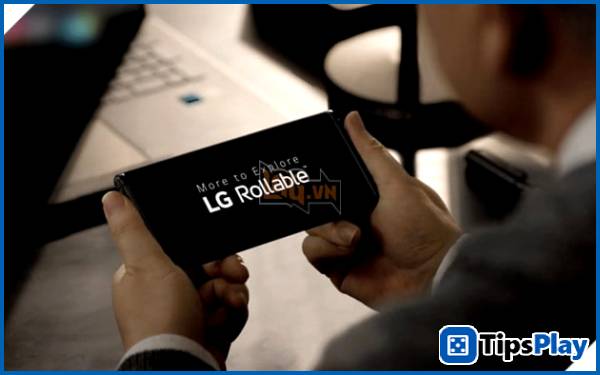
The LG Rollable, a never-before-released masterpiece of a rollable screen smartphone.
An LG Rollable prototype – a smartphone with a rollable screen that was canceled when LG exited the mobile market – has been completely disassembled by YouTuber JerryRigEverything. The video reveals the complex mechanical system inside, showing LG's ambitious plans to shape the future of smartphones.
LG once placed a big bet on rollable screen phones.
Before shutting down its smartphone division in 2021, LG developed an ambitious project called LG Rollable. This phone used a rollable screen instead of a foldable one, which was seen as a new direction for the mobile industry at the time.
A prototype of this device recently appeared in the hands of YouTuber JerryRigEverything, famous for his videos disassembling and testing the durability of smartphones. Through the teardown process, the LG Rollable shows a completely different approach compared to current foldable phone models.
Instead of unfolding like a book, the device uses motors to pull the flexible OLED screen sliding out from the side, transforming the smartphone into a small tablet with just a swipe. The display area increases by about 40% without any creases – one of the major problems with foldable phones.
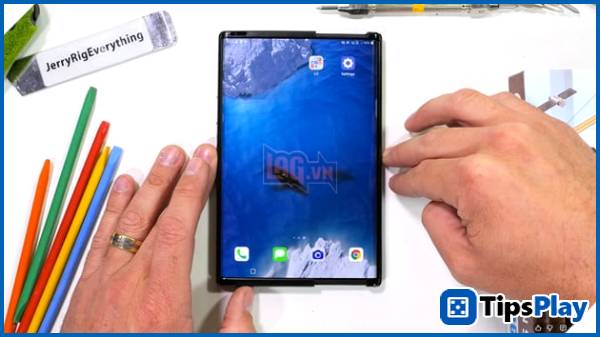
The screen scrolling mechanism is incredibly complex.
Inside the LG Rollable is a sophisticated mechanical system with many custom-designed components. Two small gear motors control the screen's extension along a rail, while a trio of spring-loaded articulated arms keep the OLED panel taut and smooth as it moves.
The screen edges are designed with locking teeth to secure the frame during transitions, while the inside of the device features tiny bristles that act like dust brushes to protect the components.
LG even handles the audio aspect: when the screen rolls out or retracts, the software plays music to mask the engine noise, making the experience more pleasant.
Additionally, the scrollable display was hidden under a glass back and could function as a secondary screen to display widgets or camera previews – a rather unique idea at the time.
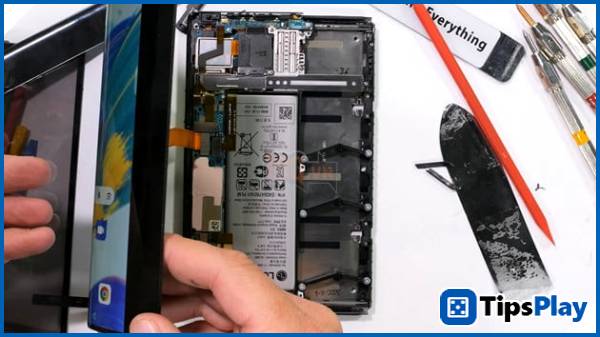
Flagship specifications, but too difficult to manufacture.
In terms of hardware, the LG Rollable boasts specifications comparable to high-end smartphones in 2021, including a Snapdragon 888 processor, 12GB of RAM, a 4,500mAh battery, and a 64MP camera with optical image stabilization.
Remarkably, after disassembling it, JerryRigEverything was able to reassemble the device and start it up normally, indicating that this prototype was quite well-developed.
However, it was precisely this complex mechanical system that prevented the product from being commercialized. Mass-producing a device with so many moving parts would have been prohibitively expensive, while LG was struggling to compete in the smartphone market at the time.
An idea ahead of its time.
Besides cost, durability is also a major issue. Even major companies take years to perfect the hinge of a foldable phone, while LG's folding mechanism is far more complex and susceptible to dust or environmental factors.
Although it was never released to the market, the LG Rollable still demonstrated LG's bold vision in seeking new directions for smartphones. This prototype partly reflects what the mobile industry could achieve if such experimental projects continue to be invested in and developed in the future.
Update 09 April 2026
Micah Soto
Micah Soto is a creator of systematic processes encompassing the design, creation, testing, and maintenance of computer programs and applications. He transforms an idea or a set of user requirements into a functional software product that solves problems, automates tasks, or provides entertainment.