Valve updates its pricing system on Steam.
Aiming to reduce price discrepancies in games worldwide, Valve has officially released a new pricing update on the Steam platform. 
This system, which began implementation in March 2026, supports up to 35 currencies and is divided into four main regional groups, thereby assisting developers in setting the most accurate and reasonable regional prices.
This update expands the recommended pricing system that developers typically use to convert base prices to local currencies. Valve provides clear guidelines for 35 different currencies and categorizes countries into four major regions. This move aims to standardize global selling prices while maintaining the necessary flexibility for local economies.
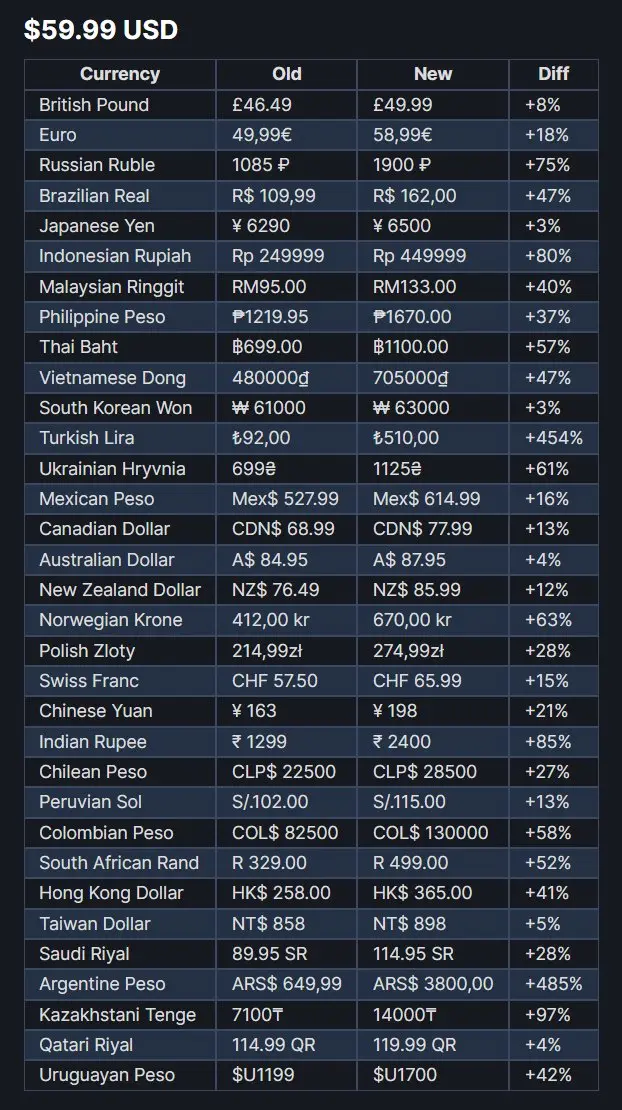
Developers can still manually adjust prices based on updated base recommendations from the new system. These recommended rates have been carefully calculated based on exchange rates and actual purchasing power, especially since these economic indicators have fluctuated significantly in recent years. As a result, the system will help minimize extreme price discrepancies, effectively addressing the issue of players in certain regions previously paying significantly more or less for the same game than in others.
One of the biggest advantages of the new update is the elimination of lag in crucial price adjustments, a persistent limitation where regional pricing was often overlooked and became outdated over time under the old system. This new structure will give developers clear tools to keep product pricing aligned with current economic conditions.
Notably, Valve designed this pricing system to be entirely open-source. This means developers have complete freedom to decide whether to adopt recommended pricing levels or set their own custom prices for their products. With this update, the parent company of Steam aims to create a fairer and more consistent pricing environment across all global markets.
Update 30 March 2026
David Pac
David Pac is a senior IT professional who designs the overall technical vision and structure of a project, transforming business requirements into viable software/system solutions.