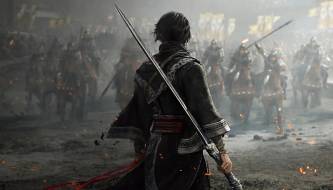
Code Vein 2 ? Game Review
Code Vein 2 – After more than a decade of development, souls-like design has transcended the boundaries of a mere genre, becoming a familiar design 'language' within the gaming community.
Its influence not only shaped the style of action games in the modern era but also spread to many other genres, from action-adventure to turn-based role-playing games, exemplified by Clair Obscur: Expedition 33 , a title that has stirred up social media and the press for the past year.
However, behind the glamour of iconic titles like Dark Souls and Elden Ring , few people notice that there is a name that always stands behind the scenes but holds a crucial role: Bandai Namco. As a global publisher, the company has partnered with the FromSoftware team to bring the harsh experiences of souls-like games to a wide audience, thereby contributing to nurturing and expanding the influence of this genre for many years.
In 2014, when that distinctive style began to shape the taste and. the frustrations of an entire generation of gamers, Bandai Namco made a rather bold decision: instead of just observing from the sidelines, they stepped directly into the game with a homegrown souls-like project of their own.
The result of that 'conception' process is Code Vein , a game that blends the familiar souls-like formula with Bandai Namco's distinctive anime art style.
Although it didn't make a huge splash upon its release, the game gradually regained recognition over time and built a stable fan base.
Therefore, when Code Vein 2 was revealed with its open-world structure and a host of significant gameplay changes, expectations from fans of the first game were quickly ignited. Even more noteworthy is that its release date coincided closely with Nioh 3 , a formidable competitor from Koei Tecmo, also making its debut in the open-world genre.
This coincidence, whether accidental or intentional, turned Code Vein 2 's launch into a true showdown. The question was not only whether a souls-like game with anime art could escape the overwhelming shadow of FromSoftware to assert its own identity, but also whether Code Vein 2 had the courage to directly confront a formidable rival like Nioh 3 .
Let's find the answer together with tipsplay.net in the following article.
Please note that this article contains mild spoilers about a character in Code Vein 2 , as well as a summary of the ending of Code Vein at the end. Readers should consider this before proceeding.
YOU WILL LIKE
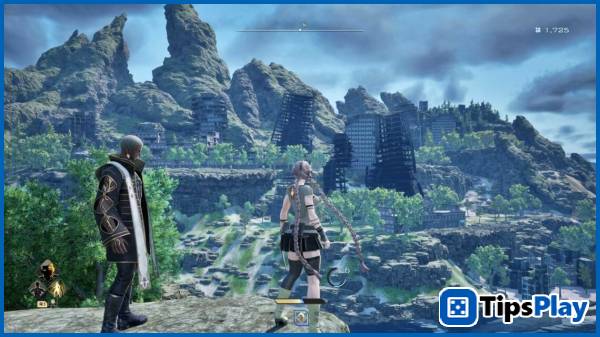
A fresh premise, emotionally rich content!
The biggest surprise for the writer, even before getting their hands on the game, was that Code Vein 2 's content was developed as an anthology.
Simply put, each installment will have its own distinct storyline, with almost no direct connection to the previous one, similar to how the Final Fantasy series has operated for many years.
This approach helps new players get acquainted with Code Vein without feeling overwhelmed or having to learn the content of its predecessor. However, conversely, it may also leave some long-time fans feeling disappointed, a topic the author will analyze in more detail at the end of the article (as it reveals the ending of the previous game).
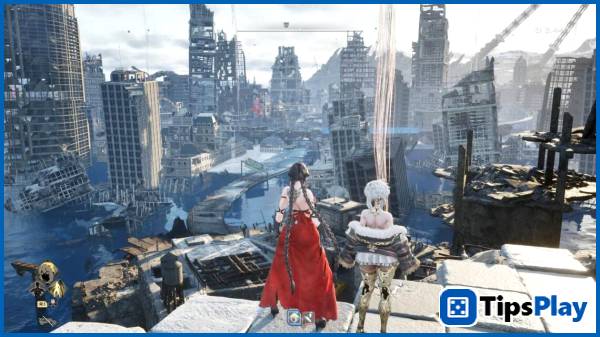
Returning to Code Vein 2 , while the storyline isn't entirely new, it still offers a compelling premise by placing players in a post-apocalyptic setting where humanity faces the threat of extinction from a catastrophe called 'Resurgence'.
A century ago, five heroes sacrificed themselves to seal this threat within cocoons scattered across the Frontier. As their life force dwindles and the seals threaten to collapse, the player must journey back in time, meeting the heroes while they are still alive, in order to make changes powerful enough to avert the present catastrophe.
On an conceptual level, repairing a decaying present by interfering with the past offers plenty of interesting moments, especially when the environment and the characters' fates change as a direct consequence of the player's actions.
The most valuable aspect of the storyline lies in how Code Vein 2 chooses to focus on the connections between the player and the main characters, fully exploiting the 'companion' feature characteristic of the series, contrasting with the feeling of solitude throughout the journey like in FromSoftware's own souls-like games.
Past memories and choices silently accumulate emotional weight, culminating in a moment when the player is forced to confront future heroes, creating an indescribable sense of excitement, like a direct clash with the very things the player once interfered with.
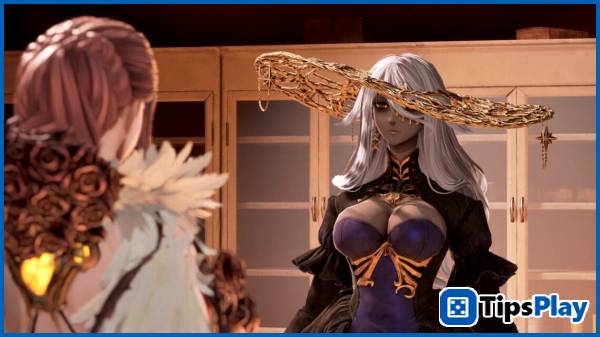
Holly serves as a prime example of this storytelling style. In the present, she is shrouded in terrifying rumors, once considered the embodiment of Reaper, who murdered all her patients, including her own father, in an uncontrollable fit of madness.
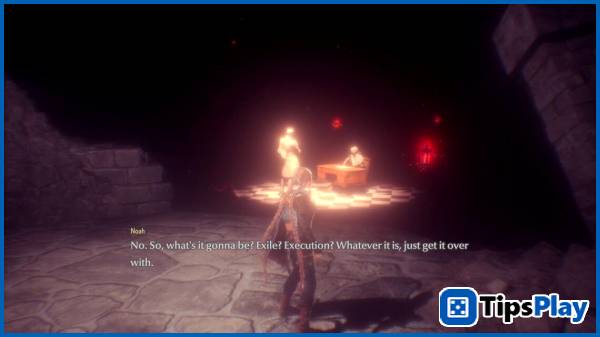
However, upon rewinding to the past, the first image the player encounters is that of a calm and dedicated female doctor, with the appearance of a gothic beauty… and a 'super bust,' which could easily lead the writer to mistakenly believe it's a familiar 'visually appealing' archetype often seen in Japanese role-playing games.
Only as fragments of memories are revealed and pieced together through the main and side quests does Holly's family tragedy gradually unfold, exposing how fate has slowly eroded both her spirit and body, ultimately leading her to a cruel end in the future. And it is the player's impact on events in the past timelines that will cause Holly to transform significantly, both physically and emotionally, in the two different present moments.
Not only the characters, but also the game's environment and setting will evolve with the passage of time. A once polluted river, a ruined bridge after a disaster, or lush vegetation transformed into a desolate wasteland filled with malevolent energy—all can be reversed if the player correctly addresses the core causes that shaped them from ancient times.
Despite remaining uncertainties (which the author will address later), this intertwining of consequences and emotions more or less demonstrates the development team's ambition to create depth in the storytelling.
The most valuable aspect of the storyline lies in how Code Vein 2 chooses to focus on the connections between the player and the main characters, fully exploiting the series' signature 'companion' feature.
Flexibility in character development
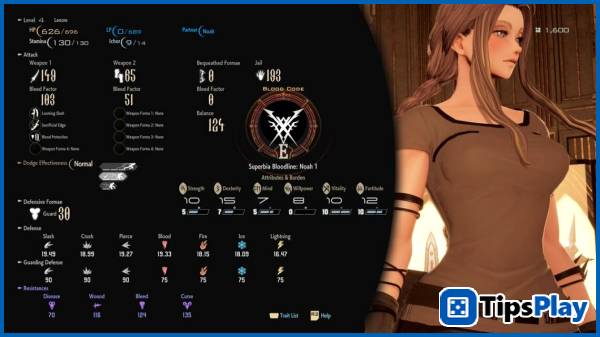
Beyond simply refreshing the content, Code Vein 2 drastically restructured almost the entire character build system, with Blood Codes becoming the focal point of the biggest changes. While in the first game, Blood Codes merely served as 'skill packs' inherited from NPCs, in this installment they are redefined as actual character classes, laying the foundation for the player's fighting style.
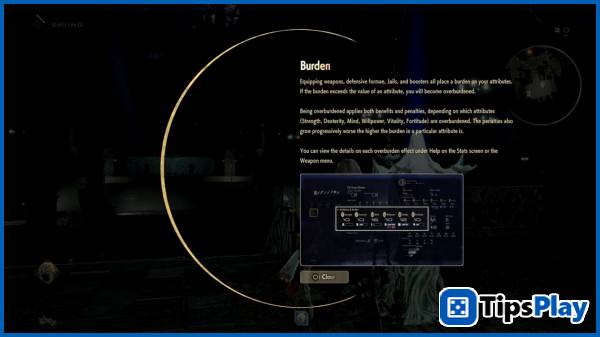
Each Blood Code possesses its own set of stats, which can be further enhanced as the player masters the skill, and also determines the effectiveness of weapons and equipment. Exceeding or failing to meet the stat requirements for each item in the inventory will put the character into an overloaded or underburdened state, resulting in corresponding trait increases or decreases in power within the Blood Code.
This mechanism forces players to carefully consider each choice, thoroughly read the item support table, and calculate to optimize their build instead of simply equipping themselves with the highest-stat items.
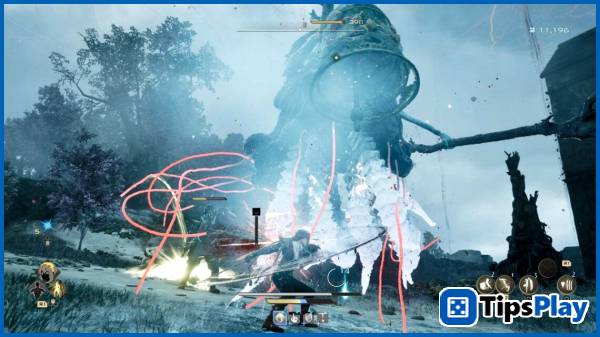
In return, with just a few Blood Code changes and equipment upgrades, players can almost instantly change their character build, from items focused on Dex, speed, and agility like the Twin Blades, to the Greatsword or the heavy Hammer with its slow but powerful attack rhythm.
Code Vein 2 constantly encourages players to experiment and adapt their playstyle to each situation, rather than being confined to a fixed pattern.
On the other hand, the skills from the previous game, now called 'Formae', can be freely added to each weapon type based on its load capacity. Players still cast these skills by consuming Ichor, an energy source restored by draining it from enemies through an item called Jail.
Each type of Jail offers a different way to restore Ichor, directly impacting the pace of combat and defensive capabilities.
For example, the Reaper's scythe attacks with a parry mechanism before immediately switching to Ichor drain, freeing up shield slots and reducing the burden on Blood Code stats.
The Partner character system has also been refined, allowing them to sacrifice themselves to revive the player immediately upon falling, before entering a cooldown state. Conversely, those who prefer solo play can still opt for the new Assimilate feature, which allows them to merge with teammates in exchange for a range of powerful enhancement buffs.
This is a clever approach, both supporting new players and offering a challenging option for those who want to face the game's harsh world on their own.
Code Vein 2 also drastically restructured almost the entire character build system, with Blood Code becoming the focal point of the biggest changes.
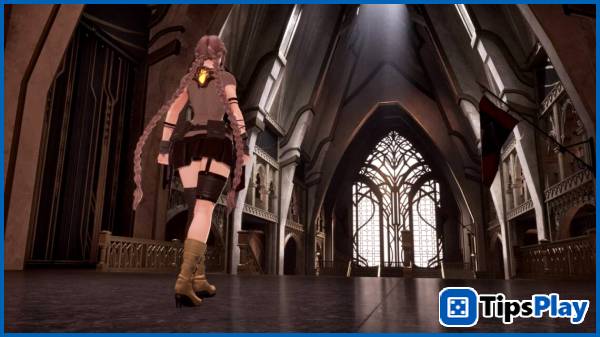
And Code Vein 2's shift towards an open-world design following the 'formula' of Elden Ring also significantly addresses the fatal weakness of its predecessor.
Instead of narrow, linear corridors and excessive use of 'copying' and 'cut-and-paste' to create convoluted mazes like the Cathedral of the Sacred Blood area—an unforgettable nightmare for many gamers in the past—the world of the second installment offers a noticeably more spacious and diverse feel, but the price for these changes is not insignificant…
YOU WILL HATE
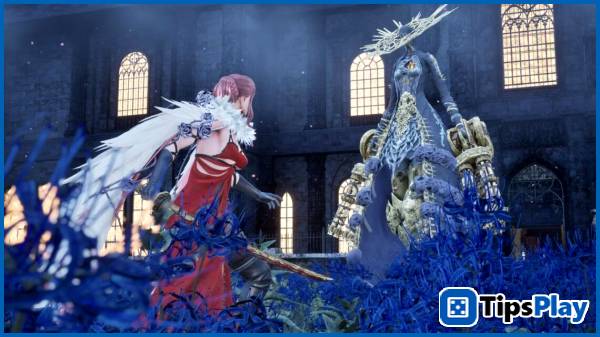
One step forward, many steps back…
The biggest and most disappointing drawback of Code Vein 2 lies in its combat mechanics, which feel… a step backward compared to its predecessor.
The responsiveness in attacks and dodges isn't smooth, and the character experiences several recovery frames after actions like jumping and dodging, making the overall movement feel significantly sluggish. Notably, this 'lag' not only interrupts character control but also puts the player in many precarious situations while within the enemy's attack range.
This problem is further amplified when the game attempts to 'cram' in bosses with fast attack speeds, relentless combat rhythms, and almost no rest periods (a familiar 'specialty' for those who have played the Shadow of the Erdtree DLC of Elden Ring ).
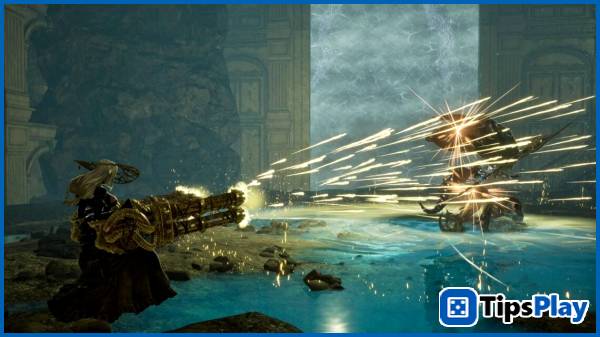
For games with responsive controls like Sekiro , Nioh , or The First Berserker: Khazan , challenges like these aren't a problem, as players still have plenty of room to maneuver.
However, in Code Vein 2 , the lingering feeling is mostly one of frustration and resentment, as the characters often suffer unfairly.
A prime example is Franz, an early-game "skill blocker." In situations where the character is low on health and revived by a companion, the character loses several frames for the motion of getting back up, and the player has no way to control or intervene. If Franz is in the middle of a combo attack, the character can instantly die in a situation where the player has virtually no control, which is extremely frustrating!
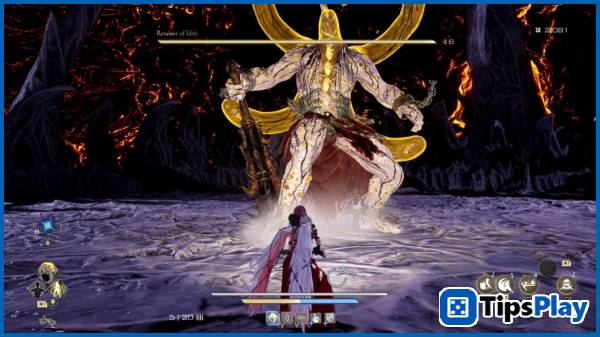
Later on, players will encounter bosses with even more annoying mechanics such as self-summoning clones, constantly stacking multiple negative debuff effects, moving at breakneck speed, using rapid-fire machine guns to 'stagger' the character, or even area-of-effect attacks covering the entire battle zone (Arena AOE) with critical damage, forcing players to seek cover.
The biggest and most disappointing aspect of Code Vein 2 lies in its combat mechanics, which feel… a step backward compared to the previous installment.
Furthermore, the hitbox and the character's invisibility frame when dodging, two core mechanics of any souls-like game, were not properly implemented, causing much frustration as it felt like you had dodged an opponent's attack but still ended up getting hit in a very frustrating way!
In theory, players can still mitigate risk by approaching targets with spells or ranged weapons. However, this very choice inadvertently exposes another problem with the game: the imbalance in the character building system.
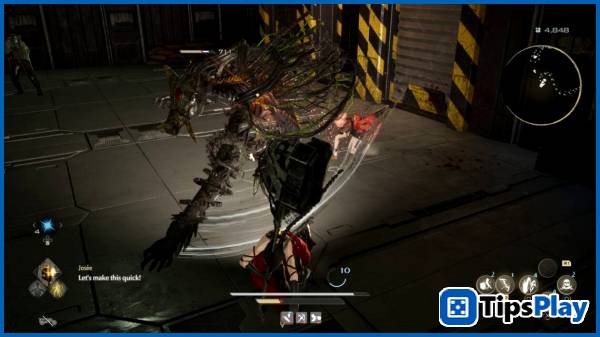
For example, with a Bayonet, players can completely take advantage of 'spam' a burst of bullets to safely 'nibble' at opponents' health from a distance, run to another location to wait for teammates to reload Ichor energy, and then 'recharge and detonate' it, instead of risking engaging in close combat in a combat system that already lacks stability.
It's worth noting that the variety of bosses and enemies is extremely limited. You'll soon realize that many bosses are actually just upgraded, tougher versions of the same old monsters and minions, while many of the main bosses are reused in different locations with almost no satisfactory explanation.
In summary, these 'unexplained' inaccuracies lead to a generally disappointing experience, significantly diminishing the satisfying feeling of defeating formidable opponents, and even making the game seem inferior to many other games in the same genre.
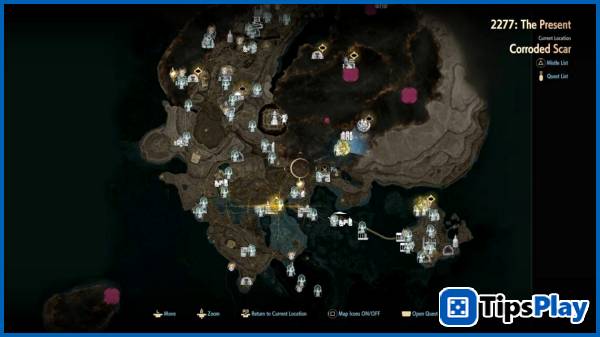
When ambition… runs out of steam!
While it might be considered a positive move, Code Vein 2 's Frontier world map still feels bland and can hardly be compared to Elden Ring 's The Lands Between .
It's not hard to see that Code Vein 2 borrows many familiar design elements from FromSoftware's formula, but much of it is merely mechanical copying, lacking depth and without improvements that would create its own unique identity.
Typically, many formidable monsters appear scattered across various areas, possessing thick health pools, high damage output, and tenacity reminiscent of the bears in Elden Ring , but the rewards for defeating them here are extremely meager, offering no significant benefits!
Similarly, the intriguing caves, fascinating dungeons, and unique multi-layered locations that once made the writer exclaim "wow," like Nokron and Mohgwyn Palace, are completely absent. Instead, there are only small, cramped places, and even if the area has expanded, the pathways remain narrow and lifeless, blocked by "invisible walls."
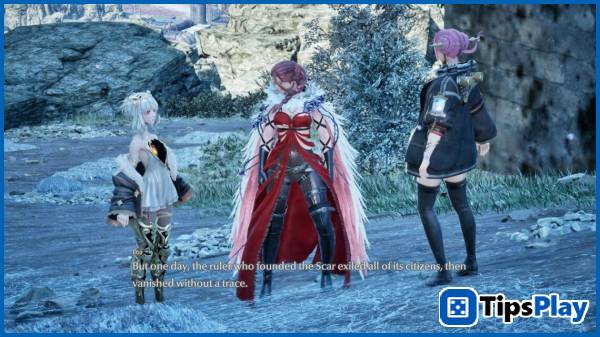
Meanwhile, as mentioned above, Code Vein 2 possesses a compelling storyline premise, even with more than enough "ingredients" to become a true "emotional feast." Unfortunately, the way the game chooses to lead the narrative, especially in the dialogue and situational setup, inadvertently diminishes the impact of these valuable moments.
Much of the characters' significant past events remain trapped within the familiar, vague 'visions' of the previous installment, characterized by static imagery, lackluster expressions, and hesitant dialogue that fails to carry the weight of the intended message.
The decision to have Code Vein 2 follow an 'anthology' direction, completely separate from the unfinished storyline and truly open ending (True Ending 'Dweller in the Dark') of the first game, also leaves a bitter taste in the mouth. While this approach makes it easier for new players to access, for those who were attached to the previous game, like the writer, the feeling of disappointment is unavoidable.
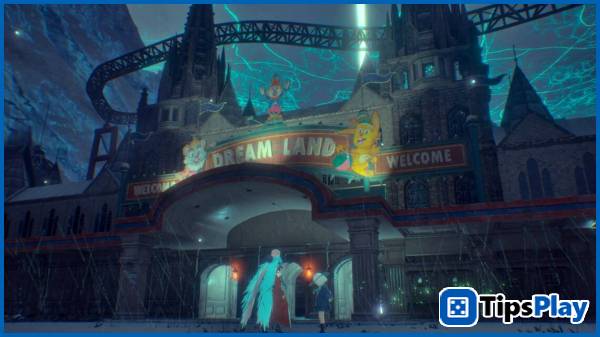
Questions surrounding the truth behind the Mist, the nature of the Horrors, the true fate of humanity, and even the connection to the God Eater universe , remain unanswered and may well remain unresolved unless Bandai Namco decides to revisit this game.
Another weakness, almost the final nail in the coffin, is that Code Vein 2 completely omits the co-op feature present in the previous installment. While this might have been a choice to highlight the refined companion system in this game, given that it was released at the same time as Nioh 3 and at the same price of $70, this trade-off becomes particularly disadvantageous.
Nioh boasts a large player community, willing to spend money from the game's release to co-op thanks to the "FOMO effect." In contrast, the core aspects of Code Vein 2 appear significantly weaker when compared.
Ultimately, Bandai Namco's ambitious goals seem to be pushing its product into an overly difficult competitive situation.
It's not hard to see that Code Vein 2 borrows many familiar design elements from FromSoftware's formula, but much of it is merely mechanical copying, lacking depth.
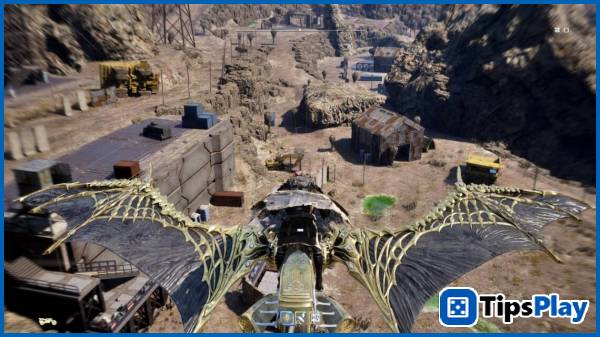
A visual and performance disaster!
It wouldn't be an exaggeration to say that Code Vein 2 is one of the least optimized games I've experienced in recent years.
Even when running on the PlayStation 5 Pro, with performance-prioritized graphics settings, the game's frame rate still couldn't consistently maintain 60fps, even in enclosed areas with minimal visual effects.
This fluctuating performance is exacerbated in boss battles, coupled with the camera constantly panning across oversized targets, pushing players into frustrating situations that are already annoying with the 'backward' combat mechanics.
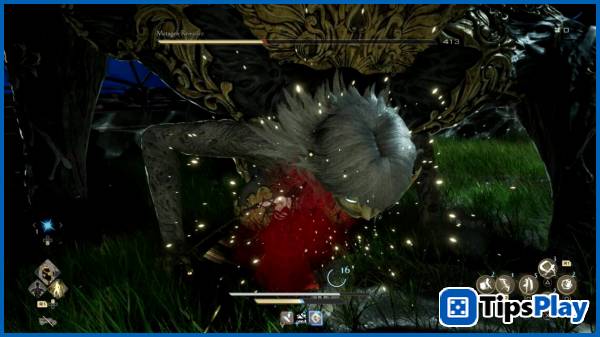
It's worth noting that the graphics quality on the Unreal Engine 5 platform of the game… hardly represents any significant improvement compared to the first installment. From a distance, the scenery is somewhat acceptable, but the closer you get, the more apparent the limitations become: blurry surfaces, rough shapes, and a lack of detail.
Even in cutscenes, the textures frequently appear stretched or slow-loading, and flicker on character models, making the game look like something straight out of the PlayStation 3 era.
Furthermore, the current version 1.0.3 that the author experienced also suffers from numerous technical bugs, such as the complete loss of sound effects when fighting monsters. Combined with the lack of background music while moving in the open world, this clearly exposes the overall lack of refinement.
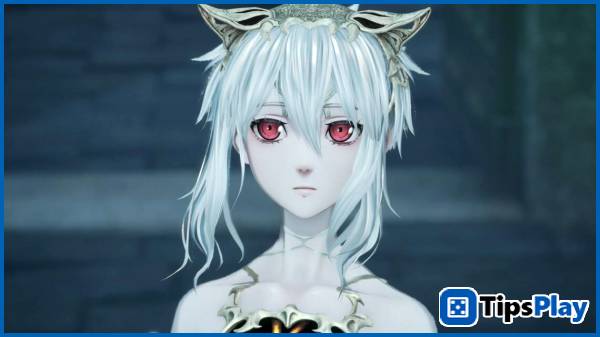
If anime art is considered a defining characteristic, then perhaps Bandai Namco and its development team should look to Chinese gacha games like Zenless Zone Zero , Wuthering Waves , or Arknights for inspiration.
These products, despite being mobile games, demonstrate superiority in character design, animation, and effects—things that a AAA-budget console game should ideally do better.
It wouldn't be an exaggeration to say that Code Vein 2 is one of the least optimized games I've experienced in recent years.
Update 19 March 2026
Marvin Fry
Marvin Fry is a game analyst who serves as a crucial link between data and game design, using in-game metrics and player behavior data to improve game quality, engagement, and monetization.