Yakuza Kiwami 3 ? Game Review
Yakuza Kiwami 3 – Following the success of the two previous Yakuza Kiwami installments , fans have reason to expect RGG Studio to create a worthy 'rebirth' for Yakuza 3 – one of the most emotionally rich parts of the game franchise.
However, instead of a project undertaken with respect and reverence for the original work, Yakuza Kiwami 3 feels like an attempt to 'fix' elements that were… not broken at all!
Built on the Dragon Engine – the cutting-edge graphics platform that has shaped the game series' appearance from Yakuza 6 onwards – the game looks sleeker and sharper.
However, the longer you play, the harder it is to avoid the feeling that this is a 'remake' lacking consistency in design vision, where many core elements are mechanically altered or restructured, diminishing the identity that made Yakuza 3 special.
Yakuza Kiwami 3 isn't a complete disaster. It has certain improvements and notable new additions. But when you weigh the pros and cons, it's a deeply disappointing project – especially for those who loved the original.
Let's find out why the game was 'disappointing' through the following review from tipsplay.net.
YOU WILL LIKE
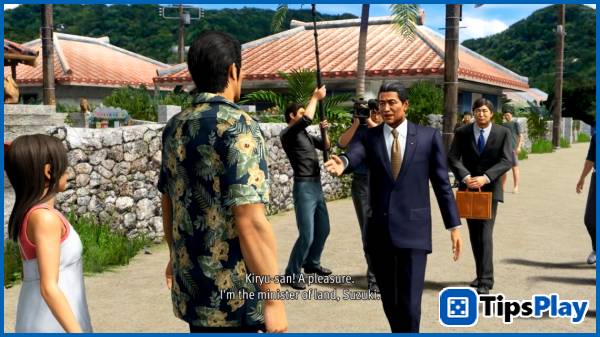
These additions are truly significant!
One of the most obvious strengths of Yakuza Kiwami 3 is the number of new cutscenes added. These cutscenes increased the screen time for supporting characters, as well as some of the antagonists, making their motivations clearer. As a result, the story flows more smoothly than the original.
In addition, many text-based dialogues have been converted into cutscenes, improving the ability to convey emotions. Players no longer have to imagine the nuances of expression through static dialogue frames, but can directly follow the psychological development of the characters.
Furthermore, RGG Studio added short dialogues between Kiryu and the supporting characters as they strolled through the streets, and transformed some important but 'optional' plot points from the original into main storylines, which further deepened the narrative of Yakuza Kiwami 3 .
One of the most obvious strengths of Yakuza Kiwami 3 is the number of new cutscenes added.

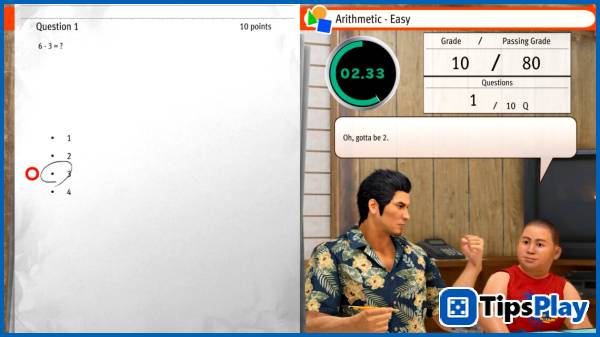
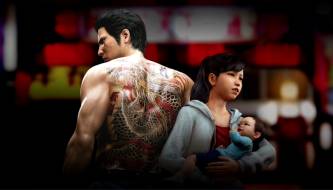
The second major addition to the game is the orphanage management element. In the original version, this element was only implemented as separate short stories interwoven with the main plot, but now it has been significantly gamified.
Playing the role of a real 'nanny,' the player can control Kiryu to participate in everyday activities such as cooking, sewing, tutoring, farming, etc. The humor of being a nanny lies in the fact that the game exaggerates these activities. If it's cooking, Kiryu will cook like a professional anime chef, and if it's homework, he will be extremely serious like an experienced teacher.
The exaggeration of these activities gave a dynamic feel to the nanny profession and created a more direct connection between Kiryu and the orphaned children in Okinawa, showing how much happiness the peaceful daily life brought to Kiryu.
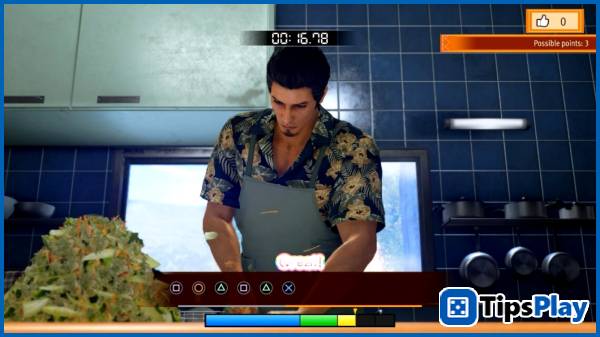
Each child at the orphanage has their own relationship score, and as players bond with them for longer periods, they can also experience small stories surrounding the children, further strengthening their connection with them.
And finally, playing the role of 'nanny' can also bring monetary or item value to Kiryu, encouraging players to do it more often.
Another positive aspect related to the orphanage element is that it has been almost completely separated from the main story. This is a significant advantage because in the original game, the inclusion of orphanage plot points interspersed within the main storyline made many gamers feel that the main crime drama was uncomfortably stalled!
YOU WILL HATE
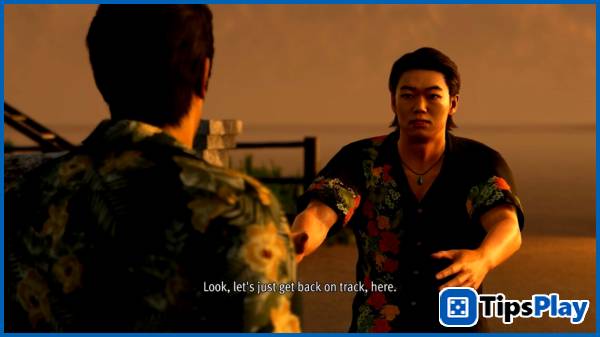
The actor was unsuitable for the role, and the character's expression was weak!
One of the first significant changes was the redesign of the game's three key characters—Nakahara, Rikiya, and Hamazaki—to match their new voice actors. This change diluted the characters' individual personalities, turning them into stereotypical yakuza archetypes instead of unique individuals.
While the 'new' Nakahara, played by Ryo Ishibashi, is relatively well-portrayed, embodying both the demeanor of an elderly yakuza and the gentle nature of a grandfather willing to do anything for his grandson's happiness, unfortunately, the new versions of Rikiya and Hamazaki fall quite far from their roles.
Rikiya, a young man from Okinawa, was portrayed as a gentle and innocent delinquent, a stark contrast to the typical Tokyo delinquents his age—a hallmark of the original Yakuza 3. The new version, starring Show Kasamatsu, lacks that innocence and loses that rustic, down-to-earth charm.
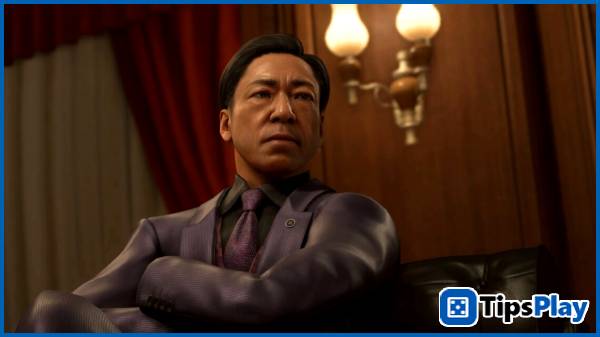
As for Hamazaki, a high-ranking member of Tojo, the character's new appearance has stripped him of the unstable, unpredictable, and menacing aura that had previously defined him. With the new design, Hamazaki, played by Terayuki Kagawa, looks like just an ordinary middle-aged gangster, not the cunning and scheming individual who would cause trouble for Kiryu on his journey.
While Nakahara's performance was acceptable, Rikiya and Hamazaki represented a significant step backward.
The acting of the characters in general is also limited due to the limitations of facial animation.
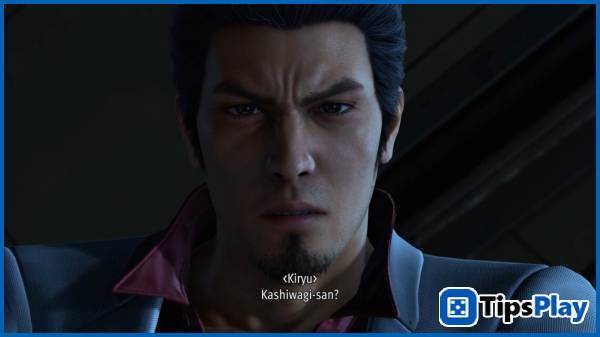
For cutscenes that existed from the original game, RGG Studio chose to reuse animation data from the PS3 version and apply it to the more detailed character models of the Dragon Engine. As a result, moments that were once emotionally charged now feel stiff and unnatural. The awkward facial expressions cause many climactic scenes to lose their impact.
Meanwhile, the new cutscenes – made from scratch – are better and more visually appealing, creating a clear contrast between the 'new' and the 'old'.
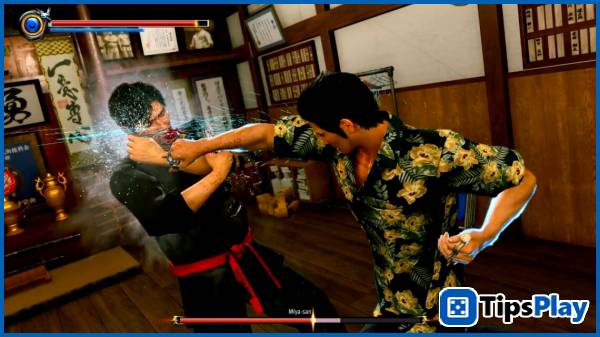
The combat system is disappointing…
The second drawback of Yakuza Kiwami 3 is its combat system. Both of the game's fighting styles – Dragon of Dojima Extreme and Ryukyu – are somewhat poorly developed.
Dragon Extreme is a blend of traditional Dragon style from older games ( Yakuza 3-4-5 Remastered ), modern Dragon style ( Yakuza 6, Kiwami 2 ), Taido martial arts style (from Gaiden ), and street fighting moves from Brawler ( Yakuza 0 ).
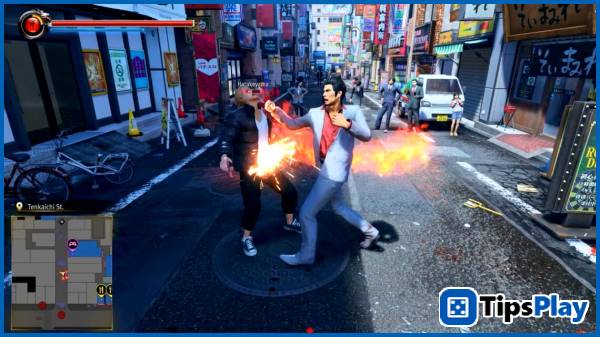
Theoretically, this blend of styles isn't a bad idea, as it clearly shows that even though Kiryu spent time training in martial arts in Okinawa, he still couldn't shake off the street fighting style that had been with him for nearly 20 years.
Unfortunately, RGG Studio didn't do a good job blending these styles. Some of the animations in 'Dragon of Dojima Extreme' are patched together awkwardly, resulting in uncoordinated attack sequences.
Furthermore, many of Kiryu's attacks lacked power; techniques that should have sent enemies flying several feet away only caused them to stumble slightly, as if being pushed. Some combo attacks were also set up in a bizarre way, quite different from the logical setups of previous installments.
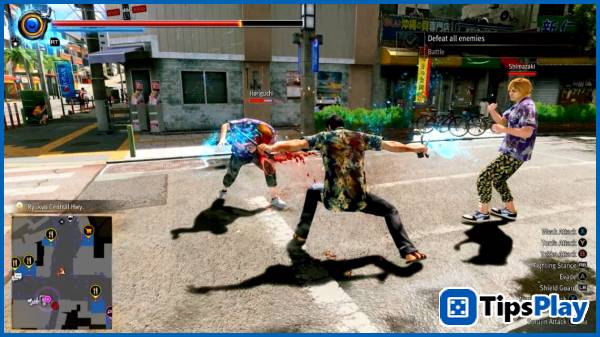
Kiryu's second style is 'Ryukyu style' – inspired by the Okinawan martial art of Kobud?. Ryukyu plays two roles in this game: firstly, as a fighting platform based on local martial arts, a way for RGG Studio to show respect for the region; secondly, Ryukyu represents Kiryu's weaponry in combat, a familiar aspect that appears in most Yakuza games .
The problem with Ryukyu is that it's too broad, resulting in a lack of depth. With only three buttons for combat (square, triangle, and circle on the Playstation controller), RGG Studio attempts to cram in eight different weapons for this martial art. The end result is a style that looks visually appealing at first glance, but completely lacks depth and easily becomes boring after a few uses.
Frankly, the Ryukyu style did a worse job of showcasing Kiryu as a multi-weapon master compared to simply letting him buy and equip weapons like in previous games.
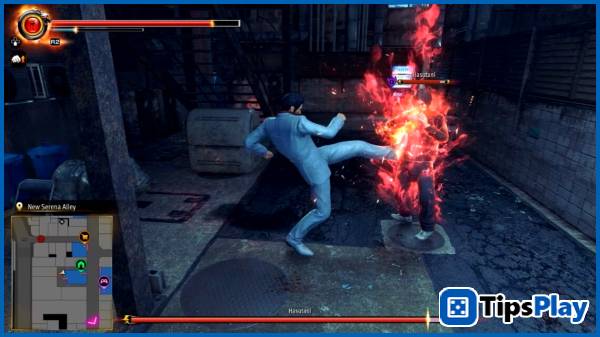
In terms of mechanics, the game adds a new element to the bosses: an 'aura,' which is essentially a shield that allows them to withstand player attacks like a tank, remaining unharmed until the shield breaks. How do you know when the shield is about to break? We… don't know, it's all luck!
And once the 'aura' is broken, the player only has a short time to unleash a combo before it reappears. Essentially, this mechanism has turned boss battles into a loop of 'using light attacks and dodging to slowly break the aura -> aura breaks, quickly unleash a combo -> aura regenerates, repeat step one'.
The game's two combat styles – Dragon of Dojima Extreme and Ryukyu – are both poorly developed.
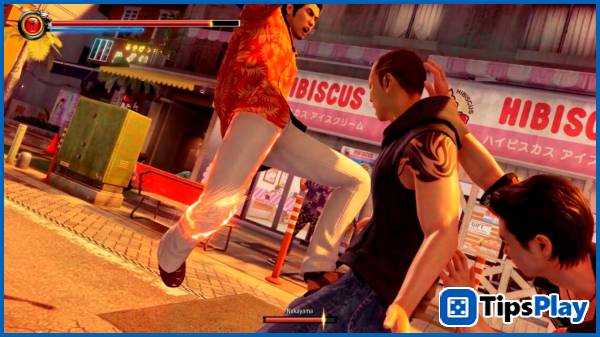
Regarding HEAT Action, the iconic "special move" element of the franchise, RGG inexplicably decided to remove about 60% of the HEAT Action compared to the original game, resulting in battles lacking many tools for eliminating large numbers of enemies, dealing significant damage to bosses, or creating memorable climactic moments.
Ultimately, the upgrade system lacks depth. Many of Kiryu's basic skills are locked into 'unlocked' skills – a clear step backward. Even with all skills unlocked, Yakuza Kiwami 3 's combat system feels significantly more limited compared to Kiwami 2 .
Too many elements were cut!
Too many elements that gave the original Yakuza 3 its unique identity were senselessly cut from Yakuza Kiwami 3 , resulting in a 'poor' game content.
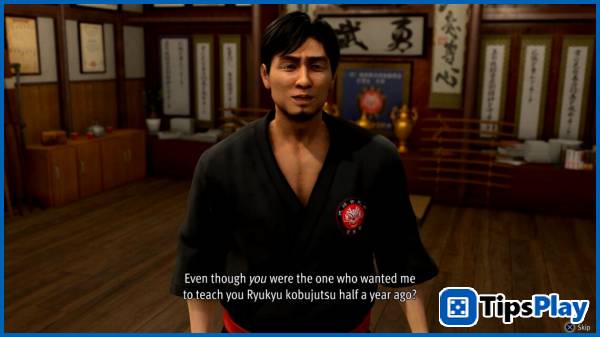
The original Okinawan martial arts instructor, Yonashiro, was replaced by Miyazato, a character who has been portrayed as Kiryu's martial arts instructor since his arrival in Okinawa. This isn't a terrible change, but it wasn't really necessary either, as RGG could have exploited Yonashiro more effectively.
But the bigger issue here is that Miyazato completely replaces Komaki, Kiryu's familiar martial arts instructor at Kamurocho. Komaki had been by Kiryu's side throughout his training since the first game, to the point that in Infinite Wealth , Komaki is portrayed as one of the most important people in Kiryu's life.
Replacing two characters into one simply to make the game 'more streamlined' is unacceptable and somewhat diminishes the game's essence.
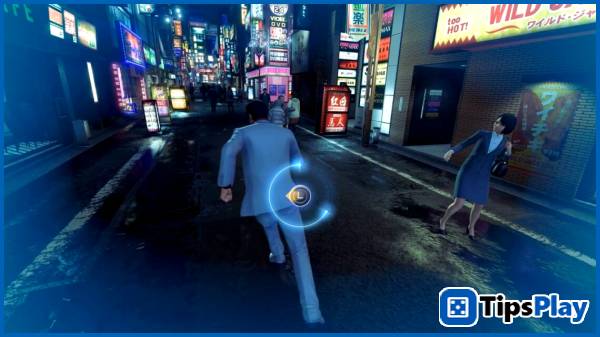
The unique chase minigame from the original Yakuza 3 , along with its character Mack, has been cut. The chase sequences are now just extended, disguised QTEs, diminishing player interaction. The 'revelation' mechanism introduced by Mack, which both added humor to the game world and provided Kiryu with an opportunity to hone his heat skills, has also disappeared.
Minigame IF7, where Kiryu trained using inventor Minamida's VR machine, was also cut, and of course, that meant losing the essential skills that this training provided.
Some lighthearted, relaxing plot segments that added to the human element of the original story were also cut. For example, the dog Mame suddenly becoming part of the Morning Glory orphanage for no apparent reason.
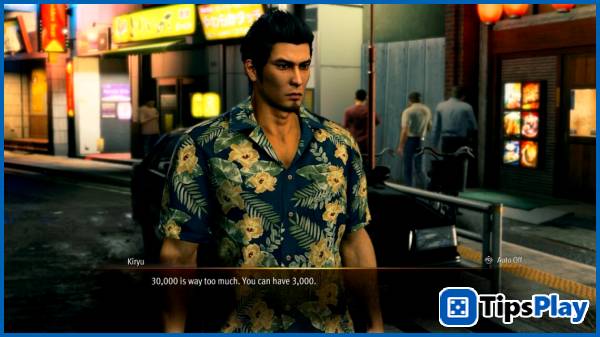
Next are the 'substories,' the side stories of the game. 'Substories' have always been a vital element of a game, revolving around the life and society as the game takes place. With Yakuza Kiwami 3 , the number of 'substories' was drastically reduced, from 119 to… 31. And most of what was cut were interesting 'substories,' such as 'Murder at Cafe Alps,' where Kiryu gets to use his intellect to solve a murder case.
Too many elements that gave the original Yakuza 3 its unique identity were carelessly cut from Yakuza Kiwami 3 , resulting in a 'poor' game content.
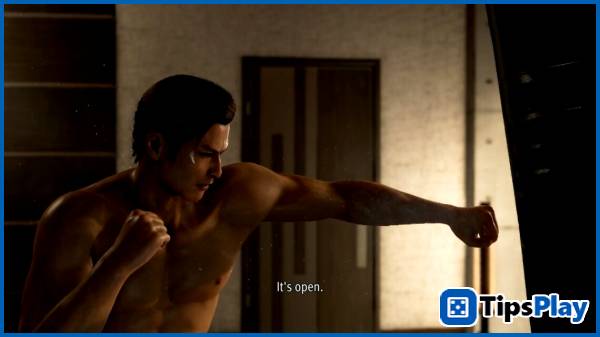
What a terrible ending!
With the new additions to the storyline, the writer truly appreciates the approach that Yakuza Kiwami 3 takes compared to the original. Several expanded details make the narrative clearer, and at times even give the impression that this is a more complete version in terms of content.
However, all that excitement almost completely vanished by the time it reached the ending. While I can't reveal the specifics, this ending felt silly and discordant, as if it deliberately interfered with the already complete ending of the original game, and directly clashed with the overall canon of the entire series.
If you're new to the Yakuza franchise , having only just experienced Yakuza 0 , Kiwami 1 , and Kiwami 2 , your reaction will most likely be: 'What just happened?' The handling of the climax lacks the necessary preparation, making the plot twist at the end abrupt and difficult to accept.
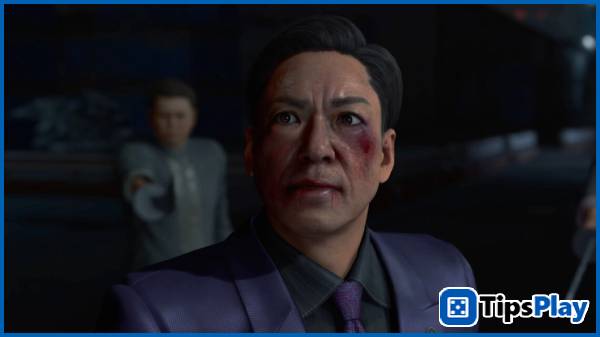
Even for those who have followed the franchise for years, the ending will undoubtedly be controversial. It diminishes the weight and influence left by some of the characters, while attempting to insert a new but unconvincing element that feels forced in an already tightly constructed story.
From the perspective of someone who played the original game, the biggest feeling that lingers is a 'lack of confidence' in the scriptwriting. It seems the game's writers no longer fully believe in the original storyline, and have tried to 'modify' and restructure it in a way they consider 'suitable for the present day'.
However, that adjustment overlooks the fact that the original ending to the story had already worked effectively and maintained continuity with the entire brand.
All the plot excitement of Yakuza Kiwami 3 almost completely disappears by the time it reaches the ending.
Update 19 March 2026
Micah Soto
Micah Soto is a creator of systematic processes encompassing the design, creation, testing, and maintenance of computer programs and applications. He transforms an idea or a set of user requirements into a functional software product that solves problems, automates tasks, or provides entertainment.