Yakuza 6: The Song of Life ? Game Review
Yakuza 6: The Song of Life – For over two decades, the Yakuza series (now known as Like a Dragon ) has maintained its unique character within the gaming industry.
Instead of chasing massive open-world models or focusing heavily on complex role-playing systems, this game series builds its identity through stories that are deeply rooted in everyday life, revolving around people and their relationships.
The Japanese underworld in Yakuza is not just a stage for violence and power, but also a place where concepts like honor, responsibility, and family are prioritized, creating emotional depth.
Released in 2018, Yakuza 6: The Song of Life marked a significant turning point for Ryu Ga Gotoku Studio. This was the first time the studio used its own developed engine – the Dragon Engine, which would be the primary tool for their future games, delivering sharp and beautiful graphics.
Unlike Yakuza 4 and Yakuza 5 , instead of spreading out multiple parallel storylines, Yakuza 6 chooses to tell a story with a clear focus, where every setting and character directly serves the overall theme. Every detail, however small, contributes to shaping the atmosphere and emotions, making the game world more cohesive and purposeful.
Of course, this is still the very familiar Yakuza : bloody street fights, intertwined gang conflicts, a host of fun mini-games, and hilarious moments – a hallmark of the series.
However, everything is set at a slower and more restrained pace. This calmness doesn't detract from the inherent character; on the contrary, it allows the story and the characters' emotions more space to settle, providing a different yet authentic Yakuza experience.
SUMMARY OF CONTENT
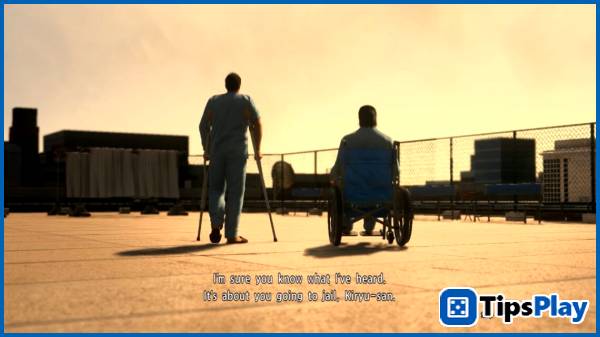
Following the events of the previous installment, Kazuma Kiryu once again finds himself entangled in legal troubles. While he could easily hire a lawyer to avoid prison, Kiryu chooses the opposite path. For him, facing the law again means a chance to close the chapter on his past and ultimately live a truly peaceful life.
Three years later, upon serving his prison sentence, Kiryu returned to Okinawa with a simple yet agonizing wish: to live peacefully with the family he cherished. However, as is often the case in the world of the Yakuza , that dream was quickly shattered by harsh reality.
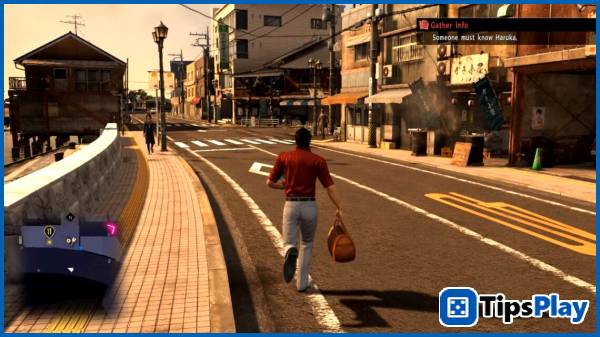
Haruka Sawamura – whom Kiryu considered his own daughter – mysteriously disappears while he is in prison. When Kiryu tracks her down, he finds Haruka in a coma following a mysterious accident, alongside an unknown infant. No one knows the baby's father, nor who is behind the accident that robbed Haruka of her consciousness. Faced with a multitude of unanswered questions, Kiryu is forced to begin his own investigation, following even the slightest clues.
From the turbulent Kamurocho, where underworld forces never truly rest, to Onomichi – a seemingly peaceful small port town harboring countless secrets – Kiryu's journey gradually unravels the intricate web of relationships between yakuza gangs, foreign powers, and seemingly unrelated individuals.
As he delved deeper, he realized that Haruka's tragedy was merely the tip of a much larger conspiracy, where past and present intertwined, and the price of the truth could far exceed anything he had ever imagined.
YOU WILL LIKE
An emotionally charged story.
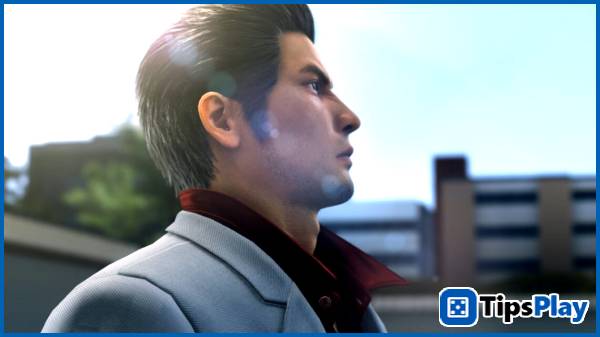
Yakuza 6: The Song of Life 's most outstanding strength lies in its emotionally rich story. With the Dragon Engine as its foundation, Ryu Ga Gotoku Studio was able to create more seamless and natural cutscenes, minimizing any sense of interruption between gameplay and storytelling.
Instead of relying too much on dialogue, the characters' emotions are conveyed through their eyes, gestures, and well-timed silences – small details that provide significant psychological depth, making dramatic situations more convincing and realistic.
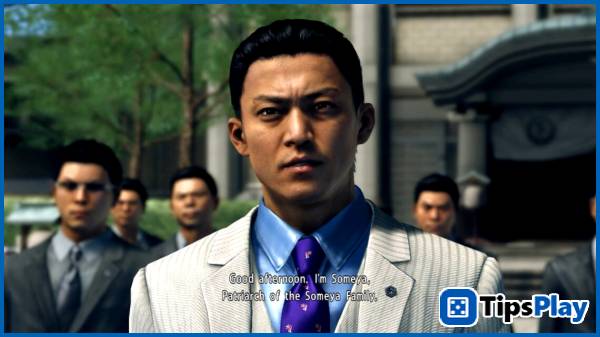
The plot of Yakuza 6: The Song of Life is elevated through its supporting characters and their interactions with Kiryu. Shun Oguri's portrayal of Someya is a notable highlight: a young, arrogant yakuza, full of internal conflict, both yearning for self-affirmation and torn between ambition and personal constraints.
Shun Oguri's performance gives Someya a very 'human' grit, making the character not simply a villain or antagonist, but a symbol of a lost generation of yakuza in a changing era.
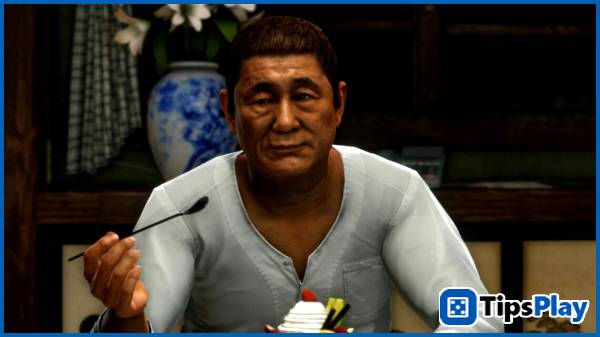
Meanwhile, Beat Takeshi, in the role of Hirose, brings a completely different dimension: calm, mature, and possessing many layers of meaning beneath his seemingly naive exterior. Every glance from Hirose exudes the feeling of a man carrying heavy secrets and responsibilities. Beat Takeshi's presence makes the segments involving Hirose's gang memorable, making the story of Yakuza 6: The Song of Life even more interesting.
The storyline of Yakuza 6: The Song of Life is taken to a new level through its supporting characters and how they interact with Kiryu.
Yakuza 6: The Song of Life takes players to a new location, Onomichi, a coastal town in Hiroshima Prefecture. This is not only a fresh setting to revitalize the experience, but also plays a crucial role in exploring the game's central theme: family, community, and relationships that transcend blood ties.
The people Kiryu encounters here – from local residents to members of the Hirose gang – are portrayed with surprising depth, giving a very real and relatable feel. The subdued atmosphere of Onomichi creates a stark contrast to the flamboyant Kamurocho, where yakuza are often depicted as dramatic and ostentatious forces.
It is also in this setting that the theme of family, particularly the responsibilities of fatherhood and the concept of 'the family we choose,' is naturally and convincingly developed. Kiryu's image is not simply that of an 'invincible' street legend, but rather that of a weary, wounded middle-aged man who is still willing to stand up and protect those he loves. The subplots revolving around life in Onomichi are therefore both heartwarming and poignant, leaving a lasting emotional impact and effectively supporting the main storyline.
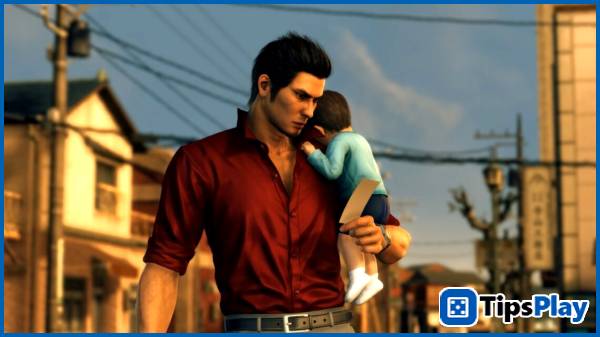
The narrative pace of Yakuza 6: The Song of Life doesn't rush players into intense climaxes. The game devotes ample time to everyday moments: Kiryu caring for his nephew, chatting with locals, quietly observing the tranquil rhythm of life in the port town.
It is these small, tranquil moments that form a solid emotional foundation, allowing players to fully feel the weight of tragedy and conflict when it truly erupts.
The world is more vibrant and seamless.
For the first time applying the Dragon Engine to a major part of the series, Ryu Ga Gotoku Studio has created a significant shift in how players interact with the world of Yakuza 6 : The Song of Life . The near-complete elimination of loading screens, from entering shops and restaurants to transitioning between combat states, helps maintain a continuous and natural pace of gameplay.
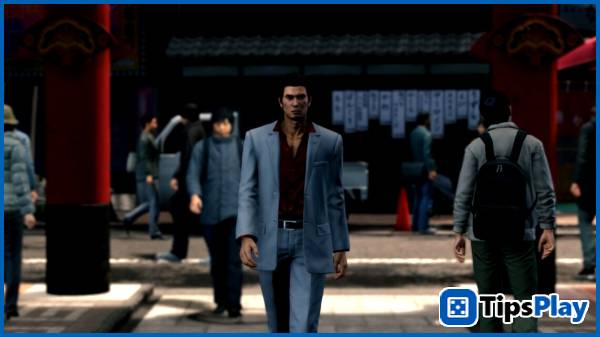
In terms of world-building, Kamurocho retains the characteristic crowded, chaotic atmosphere of a neighborhood that 'never sleeps,' where everything seems to be in constant motion.
Conversely, Onomichi presents a slower, more peaceful pace of life, creating a striking yet deliberate contrast that allows players to easily perceive the difference in atmosphere and emotion between the two locations. The winding slopes, the calm harbor, the small bars hidden in alleyways, and the residential areas nestled on the hillsides all contribute to a unique experience in Onomichi.
Alongside the main storyline, Yakuza 6: The Song of Life continues to uphold a tradition that has become the hallmark of the entire game series: the 'substory' system, where each story is a slice of life reflecting various aspects of contemporary Japanese society. There are the unfulfilled dreams of youth, the silent loneliness of adulthood, and the unseen sacrifices – small but emotionally rich stories that contribute to making the game world relatable and vibrant.
Compared to some previous installments, the number of side missions in Yakuza 6 : The Song of Life is somewhat more streamlined, but in return, the quality is significantly improved. The 'substories' are fully voice-acted and meticulously staged, like miniature versions of the main missions, giving each mission its own personality and unique character.
From seemingly absurd situations like Kiryu becoming the local mascot, to instances where he helps characters facing crucial life turning points, the side missions continue to provide a space for the Yakuza to showcase their charming, humorous, and down-to-earth personalities.
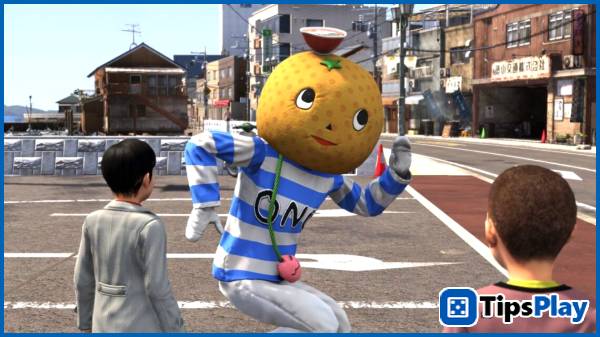
Alongside the main storyline, Yakuza 6 : The Song of Life continues to uphold a tradition that has become the hallmark of the entire game series: the 'substory' system, where each story is a slice of life reflecting various aspects of contemporary Japanese society.
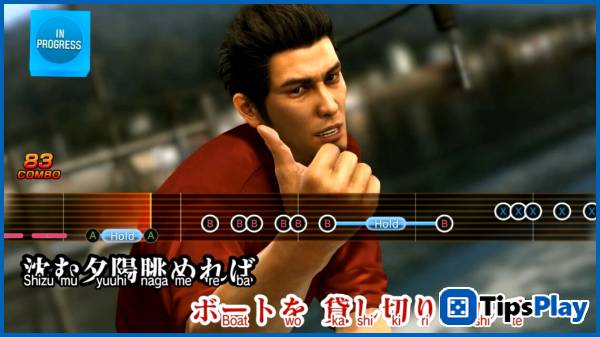
In addition, the mini-game system remains an indispensable "specialty." Kamurocho offers a range of familiar activities: karaoke, batting cage practice, gym workouts, or even playing Virtua Fighter 5 in the game centers. In contrast, Onomichi offers more distinctly local experiences, from deep-sea fishing and amateur baseball team participation to casual drinking sessions with the townspeople.
One notable new feature is the Troublr system – a collection of short, quick-response missions that react to events happening around Kiryu. Sometimes Kiryu will be called upon to rescue someone being robbed by gangsters, other times he'll have to buy medicine for the sick, or even find a bomb hidden by a terrorist in the city.
This mechanism makes the gameplay more flexible, while also reinforcing Kiryu's image as a 'local hero,' always there to intervene, help, and maintain order in the community he's a part of.
YOU WILL HATE
The combat system has been simplified.
Compared to Yakuza 0 (or Yakuza Kiwami ), the combat system in Yakuza 6 : The Song of Life can be considered a step backward in terms of mechanical depth. The removal of different fighting styles makes combat less dynamic and reduces tactical flexibility. Regular battles, especially against lower-level enemies, easily become repetitive and monotonous after a short time, as players no longer have much room to experiment with new approaches.
Heat Actions – an iconic feature associated with the 'Yakuza identity' – have also been significantly reduced in both quantity and creativity. Extreme Heat Mode offers a powerful, intense, and somewhat satisfying feeling during climactic moments, but in the long run, this mechanism is insufficient to compensate for the overall lack of variety in the combat system.
Furthermore, the physics engine of Dragon Engine sometimes creates uncontrollable 'ragdoll' situations, making collisions in large group battles chaotic and reducing the smoothness and precision that are crucial for close combat.
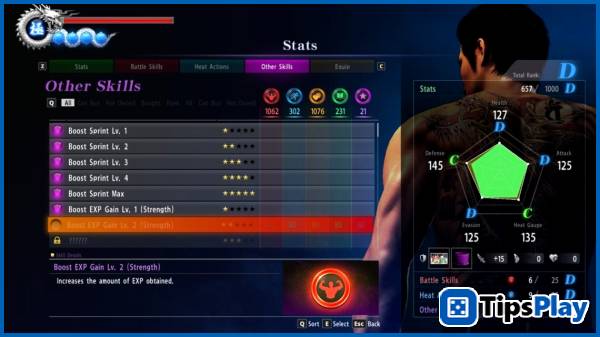
The character upgrade system also lacks real substance. Dividing EXP into many different categories is completely unnecessary. Furthermore, the number of upgrade skills is quite meaningless and lacks 'game-changing' upgrades or those that significantly alter gameplay.
Eliminating different fighting styles makes combat less flexible and less adaptable to tactical variations.
The supplementary content has been scaled down.
Yakuza 6 : The Song of Life 's increased focus on the main storyline comes at a certain cost in terms of the richness of its side content. Compared to previous installments, the number of side activities and missions has been streamlined, which might leave players who enjoy the feeling of 'wandering around doing all sorts of errands' in the Yakuza world feeling somewhat disappointed.
Although the quality of side quests has generally improved and become more well-developed, the limited number sometimes means the game world lacks the busyness and variety that long-time fans would expect.
Some 'experimental' activities, such as Troublr, can feel repetitive after a while, while the Clan Creator system, despite its interesting concept, lacks the depth to keep players engaged for the long term.
Overall, this isn't a major drawback, but it's a noticeable cutback for those accustomed to the richness of the series.
Yakuza 6 : The Song of Life 's increased focus on the main storyline comes at a certain cost in terms of the richness of its subplots.
Update 19 March 2026
David Pac
David Pac is a senior IT professional who designs the overall technical vision and structure of a project, transforming business requirements into viable software/system solutions.