Yakuza Kiwami 3: Dark Ties ? Game Review
Yakuza Kiwami 3: Dark Ties – Last September, when announcing Yakuza Kiwami 3 , RGG Studio also introduced a companion game, Yakuza Kiwami 3: Dark Ties (or simply Dark Ties ).
Dark Ties is positioned as a prequel game set between Kiwami 2 and Kiwami 3 , revolving around the story of Yoshitaka Mine, thebeloved main antagonist of Kiwami 3 .
The main purpose of Dark Ties is to expand on Mine's past and add depth to the relationship between Mine, Kanda, and the Tojo Pirates in general.
Despite being presented as a complete game, Dark Ties is actually a short story consisting of 3 chapters, making it closer to a standalone expansion.
Yet, with just three chapters, Dark Ties gave the writer a more memorable time than Yakuza Kiwami 3 .
SUMMARY OF CONTENT
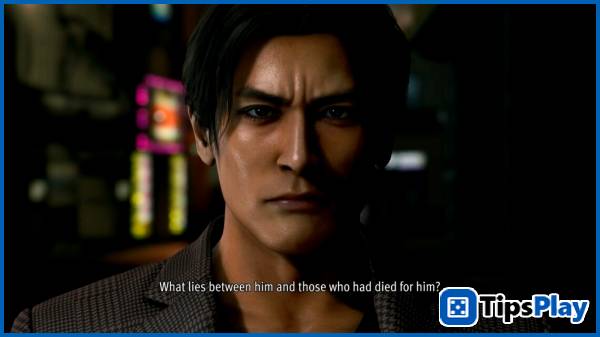
Set between Yakuza Kiwami 2 and Yakuza Kiwami 3 , Dark Ties centers on the journey of Yoshitaka Mine, an entrepreneur who owns a tech startup. After being ousted from his own board of directors for failing to pursue short-term profitable projects, Mine feels betrayed and loses faith in human connection.
After a night of heavy drinking in Kamurocho's red-light district, Mine inadvertently stumbles into a fierce clash between the Tojo gang and a rival gang. Witnessing Tojo members willing to sacrifice their lives, shielding their leader Daigo Dojima from bullets, Mine is astonished.
Why do the yakuza—the scum of society—have such fierce loyalty? What kind of person was Daigo Dojima that he inspired such absolute loyalty?
From there, Mine decided to join the yakuza world to find answers for himself. And the path he chose was to befriend Kanda – a mid-level member of the Nishikiyama family, part of the Tojo gang.
YOU WILL LIKE
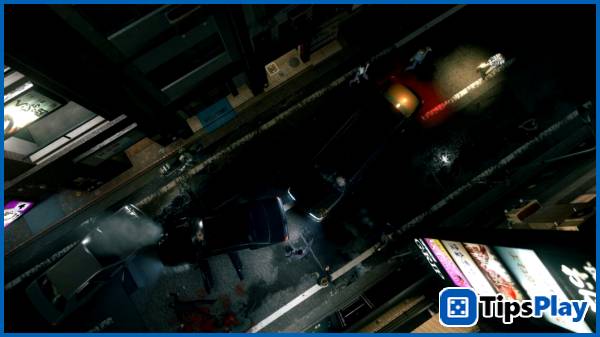
The plot is dramatic and well-crafted.
While Yakuza Kiwami 3 was controversial due to its inconsistent changes from the original, Dark Ties takes a middle ground: inheriting the limitations of Yakuza Kiwami 3 while clearly demonstrating a serious storytelling effort in its presentation and character development.
The most noticeable difference is the cutscene design – almost a 'day and night' contrast compared to the main game.
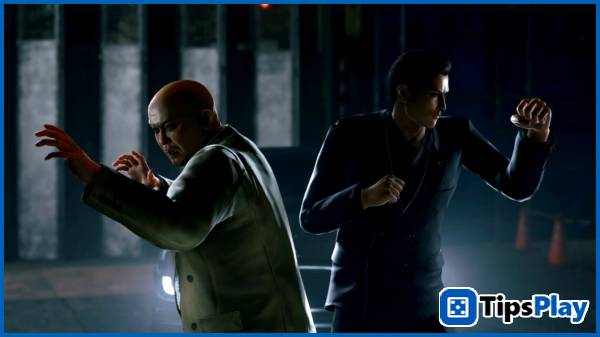
As entirely new content, Dark Ties isn't constrained by reusing animations from the PS3 era. The cutscenes are built from scratch, boasting a distinctly cinematic style with sophisticated camera angles, smooth editing, and dark, gangster-film-like lighting. In particular, the opening gunfight is one of the game's most impressive moments, both intense and full of cinematic rhythm.
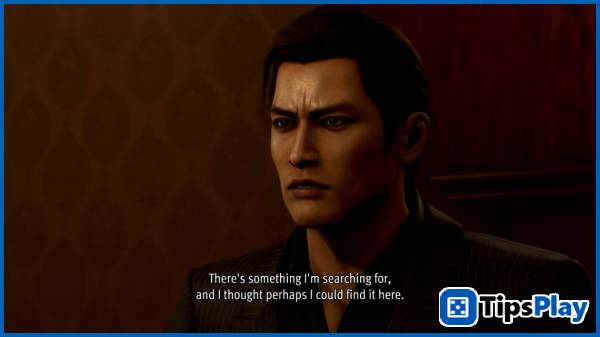
In terms of plot, Dark Ties doesn't attempt to fill every gap in the main storyline; instead, RGG Studio opts for a safe narrative approach, sticking to what's already been established to expand upon it. The premise isn't groundbreaking: a fallen businessman finds his way into the underworld. But the execution is effective, convincingly highlighting Mine's inner turmoil.
The most valuable aspect is that players always clearly sense Mine's true desire: he seeks genuine relationships, where human connection transcends monetary value.
Mine's character development is also meticulously crafted. Using a familiar narrative structure—the protagonist thinking about what they want and what they truly need—RGG Studio delivers a solid story about Mine's transformation, seamlessly connecting with the version of Mine in the main storyline.
What are the limitations that Dark Ties inherits? We'll discuss that at the end of the article.
The premise of Yakuza Kiwami 3: Dark Ties isn't groundbreaking: a fallen businessman finds his way into the underworld. But the execution is effective, convincingly highlighting Mine's inner turmoil.
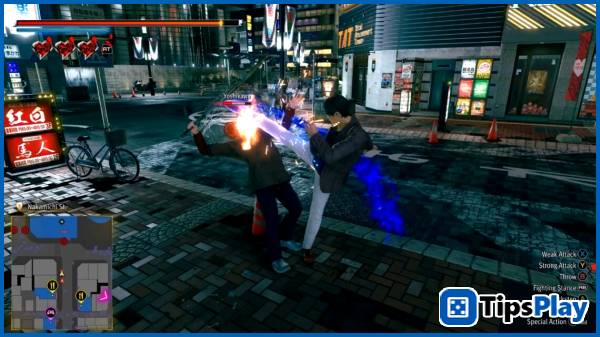
Mine's fighting style: speed over brute force!
Mine's fighting style is Shoot-Boxing, focusing on the fast, precise punches and kicks of modern combat martial arts. Compared to Kiryu – whose style is a blend of street fighting and traditional martial arts – Mine clearly demonstrates the more systematic and professional approach of modern martial arts in each movement.
One of the weaknesses in Yakuza Kiwami 3 's combat is the lack of impactful strikes, but with Mine, this is no longer a serious issue. Because his strengths lie in his speed of attack, agile target switching, and dodging abilities, the lack of 'weight' in the animation doesn't significantly detract from the combat experience.
In addition to his primary style, Mine also has a secondary state called 'Dark Awakening' – when he lets go of reason and unleashes his pent-up anger. When activated, Mine becomes a destructive force for a short time: his moves change completely, becoming more brutal and powerful, accompanied by new Heat Actions, distinctly different from his default state.
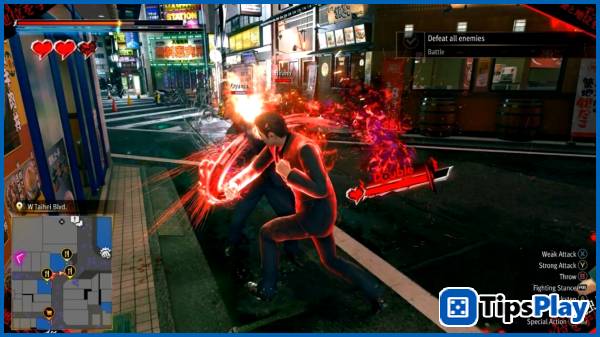
The distinct differences between the default shoot-boxing style and Dark Awakening also make boss fights a bit more fun. In the Kiwami 3 review , the author mentioned that the game's new boss mechanic – aura – has turned boss fights into a loop: 'use light attacks and dodge to slowly break the aura -> aura 'breaks', quickly unleash a combo -> aura regenerates, repeat step one'.
The Dark Awakening mechanic is most effective when the boss's aura is broken. The effectiveness of attacks in Dark Awakening mode increases as the boss weakens, giving Mine the feeling of, "Okay, I've been feinting long enough, now it's time to go berserk and counterattack."
Kiwami 3 's weakness lies in its lack of impactful attacks, but this isn't a major issue with Mine. Thanks to her fast attack speed, agile target switching, and good dodging, the lack of "weight" in her animation doesn't significantly impact the combat experience.
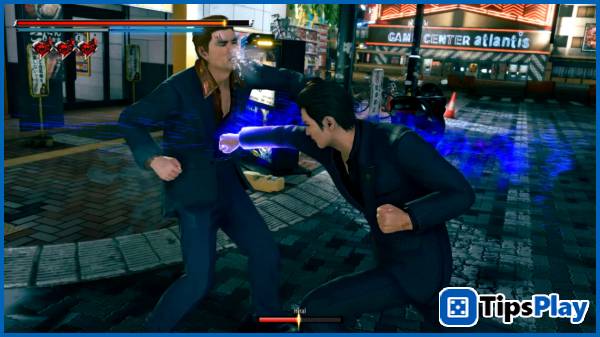
Mine's upgrade system is also more logically structured compared to Yakuza Kiwami 3. The game doesn't cut out essential basic techniques to make them skills that must be purchased. Instead, upgrades serve as supplementary tools, increasing combat depth rather than limiting it from the start.
And finally, there's the HEAT Action system. Mine doesn't have a lot of HEAT Actions, but the ones he does have are enough to keep players entertained throughout Dark Ties ' short journey . Mine's HEAT Action moves excel at showcasing impressive martial arts skills, but they're also undeniably brutal.
If there's one minor flaw in Mine's fighting system, it's that his first four combo sequences all end with a backflip. While this move is useful for creating distance to dodge attacks or setting up jumps over targets, its inclusion in four out of seven combo sequences is unnecessary.
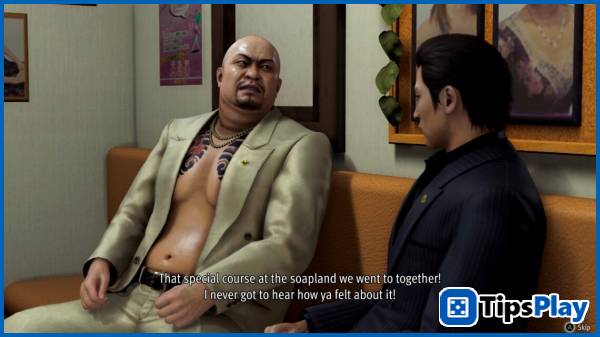
Kanda Rep and Bro Time – an interesting reversal!
The most notable side activity in Dark Ties is the Kanda Rep system – a series of missions that Mine must complete to enhance Kanda's reputation. If you've ever heard of real-life yakuza organizations using charity to polish their image and cover up their dark activities, this system is essentially a gamified version of that.
The tasks range from simple things like delivering food, water, and medicine to those in need; achieving high scores in bowling, karaoke, or winning toy claw machines for children; to 'substories' about the daily struggles of Kamurocho residents.
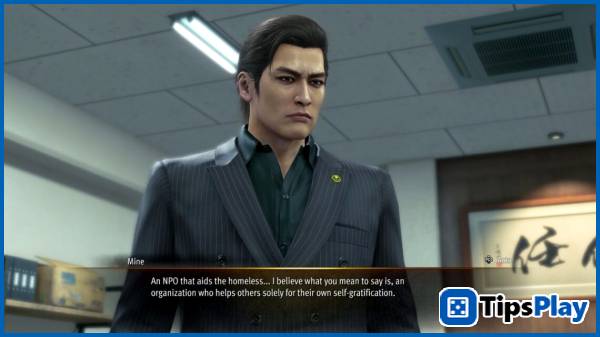
Regarding the 'substory,' while Kiryu acts out of genuine compassion, Mine's motives are entirely different. For example, in a 'substory' about a charity kitchen in need of support, Mine still helps – but he suspects the founder is only doing so for self-gratification, not out of true altruism. This suspicion creates a unique perspective, contrasting with Kiryu's.
Upon reaching certain fame milestones, players unlock 'Bro Time' – an interesting reversal of Drink Link from previous installments. While Drink Link aimed to build a bond between Kiryu or Ichiban and the supporting characters, Bro Time gradually reveals Mine's accumulated hatred for Kanda. The further players play, the more they realize that Mine's eventual demise of Kanda in the main game is only a matter of time.
Regarding the substory, if Kiryu acted out of genuine compassion, Mine's motives were entirely different.
YOU WILL HATE
What a terrible ending!
Influenced by the new story direction of Yakuza Kiwami 3 , the ending of Dark Ties left the writer feeling disappointed.
The shift in narrative direction has made Mine's character development and journey feel absurd. The writer's feeling upon seeing the ending of Dark Ties is one of discomfort, as it is a completely unnecessary change.
And for gamers who haven't played the original Yakuza 3 , the ending of Dark Ties will likely once again leave them confused, wondering, " Who is this? What does this line mean? "
Overall, the story of Yakuza Kiwami 3: Dark Ties is a relatively complete experience for a small free expansion, except for the ending.
The story of Yakuza Kiwami 3: Dark Ties is a relatively complete experience, except for the ending.
Update 19 March 2026
Micah Soto
Micah Soto is a creator of systematic processes encompassing the design, creation, testing, and maintenance of computer programs and applications. He transforms an idea or a set of user requirements into a functional software product that solves problems, automates tasks, or provides entertainment.