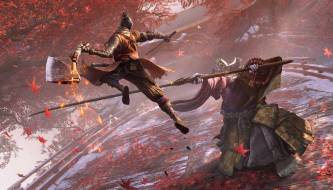
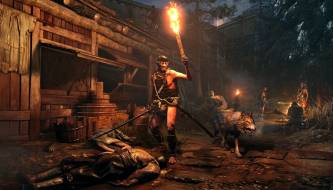
Sekiro: Shadows Die Twice - Death isn't the end, death just lets gamers experience it... a second time.
I'm sure that any gamer who has been lucky enough to try From Software 's new action RPG , Sekiro: Shadows Die Twice , will agree that compared to other games on the market today, Sekiro is incredibly difficult. Even if you're a veteran with extensive experience playing the Souls series, the same "creator" of Sekiro, don't expect to use that experience to conquer this super-difficult game. It's neither "Japanese Dark Souls" nor a "NIOH remake," so players must once again adapt to a new pace and develop their own reasoning skills.
?
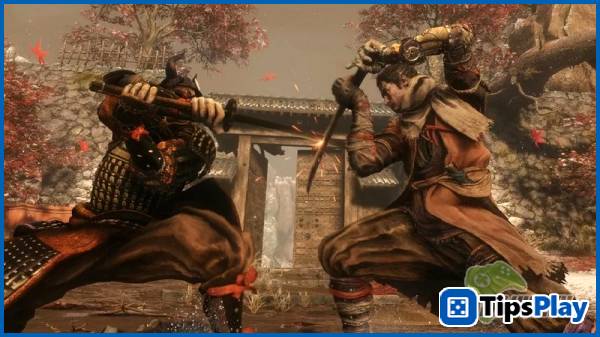
In terms of gameplay: The core of Sekiro's combat system lies in two new concepts: Posture and Deathblow. Because these are battles between samurai, the line between victory and defeat is as thin as a sheet of paper, making balance in stance during combat crucial. The Posture bar displays the level of balance between your stance and your opponent's. When you attack and parry with your sword, the enemy's Posture bar increases. When this bar is full, it means the enemy has lost the ability to parry. At that point, regardless of their remaining health, you should charge in and deliver a Deathblow to finish them off. However, filling the enemy's Posture bar isn't easy; simply attacking or defending isn't enough. You must also learn how to choose the right moment. By anticipating an enemy's attack and parrying with your sword, your opponent will be knocked back a short distance, creating the perfect opportunity for you to counterattack and increase their Posture bar.
 ?
?
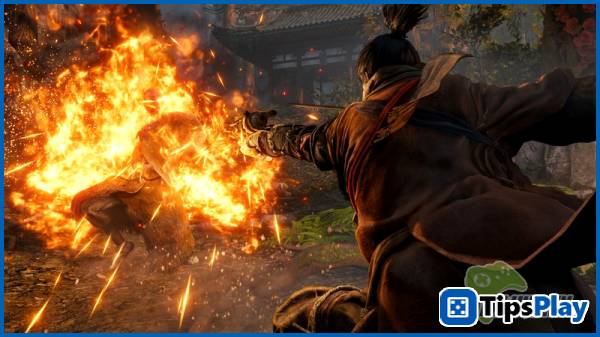
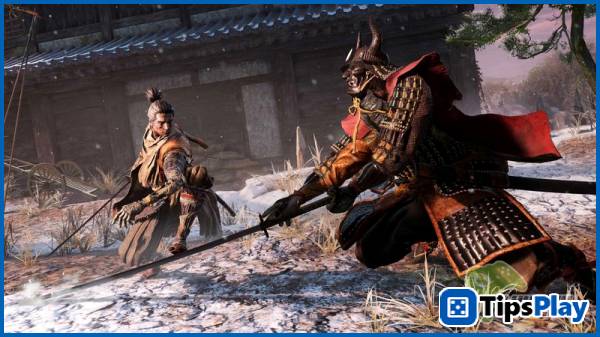
It's worth noting that you can only defeat powerful enemies and bosses using Deathblow, making HP a secondary metric. Essentially, encounters in Sekiro: Shadows Die Twice are a race to see who fills their Posture bar first. In terms of pace, Sekiro is incredibly fast, surpassing even Dark Souls or Bloodborne . The sparks that fly when two swords clash, the realistic feel and sound of metal, contribute to the game's realistic recreation of the intense, breathtaking battles of ancient samurai. Defense, dodging, jumping, posture, stealth… Sekiro offers countless ways to attack enemies and protect yourself, but of course, nothing is foolproof. Countering the enemy's blades and relentless attacks requires corresponding countermeasures. But with this posture-based combat system, the game actually encourages players to use high-risk, high-reward moves that require skillful maneuvers like posture and stealth. If successful, the enemy's posture bar will fill up at a dizzying speed, but if you fail, 'DEATH' will appear on your screen. Weapons and Bosses: In addition to the multi-functional robotic arm, players are equipped with more than 10 different Ninja weapons such as throwing stars, axes, flamethrowers, cannons, etc. In specific situations, they can unleash incredibly powerful special effects. For example, throwing stars can partially interrupt an enemy's moves, and cannons can frighten beast-type enemies. After enhancing weapons or learning Ninja skills, the combination of Ninja weapon attacks and regular attacks can create more practical or flashy moves. This gives gamers a rich space to develop their strategies. To be honest, the number of bosses in Seriko is limited, but in return, each boss battle is meticulously crafted. Every movement, move, style, and rhythm is carefully designed. As mentioned, this game is very difficult, so it's not surprising if you die dozens, even hundreds of times, and spend hours just to defeat a normal boss. Therefore, even without many bosses, players won't feel bored.
?
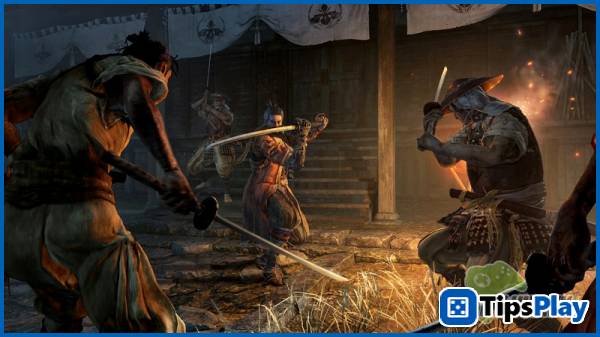
Death: The concept of death in the game is quite flexible; death isn't simply death, but also means punishment, or sometimes it's a delaying tactic. Although after dying, players face the penalty of losing half their experience and money, which cannot be recovered, the game also allows players to revive once before dying completely. Taking advantage of this, you can immediately attack unsuspecting monsters or seize the opportunity to escape. Character Development: Sekiro doesn't have a detailed character development system; it's simply shown through unlocking passive and main skills. Some skills help players recover a certain amount of health after a Deathblow, while others help players enhance their moves. In short, after overcoming the initial difficult stage, the later stages will be easier. Some drawbacks: Perhaps due to Sekiro: Shadows Die Twice's emphasis on three-dimensional space, the terrain is often uneven and undulating. While this gives it a unique style, the developers don't seem to have handled the blind spots in some areas very well. Especially in intense battles where players struggle against enemies, they risk getting stuck in blind spots. Their view is frequently obstructed by obstacles, missing good opportunities to counterattack. Sekiro: Shadows Die Twice runs quite smoothly on PS4, even better than Bloodborne and Dark Souls 3; however, it still suffers from lag when there are too many visual effects running simultaneously. Compared to the recently released masterpiece Devil May Cry 5, which can run smoothly at 4K graphics and 60 fps on PS4 Pro, Sekiro seems to be at a disadvantage. If you have high demands regarding game smoothness, then a PC would probably be the better choice.
 ?
?
Upon its release, From Software's latest masterpiece received very high ratings from reputable websites worldwide: IGN: 9.5/10, GameSpot: 9/10, Game Informer: 9/10, PlayStation Lifestyle: 9.5/10… This also confirms the excellent quality of Sekiro, even though at times it's so difficult that gamers want to smash their consoles and quit the game. Sekiro: Shadows Die Twice was officially released on March 22nd on PS4, Xbox One, and PC .
Update 24 March 2026
David Pac
David Pac is a senior IT professional who designs the overall technical vision and structure of a project, transforming business requirements into viable software/system solutions.