ASUS TUF Gaming F15 vs Lenovo LOQ: Which is the best choice for gamers and versatile users? ? Technology
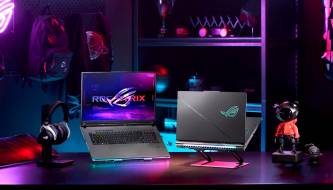
The gaming laptop segment around 25 million VND is a fiercely competitive arena with a host of attractive options. Among them, the ASUS TUF Gaming F15 from ASUS and the Lenovo LOQ 15IRX9 from Lenovo stand out, both featuring RTX 4050 GPUs and 16GB of RAM, ensuring powerful performance. However, beyond its specifications, the ASUS TUF Gaming F15 excels in other aspects such as durable design, efficient cooling, and a more comprehensive user experience, making it a compelling choice in this segment.
Optimized design for users on the go.
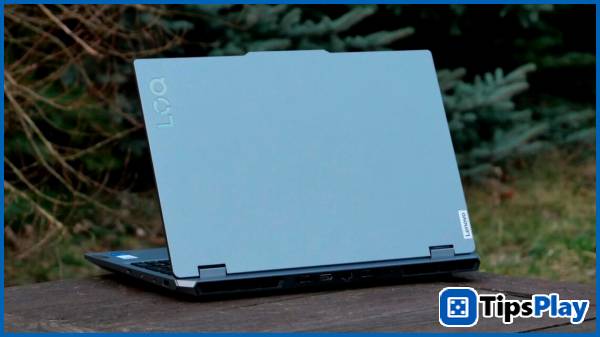
In terms of design, the Lenovo LOQ has a protruding rear end – a characteristic design of Lenovo gaming laptops to optimize space for additional ports at the back and minimize cable management. Its appearance is simple and modern, without many gaming features, but it is quite heavy.
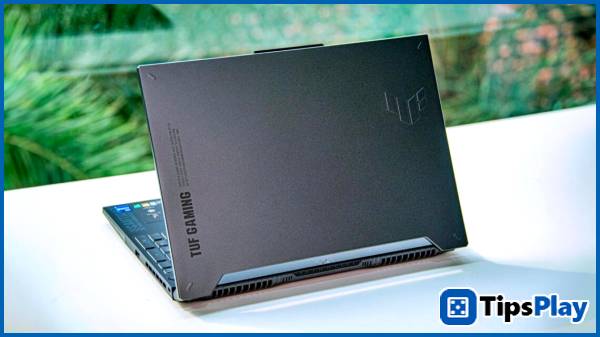
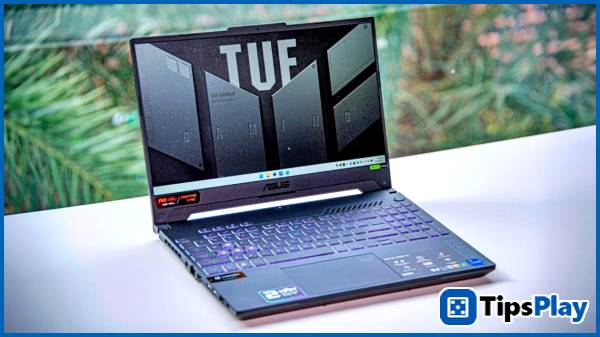
In contrast, the ASUS TUF Gaming F15 boasts a traditional laptop design to optimize size and weight. Compared to the Lenovo LOQ, the ASUS TUF Gaming F15 weighs only 2.2KG and is smaller, offering lightness and portability. At the same time, its robust, modern, and somewhat gaming-oriented feel is evident in the embossed TUF logo and some stylized accents on the device.
In terms of durability, both products meet the US military durability standard MIL-STD-810H, capable of withstanding impacts and harsh conditions. However, the ASUS TUF Gaming F15 's metal lid feels more robust than the Lenovo LOQ's.
Configuration specifications
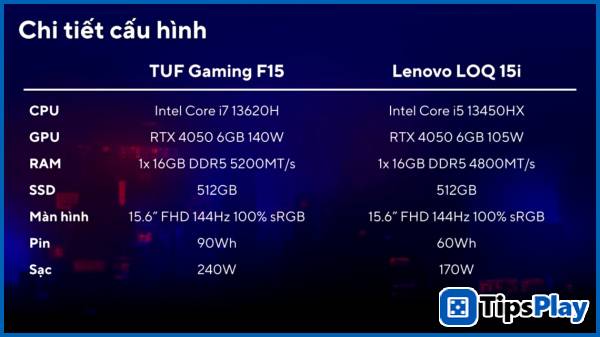
In terms of specifications, the ASUS TUF Gaming F15 features an Intel Core i7 13620H processor and an RTX 4050 140W graphics card, while the Lenovo LOQ will have an i5-13450HX processor and an RTX 4050 105W graphics card. Both will still be equipped with 16GB of single-channel RAM, a high-speed 512GB SSD, and a 144Hz FHD IPS display with 100% sRGB color coverage.
Priced above 25 million VND, both are equipped with top-of-the-line configurations and feature beautiful screens suitable for image editing and entertainment. The most obvious difference remains the CPU, with the i7 13620H on the TUF Gaming F15 and the i5 13450HX on the Lenovo LOQ, along with battery capacity and the power of the included charger.
Powerful performance, capable of maintaining stability over the long term.
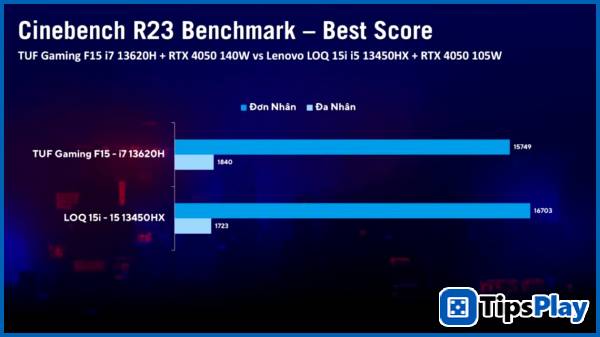
Considering the hardware alone: ??Both the Intel Core i7 13620H and Intel Core i5 13450HX CPUs offer powerful performance in the mid-range gaming laptop segment. With the same number of cores and threads, but thanks to higher clock speeds and L3 cache, the i7 13620H has an advantage in single-core performance and gaming tasks. Conversely, the 13450HX, with its significantly higher TDP, offers superior multi-core performance, benefiting CPU rendering tasks.
At the same time, when comparing rendering stability, both the ASUS TUF Gaming F15 and the Lenovo LOQ maintained a stable 90W TDP over extended periods, demonstrating their ability to optimize temperature and maintain performance over time.
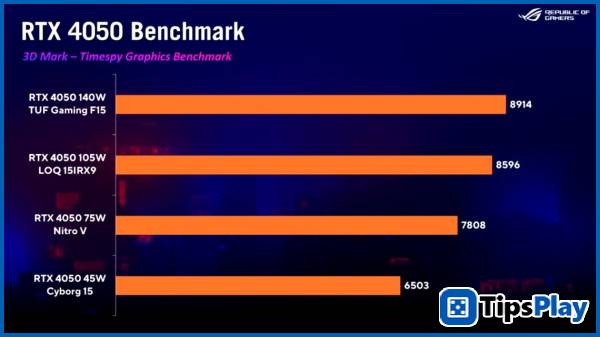
In terms of GPU, the ASUS TUF Gaming F15 is designed to run the RTX 4050 with a TGP of 140W, the highest among all gaming laptops in its segment. While the Lenovo LOQ has a TGP of 105W, theoretically the ASUS TUF Gaming F15 has better GPU performance. In practice, the Timespy Graphics test showed the ASUS TUF Gaming F15 performed better than the Lenovo LOQ, demonstrating the strongest performance in its segment.
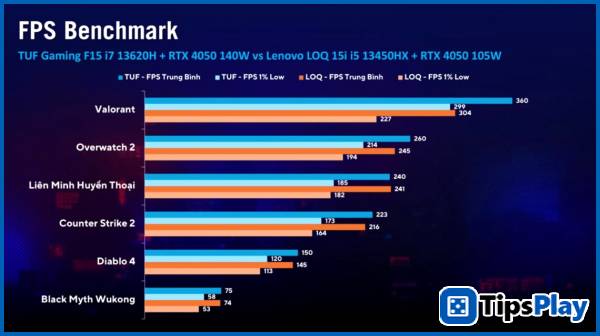
In actual gameplay, both laptops achieved similar FPS levels and adequately met current gaming needs, but the ASUS TUF Gaming F15 was slightly more stable, as evidenced by its better average FPS and 1% Low FPS. This suggests that, despite using the same GPU, the combination of a CPU with better single-core performance and a GPU with a 140W TGP allows the ASUS TUF Gaming F15 to deliver better FPS compared to the Lenovo LOQ.
When playing games or rendering heavy tasks, both laptops' fans produce a lot of noise. The Lenovo LOQ is slightly quieter thanks to its new HyperCooling design, with all the vents directed to the back. Of course, you'll still need to wear headphones to minimize noise while gaming.
Longer battery life
Besides design, battery life is also a key consideration when you need to take your laptop outside. With its 90Wh battery, the ASUS TUF Gaming F15 allows you to work and play all day without interruption – something the Lenovo LOQ's 60Wh battery can hardly match.
Along with being equipped with an H-series CPU instead of the HX-Series found in the Lenovo LOQ, the ASUS TUF Gaming F15 can offer significantly longer battery life for current office and web browsing needs.
Summary
With the advantages mentioned above, both can meet the current needs of users, capable of playing high-performance esports and AAA games well, and are suitable for handling heavy tasks for extended periods. However, in terms of gaming performance, the ASUS TUF Gaming F15 has a slight advantage by prioritizing single-core CPU performance along with a 140W GPU, resulting in higher and more stable FPS compared to the Lenovo LOQ. Therefore, for those who truly need low latency and stable performance, the ASUS TUF Gaming F15 will be a better fit.
Besides performance, both laptops boast modern designs and good build quality for the mainstream gaming laptop segment, complete connectivity options, and attractive displays. However, the Lenovo LOQ is a gaming laptop more suitable for those who prefer a modern, office-oriented look and optimized cable management for connecting peripherals without excessive movement.
In contrast, the ASUS TUF Gaming F15 boasts an optimized weight and long battery life, combined with powerful performance, making it a well-rounded machine for those who need portability alongside top-notch gaming capabilities.
tipsplay.net will bring you the latest news in the coming time.
Update 19 March 2026
Jessica Tanner
Jessica Tanner is a Technical Analyst who serves as a crucial link between an organization's business needs and its information technology (IT) systems. She specializes in evaluating, designing, implementing, and maintaining software, hardware, and network systems to optimize business processes.