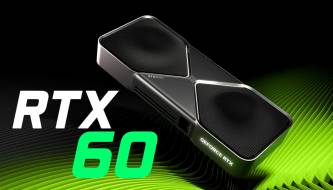
Rumors are circulating about the GeForce RTX 60 based on the Rubin architecture, but the specifications are still unreliable.
Despite remaining uncertainties, initial rumors suggest Nvidia may continue its GeForce release cycle of approximately every two years.
Leaked information about Nvidia's GeForce RTX 60 series graphics cards based on the Rubin architecture is spreading rapidly on social media and YouTube, attracting significant attention from the tech community. However, many reputable sources warn that the current specifications are speculative and do not reflect Nvidia's official plans.
According to VideoCardz, the Rubin GPU for gaming is still under development and does not yet have complete specifications. Nvidia is currently focusing heavily on AI hardware, so it hasn't officially named the new generation GeForce cards with SKUs, only using internal board codes. Therefore, names like RTX 6090, RTX 6080, or RTX 6070 are essentially just temporary names used by the community.

The source also indicated that GPU clock speeds, chip configurations, and performance are still not finalized. Even Rubin's GeForce chips are said to be in an incomplete design, so the detailed specifications circulating online are largely based on unverified leaked data. More reliable information may only emerge when reputable leakers like Kopite7kimi begin publishing independently verifiable data.
Rubin could continue Nvidia's two-year GPU launch cycle.
Despite remaining uncertainties, initial rumors suggest Nvidia may continue its GeForce release cycle of approximately every two years. The RTX 60 series will most likely utilize the Rubin architecture, which originates from the company's AI hardware platform.
Regarding the manufacturing process, Rubin's gaming GPUs are predicted to use TSMC's 3nm FinFET process instead of technology below 2nm. This is seen as a reasonable choice to balance performance and cost, similar to how Nvidia customized its 5nm process into Nvidia 4N in previous generations.
Leaks also mention the GR20x chip code, with the GR202 being the highest-end version. The GPU clock speed is expected to be in the range of 2–3 GHz, only a slight increase compared to the Blackwell architecture, suggesting Nvidia may be focusing on optimizing the architecture and overall performance rather than racing for higher clock speeds.
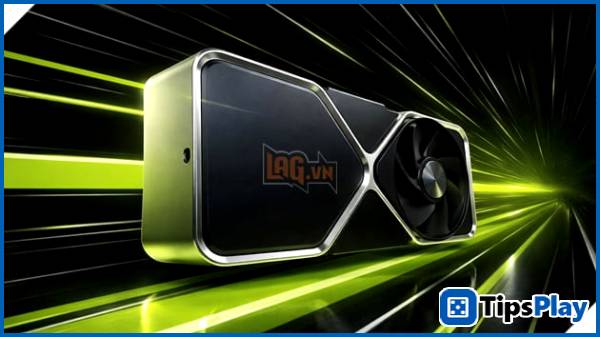
Tensor Core and Ray Tracing are expected to receive significant upgrades.
One of Rubin's most notable features is its technological upgrades. The next-generation GPUs may be equipped with 6th-generation Tensor Cores and 5th-generation RT Cores, promising significant improvements in AI processing and ray tracing capabilities.
The new Tensor Core is expected to improve neural rendering efficiency, paving the way for better DLSS 5 performance and potentially becoming more widespread across GPU segments, rather than being limited to the high-end. Meanwhile, the new generation RT Core is rumored to double ray tracing performance compared to the RTX 50 series.
Conversely, traditional rasterization performance is projected to increase by only about 30–35%. This improvement is primarily driven by the 3nm process, higher memory bandwidth, and architectural refinements, rather than a significant increase in chip size.
GDDR7 memory could be a major upgrade.
The RTX 60 series is expected to feature significant changes in memory configuration. The RTX 6090 (GR202) may utilize a 512-bit GDDR7 bus and 32GB of VRAM, offering higher bandwidth thanks to the new memory speeds.
The RTX 6080 is rumored to have a 320-bit GDDR7 bus and 20GB of VRAM, offering at least a 25% increase in bandwidth compared to the RTX 5080. Meanwhile, the RTX 6070 may utilize a 256-bit GDDR7 bus and 16GB of VRAM, providing significantly higher bandwidth than its predecessor.
Overall, the Rubin architecture is still in its very early stages and has not been officially confirmed by Nvidia. The current information is mostly for reference, but it still shows a clear direction: focusing on AI, ray tracing, and DLSS, while improving graphics performance in a more stable and practical way.
Update 01 April 2026
Marvin Fry
Marvin Fry is a game analyst who serves as a crucial link between data and game design, using in-game metrics and player behavior data to improve game quality, engagement, and monetization.