Valve develops a VRAM patch for Linux to improve gaming performance on 8GB GPUs.
The core problem lies in how Linux manages resources: the system sometimes fails to distinguish between games running in priority mode and background applications such as browsers or chat applications.
In an effort to optimize the gaming experience on open-source operating systems, Natalie Vock, an engineer on Valve's Linux GPU driver team, has just unveiled a groundbreaking solution. This is seen as a "lifesaver" for gamers who own graphics cards with modest VRAM capacity (8GB), which often experience memory overflow and performance drops when running demanding games.

The core problem lies in Linux's resource management: the system sometimes fails to distinguish between games running in priority mode and background applications such as browsers or chat applications. When video memory (VRAM) is full, game data is pushed to GTT (system RAM) via PCIe. Because system RAM is significantly slower than dedicated VRAM, users will immediately experience stuttering and spikes in frame rates.
Vock's solution is a set of kernel patches combined with two tools, dmemcg-booster and plasma-foreground-booster. This mechanism allows the system (especially the KDE Plasma environment) to accurately identify the active full-screen application, granting absolute priority to high-speed local memory while pushing less critical tasks down to system RAM.
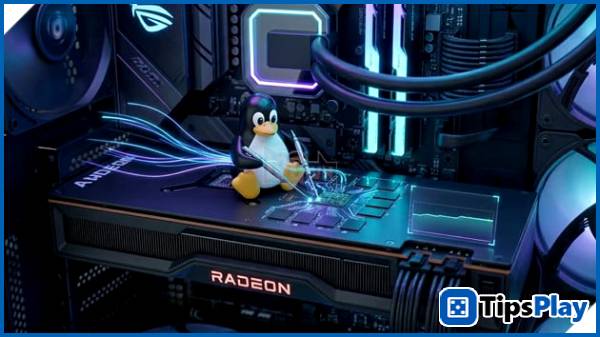
Experimental results on the game Cyberpunk 2077 with an 8GB GPU showed a clear improvement: The game's actual VRAM usage increased from 6GB to nearly 7.4GB, while the amount of data pushed to system RAM decreased sharply from 1.37GB to just 650MB (a reduction of about 53%). This resulted in significantly more stable and smoother gameplay by maximizing the graphics card's bandwidth.
Currently, these patches target AMD's open-source graphics library, but also promise to benefit users of Intel Xe GPUs and Nvidia (via the open-source nouveau driver). Gamers can experience this feature early on CachyOS with KDE Plasma from version 7.0rc7-2, or use the latest versions of Gamescope to optimize performance for their machines.
Update 15 April 2026
Micah Soto
Micah Soto is a creator of systematic processes encompassing the design, creation, testing, and maintenance of computer programs and applications. He transforms an idea or a set of user requirements into a functional software product that solves problems, automates tasks, or provides entertainment.