CHERRY MX-LP 2.1 Compact Wireless
CHERRY MX-LP 2.1 Compact Wireless – As users increasingly value flexibility when moving between different tasks, convenience and compactness are becoming seemingly indispensable trends in technology products.
Typically, wireless mice have long been at the forefront of compactness, and more recently, headphones have been becoming increasingly streamlined, followed by keyboards.
However, creating a mechanical keyboard that's good enough for gaming, yet compact enough for portability while maintaining connectivity flexibility, remains a challenge that few manufacturers have been able to overcome.
With support from Phong Cach Xanh, tipsplay.net had the opportunity to test the CHERRY MX-LP 2.1 Compact Wireless , a compact wireless mechanical keyboard from the giant Cherry, using the relatively new Cherry MX Low-Profile Speed ??mechanical switches.
Let's explore the strengths and weaknesses of this keyboard model!
You will like it
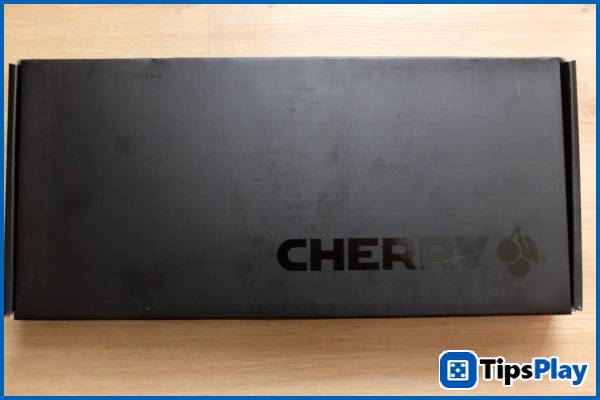
CHERRY MX-LP 2.1 Compact Wireless – Simple and Stable
Having already become a household name in the mechanical keyboard market, Cherry doesn't seem to focus heavily on product promotion. Instead, they've equipped the CHERRY MX-LP 2.1 Compact Wireless's packaging with an extremely minimalist design, using a predominantly black color scheme with a subtly embossed logo, as if to evoke a sense of mystery for the buyer to discover for themselves.
There is no list of features, and no product photos either.
From a distance, you probably wouldn't even realize this is the box for Cherry's newly released low-profile mechanical keyboard.
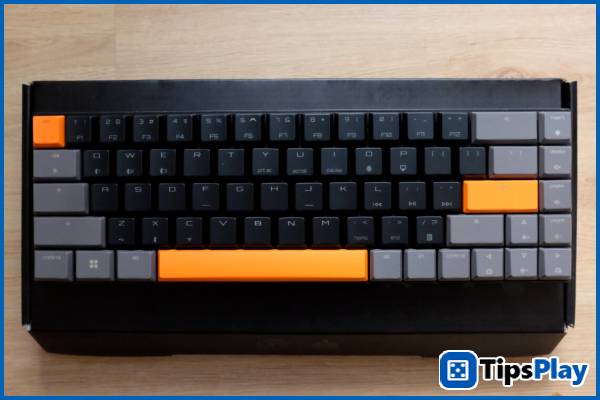
Upon unboxing and hands-on experience, the first surprising detail is undoubtedly the keyboard's slim and lightweight design. The CHERRY MX-LP 2.1 Compact Wireless measures approximately 35mm in thickness and weighs just under 800g – nearly half the weight of the full-size Corsair K70 Max keyboard at 1.4kg.
Despite its slim and lightweight design, the keyboard maintains a high level of build quality and sturdiness, offering great versatility whether for office work or gaming.
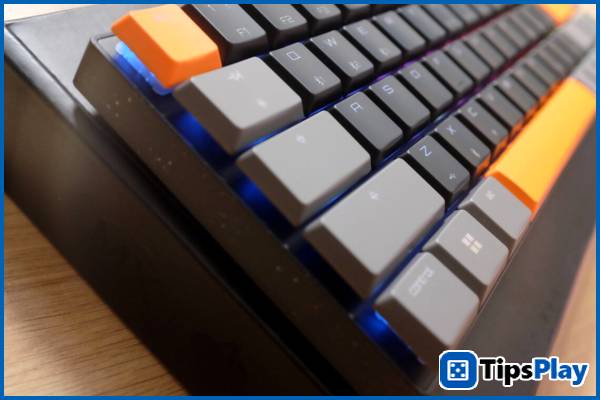
When it comes to design, at first glance, the highlight of the CHERRY MX-LP 2.1 Compact Wireless is definitely the keycaps, finished in different colors to give it a more youthful look. The Space, Escape, and Enter keys are painted a striking orange, while the 'meta' keys like Control, Shift, and Tab are painted light gray, combined with the dark gray alphanumeric keys.
In the white version of the keyboard, the Space, Escape, and Enter keys stand out even more with their bright red color, while the 'meta' keys are painted a lighter shade of blue and the letter and number keys are white.
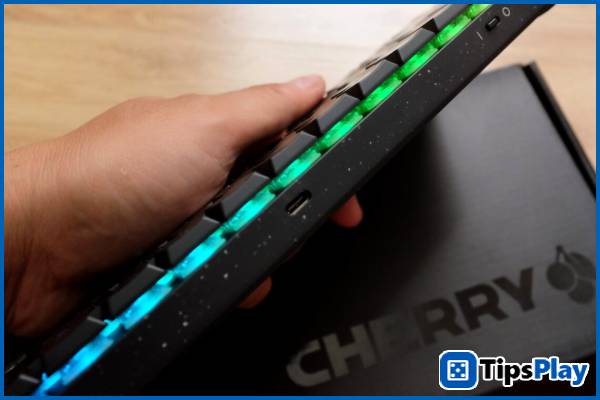
The frame design of the CHERRY MX-LP 2.1 Compact Wireless is also more unique and innovative compared to other keyboards on the market, with a paint finish featuring 'dots' like a cluster of stars, instead of the common black/white paint.
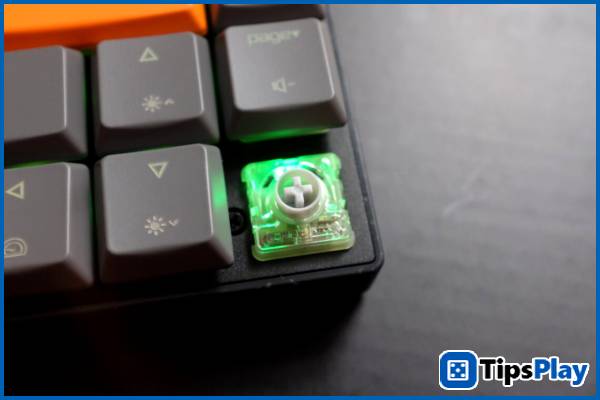
Although known for its widely used Cherry MX mechanical switches in gaming keyboards, Cherry has utilized the Cherry MX Low-Profile Speed ??switch in the CHERRY MX-LP 2.1 Compact Wireless to achieve the slim and lightweight design of a 'low-profile' keyboard while still providing the sufficiently 'deep' typing feel of a conventional mechanical switch.
Compared to traditional Cherry MX Speed ??mechanical switches, Cherry MX Low-Profile Speed ??switches are still linear switches for speed enthusiasts, but are more sensitive with an actuation point of approximately 1.2mm compared to 2mm and a travel distance of 3.2mm compared to 4mm.
Furthermore, low-profile switches still produce a sound that isn't too loud or unpleasant when typing, making them a relatively good choice for office and public environments.
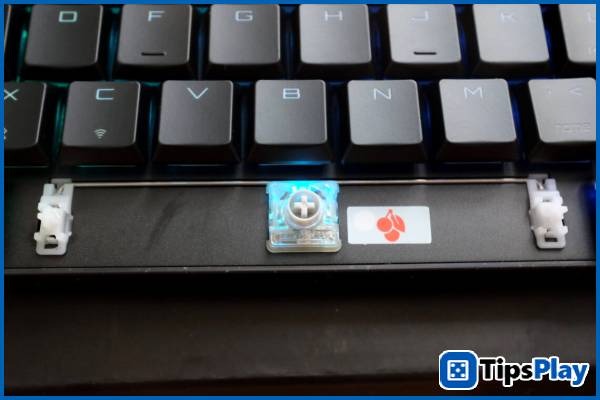
With its design and features optimized for versatility, the CHERRY MX-LP 2.1 Compact Wireless can also be used with most devices via a variety of connection options available on the keyboard.
For gaming, speed and low latency are essential, and this keyboard model features wireless USB connectivity with a 2.4 GHz mode for sub-1ms latency. For multi-device connectivity, the keyboard also utilizes Bluetooth 5.2 to switch between up to three devices, from PCs and laptops to phones and tablets.
Furthermore, the USB-C port on the keyboard allows for simultaneous charging and use when wireless connections are not being used.
In addition, despite its relatively limited 65% layout, Cherry has equipped it with a fairly complete set of function keys, such as volume up and down, 'hidden' under the main keys via the Fn function button.
You will hate it.
CHERRY MX-LP 2.1 Compact Wireless – Not ideal for gamers
Although aimed at gamers, the CHERRY MX-LP 2.1 Compact Wireless could be said to be not entirely suitable for gamers.
While the Cherry MX Low-Profile Speed ??switch offers a 'refined' typing feel similar to the Cherry MX Speed, its low key travel and actuation point can be considered a 'downside' as it can be more difficult to control in games requiring a lot of movement, such as Apex Legends and Rainbow Six: Siege .
Furthermore, the CHERRY MX-LP 2.1 Compact Wireless doesn't come with many accessories, as the box only includes a USB-A to USB-C cable and a wireless USB dongle. This could be considered a missed opportunity for Cherry, who focused on the keyboard's versatility; accessories like a carrying case might have been more appealing to users.
In addition, despite its good build quality, the CHERRY MX-LP 2.1 Compact Wireless is made entirely of plastic with some design flaws. For example, the height and tilt of the keyboard are completely fixed with four rubber feet, and there is no place for users to store the USB dongle when not in use.
REFERENCE PRICE
3,410,000 VND
Update 19 March 2026
Jessica Tanner
Jessica Tanner is a Technical Analyst who serves as a crucial link between an organization's business needs and its information technology (IT) systems. She specializes in evaluating, designing, implementing, and maintaining software, hardware, and network systems to optimize business processes.