Battlefield 6 Reveals Upcoming Content and Key Changes for the Future
EA and Battlefield Studios have begun setting expectations for fans as they head into Season 2 of Battlefield 6, with upcoming content and other notable changes.
Content update plan for Battlefield 6
Following its explosive launch last year, Battlefield Studios has seen a decline in player numbers, along with a host of problems and frustrations. Despite the bumpy road, Battlefield Studios continues to push the game forward, with the Season 2 update playing a crucial role in turning things around. While the new content has received positive feedback from players, the past month has been more challenging than expected as Battlefield Studios' studios have faced a wave of layoffs in what is being called a 'restructuring'.
Reports haven't confirmed the exact number of people affected, but it's clear that the loss of personnel will significantly impact development as teams strive to improve the game through new content and updates. Nevertheless, Battlefield 6 continues to operate, and the development team has given players a glimpse of what's to come.
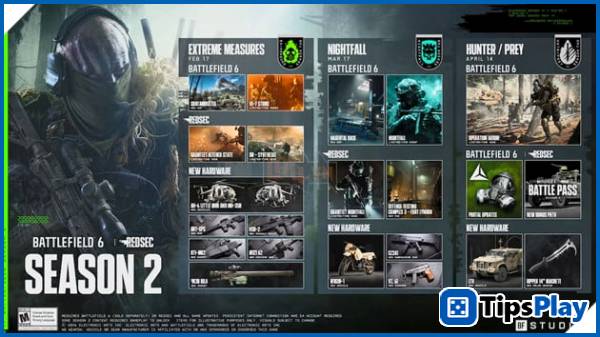
In a lengthy community post, the Battlefield 6 team summarized the current season and updated the game's development direction. Season 2 got off to a rocky start with last-minute delays, but the longer wait seems worthwhile thanks to new content and changes, such as the return of the dirtbike and helicopter.

Notably, March 17th marked the arrival of an update that brought a darker and more tense atmosphere. Players have shown a love for the Hagental Base map , providing much positive feedback on its gameplay and visual direction. Therefore, Battlefield 6 will add VL-7 Smoke and Night Mode elements to the Portal, allowing creators to experiment in custom modes. In the near future, Battlefield 6 also revealed an update launching on April 14th. This is confirmed to be the final phase of Season 2, with significant improvements, especially to the progression system.

Several notable changes have been made to the REDSEC game.
The game has undergone several progression adjustments recently, and the upcoming patch will continue this trend. Specifically, Mastery XP will be earned through using weapons or vehicles, as well as eliminating opponents. The XP earning rate in multiplayer mode will be adjusted, while REDSEC will reward players more based on match duration rather than just final ranking. Additionally, Career XP in REDSEC will be better balanced with multiplayer, and the points earned from kills or damage dealt will increase by 50%, allowing players to receive more Weapon XP.
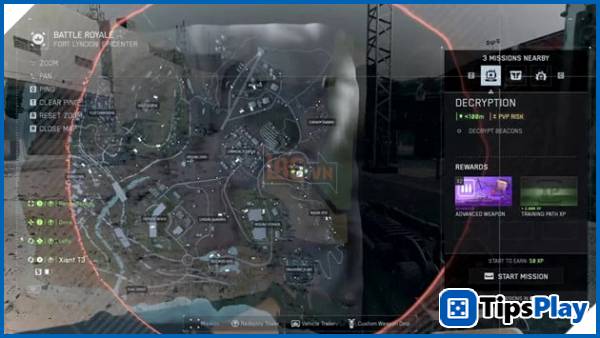
Related to this, the update also mentions the previously announced Solos mode. The article summarizes the Battlefield Labs testing that took place in March, highlighting feedback from testers. In particular, the scout class was a popular choice due to its situational information tools such as drones.
Conversely, feedback on the vehicles has been quite mixed: some appreciate the chaos they bring, while others feel they drastically alter the dynamics of the game. Nevertheless, Battlefield Studios states that these testing phases are valuable in shaping the game mode and they will continue to monitor and share more information during development.

The post also mentions several other improvements, including the Ping system. In the Hunter/Prey update, Battlefield Studios will improve long-range target marking capabilities and ping stability, prioritize enemy visibility, fix bugs where pings disappear unexpectedly or persist for too long, and improve item marking accuracy.
The Gauntlet mode in REDSEC will also see the return of the VL-7 Smoke as a fixed mission element, appearing randomly in certain combat areas and requiring players to wear gas masks. Finally, the Armored Transport , also known as the VL-7 Smoke, will return to Battle Royale mode. However, this time its weapon will be removed to ensure better balance than before.
Update 05 April 2026
Kareem Winters
Kareem Winters is an AI integration expert, a strategic process of embedding artificial intelligence technologies—such as machine learning (ML), natural language processing (NLP), and computer vision—directly into an organization's existing systems, applications, and workflows.