The creator of Dragon Quest: Japanese game loses its 'flavor' when translated into English.
Yuji Horii, the creator of the Dragon Quest series , argues that many Japanese games often lose some of their 'flavor' when translated into English, due to the simpler nature of the English language compared to Japanese.
Horii shared this information in an interview with Famitsu magazine, where he spoke with Takanari Ishiyama, the screenwriter and director of Paranormasight: The Mermaid's Curse . Ishiyama previously worked on the development of Dragon Quest X before taking on his new project.
During the conversation, Ishiyama stated that Paranormasight: The Mermaid's Curse supports multiple languages, including English and Chinese in addition to Japanese. However, he admitted that he was very careful in choosing how to write the dialogue in the game, because if he focused too much on the nuances of the original language, the meaning might be altered or difficult to convey fully when translated into other languages.
In response, Horii argued that the "loss of flavor" when translating into English is quite common for many Japanese games. According to him, dialogue often becomes simpler when translated into English compared to the original.

Ishiyama then gave examples of how Japanese people use various first-person pronouns to refer to themselves. In Japanese, a person might use words like 'ore', 'boku', or 'watashi' to refer to themselves, and the choice of which word depends on gender, age, or the formality of the conversation.
For example, women often use 'watashi,' while men may alternate between 'watashi,' 'boku,' and 'ore' depending on the situation. Conversely, in English, speakers almost exclusively use a single pronoun, 'I,' regardless of gender, age, or formality. According to Horii, this difference causes some of the character's nuances to be lost during translation.
Horii stated that he has accepted that English is a relatively simple language compared to Japanese, so losing some nuances during translation is unavoidable. However, he also believes that the addition of voice acting in modern games has helped to improve this issue somewhat.
According to Horii, vocal performance can convey a character's personality through tone and expression, thereby compensating for linguistic details that cannot be preserved when translated into another language.
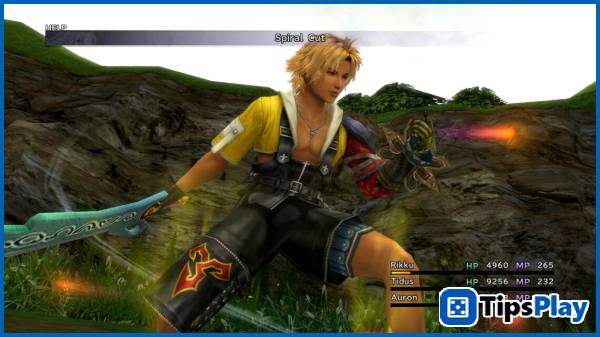
In a previous interview, Horii also spoke about the significant differences between Dragon Quest and the Final Fantasy series . According to him, while he doesn't consider them direct competitors, he still follows the series to see what they're doing.
Horii argues that the most obvious difference is that in Final Fantasy , the main characters often converse with each other and have clear dialogue. Dragon Quest , on the other hand, maintains the tradition of silent protagonists, allowing players to immerse themselves in their characters.
In addition to his contributions to the gaming industry, Horii has also received recognition from the Japanese government. In November 2025, he was awarded the Order of the Rising Sun, Gold Rays with Rosette, during the government's autumn awards ceremony.
This award recognizes individuals who have made outstanding contributions to the nation in various fields, and Horii became the first game designer to receive this honor.
Update 19 March 2026
David Pac
David Pac is a senior IT professional who designs the overall technical vision and structure of a project, transforming business requirements into viable software/system solutions.