The truth about DLSS 5 revealed! NVIDIA suspected of misleading marketing, developers losing control?
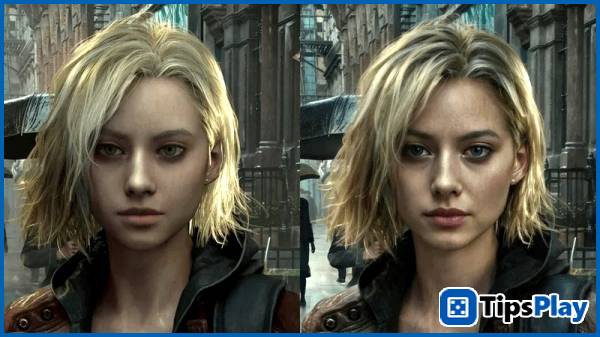
Not long ago, DLSS 5 sparked endless controversy from the moment it was announced, and now another major problem has emerged. Foreign media reports indicate that NVIDIA concealed the true workings of this technology upon its release, resulting in significantly different performance compared to official marketing. Last week, NVIDIA officially announced its flagship upscaling technology, DLSS 5. The company claims that this technology combines traditional rendering and AI generation, capable of dramatically improving image quality while ensuring developers have complete control over geometry, textures, and artistic creativity, preserving the original style of the game.
 ?
?
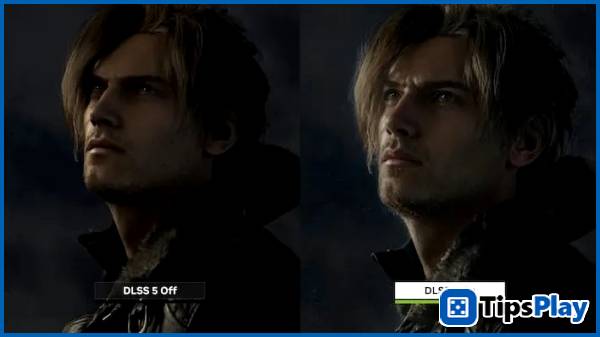
But in the eyes of gamers and developers alike, this technology is only fueling the influx of low-quality AI content into the gaming industry, escalating the controversy. Amidst public outcry, NVIDIA CEO Jensen Huang has repeatedly defended the technology, arguing that the public misunderstands AI and asserting that developers retain full control at the rendering stage. However, NVIDIA employee Jacob Freeman, in an interview with graphics YouTuber Daniel Owen, revealed the true mechanism of DLSS 5. Freeman stated that DLSS 5 only receives 2D images along with motion vector data, then uses AI to identify characters, hair, fabrics, skin tone effects, and ambient lighting elements. It then analyzes and "redraws" the frame before overlaying it onto the original image.
 ?
?
Simply put, DLSS 5 is essentially an AI-powered post-processing filter, not a platform-level rendering optimization. Regarding developer control, NVIDIA explains that developers can adjust image intensity, color, contrast, saturation, gamma, and the area where effects are applied. However, these adjustments are essentially no different from color correction in Lightroom software. Developers can only fine-tune the visual perception of the image; they cannot interfere with textures, models, or details created by the AI, failing to achieve the "total control" advertised.
 ?
?
Daniel Owen concludes: the worst fears of gamers have come true. DLSS 5 simply takes game images and hands them over to AI for processing to create the final result, while the artist can only adjust the colors without deciding on the core content of the image. If NVIDIA continues in this direction without change, this technology could completely transform the game graphics ecosystem.
Update 25 March 2026
Isabella Humphrey
Isabella Humphrey is a Senior Game Analyst. This position is a high-level professional who acts as a bridge between raw data and game design to drive game success. Unlike lower-level positions that focus solely on basic reporting, a senior analyst proactively shapes data strategy, predicts player behavior, and directly influences core business decisions.