Shinonome Abyss: The Maiden Exorcist ? Game Review
Shinonome Abyss: The Maiden Exorcist – Did you know that behind this seemingly modest roguelike horror game (death means losing everything) is a name familiar to anyone who experienced the golden age of Resident Evil in the early 1990s: Director Kenichi Iwao, who helped lay the foundation for Capcom's illustrious action-horror game series?
After years of being largely absent from the spotlight, Iwao is now back through his studio WODAN, amidst a resurgence of attention in the horror genre, particularly following the unexpected success of Silent Hill 2 Remake in late 2024.
This time, he brings a project that, while small in scale – Shinonome Abyss: The Maiden Exorcist – boasts a rather bold concept: building the entire horror experience around… the player's ears.
Shinonome Abyss: The Maiden Exorcist continues to expand the Shinonome franchise with more content than its predecessor: more mononoke (monsters), more traps, more items, more dungeons, and most notably, the appearance of a 'second personality' hidden within the main miko, Yono.
So, does Shinonome Abyss: The Maiden Exorcist truly capture the essence of Iwao's classic horror in a new form, or is it just another experimental project that could easily get lost in the increasingly crowded sea of ??indie games?
Readers, let's explore this topic together with tipsplay.net in the following review!
YOU WILL LIKE
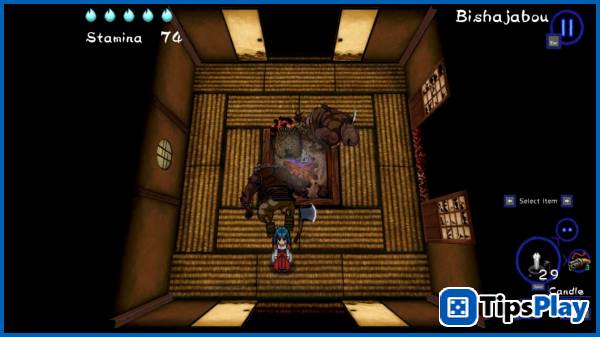
Ears: a powerful weapon!
In Shinonome Abyss: The Maiden Exorcist , players take on the role of Yono, the daughter of a renowned family of exorcists in the region. Her brother, a famous onomatopoeia, suddenly disappears, and now Yono must take his place, beginning with a 'trial' exorcism right in her family's apartment.
Players will be 'dropped' into different houses and will have to go through each room one by one to find their way out of the house and eliminate the swarming monsters inside, as well as utilize the items they pick up in each room.
What sets Shinonome Abyss: The Maiden Exorcist apart from the rest of the genre is that the entire experience is built around… the reader's ears.
No minimap, no health bar showing the location of enemies in the next room. Instead, players will listen to every footsteps, every whisper, every scratching sound to guess what kind of mononoke is lurking around, and make appropriate decisions: fight or… flee!

In Shinonome Abyss: The Maiden Exorcist , every step must be taken carefully.
The author advises readers to put on headphones – this isn't just advice to help you 'immerse' yourself in the world of Shinonome Abyss: The Maiden Exorcist , but almost a 'mandatory condition' to truly 'play' this game.
For example, if you walk into a room and suddenly hear a shrill scream, it could be a Gaki waiting to… stab you! Or if you hear the faint sound of "Amitabha Buddha," it's not monks coming to your rescue; it's usually Oni disguised as monks, ready to jump out and slash you.
In Shinonome Abyss: The Maiden Exorcist , every step must be taken carefully, and you must use the ears (and voice) of the little girl Yono to overcome the challenges ahead.
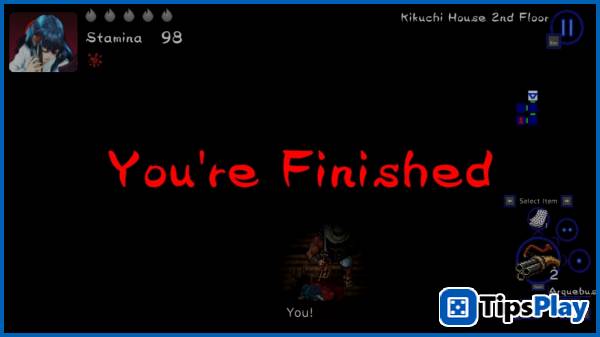
The head: the ultimate weapon!
That being said, if you're expecting a game where you charge into a swarm of mononoke and hack and slash to your heart's content, then collect items like in those roguelike action games, this isn't the game for you.
Yono is almost… useless in direct combat; she has no close-combat skills whatsoever (she can't even run fast), and each life-or-death encounter forces the reader to think like a hunter: how many items do I have left? What is this mononoke afraid of? Do I have enough time to run around the hallway and lure it into the trap in the corner? The extremely cramped inventory system further heightens the tension – each slot is a headache decision, each discarded item is a gamble.
More specifically, upon entering a house, Yono's only weapon is an old gun with 3 bullets, a magazine with… 5 bullets, and 3 item slots (of which the gun and magazine already occupy 2 slots). The gun is also relatively useless, barely scratching the large monsters, and doesn't even have an auto-reload function; if you want to reload, you have to… turn to the magazine and… load each bullet one by one.
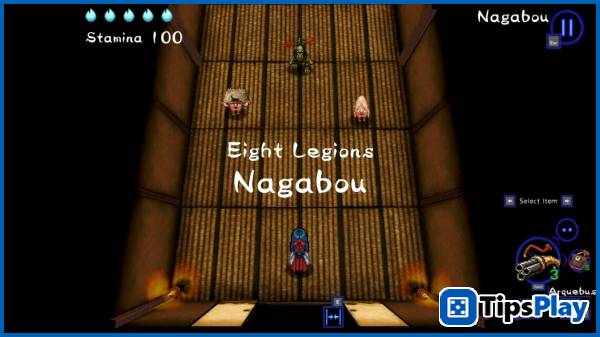
Therefore, 'fighting' in Shinonome Abyss: The Maiden Exorcist means you have to remember the layout of the house, where the fireplaces are, which direction the 'trap' rooms are located, and when you hear monsters, what you have in your inventory, and whether you can hold your ground. You can set traps right in front of the door and let Yono's voice lure the monsters out, or drag the monsters into the fireplaces to burn them to ashes.
The author vividly remembers having to choose between a candle – the only thing that allowed Yono to see anything in a dark room – and a protective amulet that the author had kept all along. Ultimately, the amulet was kept, and the price was navigating in the darkness, only to walk straight into the mouth of an Oni before the author could even hear.
Sometimes, the best thing about Shinonome Abyss: The Maiden Exorcist is that it makes you… regret decisions that, in any other game, you wouldn't even consider 'decisions'.
It forces you to 'gamble' on each item. To discard? Or to keep? – and honestly, it's been a long time since I've felt that kind of pressure in a game.
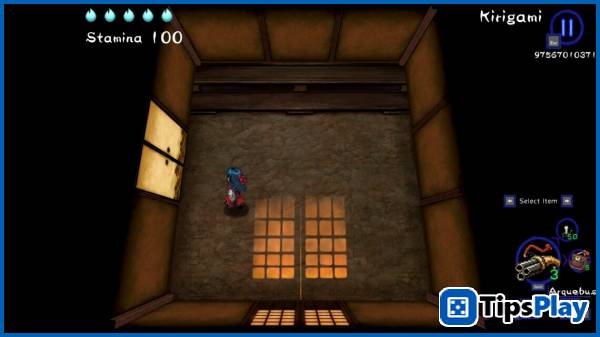
The best thing about Shinonome Abyss: The Maiden Exorcist is that it makes you… regret your decisions.
In fact, Shinonome Abyss: The Maiden Exorcist is divided into three modes:
- Harai: a place where houses have pre-set layouts, and to get through it you will need to learn the house layout through multiple playthroughs, where the monsters are, where the items are located, and devise a plan to use the items effectively.
- Misogi: This is the true 'roguelike' gameplay; rooms 'appear' randomly, and your task is to somehow navigate through the house using random items you pick up along the way.
- Gyou: Basically Misogi but with 'hellish' difficulty.
Therefore, Shinonome Abyss: The Maiden Exorcist can be considered suitable for those who want to play 'puzzle' games with a bit of thrilling action, as well as those who are 'addicted' to roguelikes but don't mind thinking a little, instead of just diving into hack-and-slash.
YOU WILL HATE
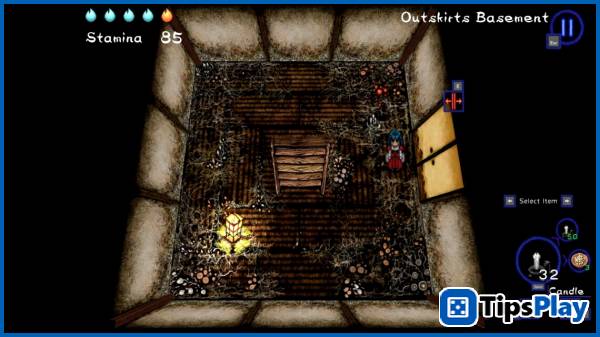
Not everyone has the patience!
To be frank: Shinonome Abyss: The Maiden Exorcist isn't for everyone. Yono can't run, so the game's pace is so slow that readers accustomed to action-packed games like Hades or Dead Cells might find themselves yawning!
The difficulty curve is almost a steep incline, and the feeling of "dying and starting over" (it's roguelike, after all) because of one wrong decision in the third room – not to mention losing all the items you'd gathered in the first half of the house – can be incredibly frustrating. Dying and then going back is fine, but returning to the same point is incredibly slow and tedious because Yono only knows how to… walk, and you'll have to repeat the exact same actions you did before, slowly…
Many times, the writer has reached the end of a house, only for two Oni (horse-like creatures) and one Oni (bull-like creature) to suddenly attack Yono, leaving him no time to defend himself. So, the writer has to reluctantly… retrace his steps from the beginning (the game has no save points or anything), and this will greatly test the player's patience.
To be frank: Shinonome Abyss: The Maiden Exorcist is not for everyone.
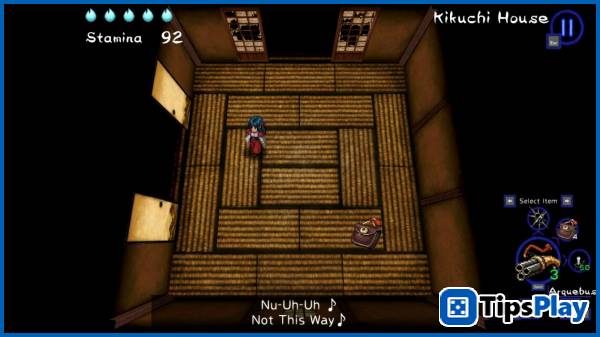
This house… it looks so familiar!
Another point that's more frustrating is that the 'dungeons' start to look… alike after a while. Although each map is randomly generated, the floorboards, corridor patterns, and room layouts are all pulled from a rather limited resource pool.
For a game that relies almost entirely on atmosphere like Shinonome Abyss: The Maiden Exorcist , 'seeing' a familiar hallway again can sometimes 'break' the very tension that the sound design by WODAN studio has painstakingly built.
Furthermore, a blunt warning is needed: if you play in a noisy environment – ??a living room with a TV, a cafe, or on a morning train – you've essentially taken away half the game's potential.
Shinonome Abyss: The Maiden Exorcist is literally an 'environment-sensitive' game, and that's a limitation WODAN probably can't overcome, but readers should be aware of it before spending their money.
Shinonome Abyss: The Maiden Exorcist is literally an environment-sensitive game, and that's a limitation WODAN probably can't overcome.
Update 14 April 2026
Micah Soto
Micah Soto is a creator of systematic processes encompassing the design, creation, testing, and maintenance of computer programs and applications. He transforms an idea or a set of user requirements into a functional software product that solves problems, automates tasks, or provides entertainment.