Nvidia CEO says criticisms of DLSS 5 are 'completely wrong'.
DLSS 5 is not what its critics say; instead, it gives developers complete control over the game's appearance.
It seems the customer isn't always right, at least according to Nvidia CEO Jensen Huang. While public opinion was largely dissatisfied, and numerous memes were created about Nvidia DLSS 5 yesterday, Huang countered the criticism, saying 'they are completely wrong'.
There are still at least six months to go before mainstream users can experience DLSS 5 and make their own decisions. But the reaction to Nvidia's demo has been quite humorous, with many DLSS 5 memes circulating widely. More importantly, Nvidia asserts that those criticisms so far have been wrong.
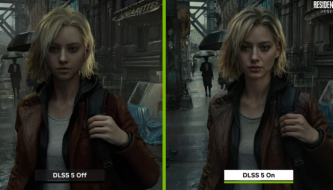
In response to a question about negative feedback regarding DLSS 5 seemingly altering the original game's artistic vision, particularly for Grace Ashcroft and Leon Kennedy in Resident Evil Requiem, Huang immediately countered with the statement, "completely wrong."
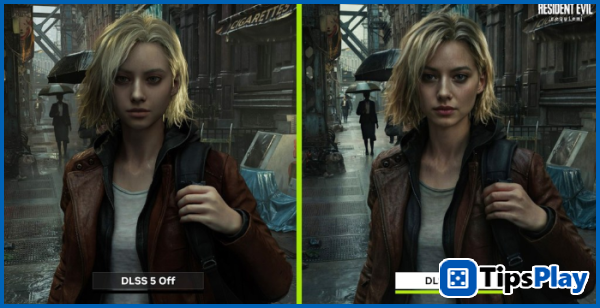
He then went on to explain why he believed these criticisms were wrong, pointing out that, contrary to what many seem to be assuming, the technology is not just an AI filter but 'DLSS 5 combines the ability to control geometry and textures as well as everything about the game with generative AI', adding that developers can 'fine-tune the AI' to suit their artistic vision.
Getting straight to the point, Huang asserted that 'it's not post-processing at the frame level, but rather generative control at the geometric level.'
However, a later statement somewhat contradicts this view. He said that developers could, for example, create 'animated shaders' or make the game look 'made of glass'. While that fits the definition of technology being under the developer's control, it suggests that this technology goes far beyond merely controlling a portion of the rendering process and, in fact, could completely reinterpret the final rendered scene, even if it's based on the developer's own parameters.
Huang concluded his rebuttal by pointing out, "This is very different from generative AI; this is content-driven generative AI. That's why we call it neural rendering."

In short, it's still too early to judge DLSS 5, because the technology hasn't actually been officially released yet. After all, despite the skepticism of the gaming community, it could truly be revolutionary for games in terms of graphics. It's undeniable that many games with great graphics are affected by facial modeling and other crucial details, and if DLSS 5 can intervene and improve those things without causing an excessive 'Uncanny Valley' effect, then it will be a pretty powerful tool.
Update 25 March 2026
Isabella Humphrey
Isabella Humphrey is a Senior Game Analyst. This position is a high-level professional who acts as a bridge between raw data and game design to drive game success. Unlike lower-level positions that focus solely on basic reporting, a senior analyst proactively shapes data strategy, predicts player behavior, and directly influences core business decisions.