Nvidia admits DLSS 5 is only a 2D AI filter.
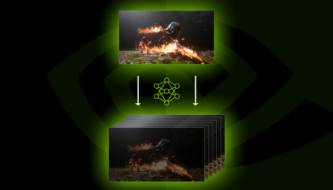
Aside from accounting for motion vectors, Nvidia DLSS 5 doesn't seem to offer much more than AI-powered reprocessing of the final frame.
According to the latest information from Nvidia, DLSS 5 technology is actually as 'simple' as some people feared. When asked whether this new AI-powered image enhancement technology takes into account 3D geometry and other background data of the game engine, the world's most valuable company acknowledged that the only input data DLSS 5 receives is the final rendered frames from the game and motion vectors that inform the algorithm about the direction of movement of players and objects in the scene.
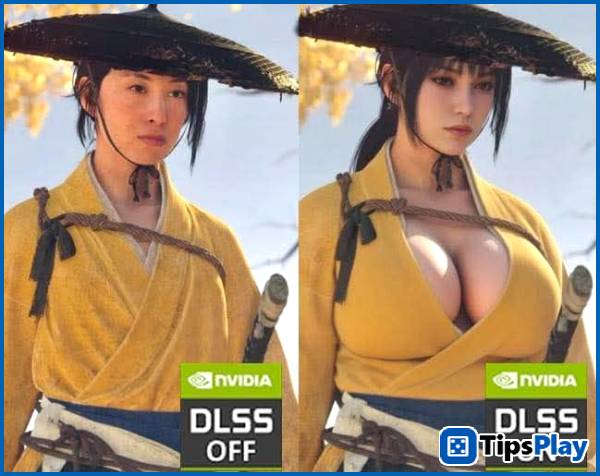
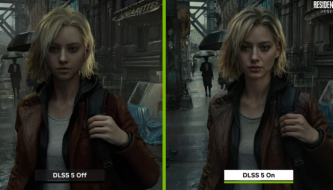
The reason this is important is that much of the criticism of this technology so far has revolved around its production of final images that are quite similar to 'AI filters,' reminiscent of countless other beauty and image editing tools. Not only does this create a somewhat unnatural look, but many reactions have expressed concern that it goes against the game's core artistic intent – ??essentially, it's just DLSS 5 creating unnecessary elements. However, if Nvidia's new technology proves to be more deeply embedded within the game, it could be argued that it has more applications than just another AI filter.
Nvidia confirmed these details in response to questions from tech YouTuber Daniel Owen. After asking GeForce Evangelist expert Jacob Freeman whether DLSS 5 only accepts a 2D frame and motion vectors as input, Freeman replied: "Yes, DLSS 5 accepts a 2D frame plus motion vectors as input."
Owen also asked whether DLSS 5 could recognize the geometry, textures, and other components of the 3D engine in the game, to which Freeman replied: 'DLSS 5 was trained […] to understand the complex semantics of scenes such as characters, hair, fabrics, and skin throughout […] all by analyzing a single frame.'
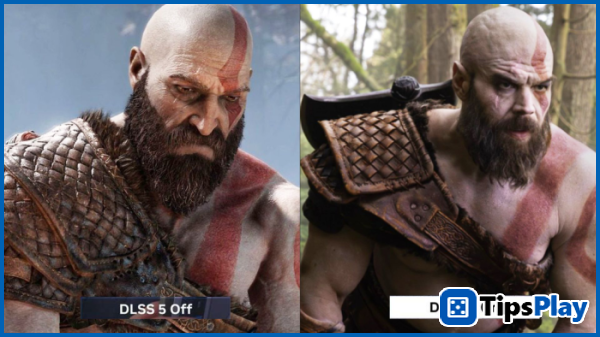
All of this clearly shows that DLSS 5, while obviously demanding enough computing resources to require a second RTX 5090 card to run smoothly today, is essentially just an AI filter, with all its advantages and disadvantages. On the positive side, theoretically, it could allow reactivation on many older games, with minimal game integration requirements. However, on the negative side, it means the potential for inconsistencies, confusing illusions, fundamental deviations from the game's intended visuals, and more could affect the final result.
However, Nvidia also confirmed that while integration into games is still quite limited, there are still some important options available to developers. These include: Intensity, which controls the blending between the original image and the image enhanced by DLSS 5; Color Grading, which provides simple adjustments to saturation, contrast, and gamma; and Masking, which allows developers to completely remove the DLSS 5 results from certain parts of the image.
It remains to be seen how much Nvidia can fine-tune DLSS 5 to produce less obvious results that look entirely AI-generated, and, perhaps more importantly, how well they can optimize the technology to run smoothly on single GPUs and with more modest configurations.
Update 25 March 2026
Jessica Tanner
Jessica Tanner is a Technical Analyst who serves as a crucial link between an organization's business needs and its information technology (IT) systems. She specializes in evaluating, designing, implementing, and maintaining software, hardware, and network systems to optimize business processes.