NVIDIA develops real-time ray tracing technology that is 2-3 times faster without using AI.
With ray tracing technology finally gaining traction in PC games, Nvidia is focusing on light tracing performance with its latest research.
Nvidia has just announced new graphics research that they claim can unlock 2-3 times the performance in certain situations, and most importantly, this research doesn't rely on AI. The new study uses techniques such as 'mutual neighborhood selection' and 'replication mapping', showing that traditional algorithms are at the core of this breakthrough.
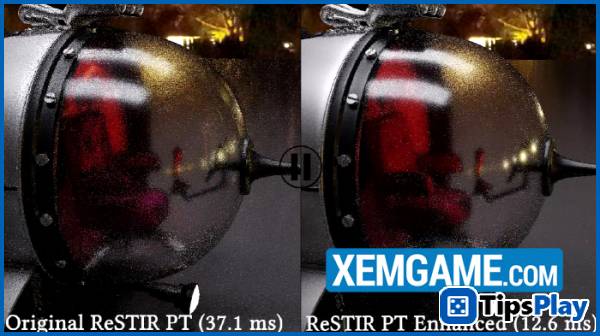
As for what those graphical scenarios entail, Nvidia's research relates to path tracing, an extremely demanding advancement in PC rendering compared to ray tracing, and only realistically playable on the best graphics cards currently available. Games like Cyberpunk 2077 and Indiana Jones and the Great Circle include both ray tracing and path tracing modes, with the latter often requiring significantly higher specifications, resulting in reduced frame rates in exchange for incredibly realistic visuals.
This new research addresses a fundamental part of the ray tracing process: the random sampling of the rays used to approximate the light-tracking display. These random sampling equations have existed for a long time, but Nvidia and other companies are constantly searching for more efficient methods.
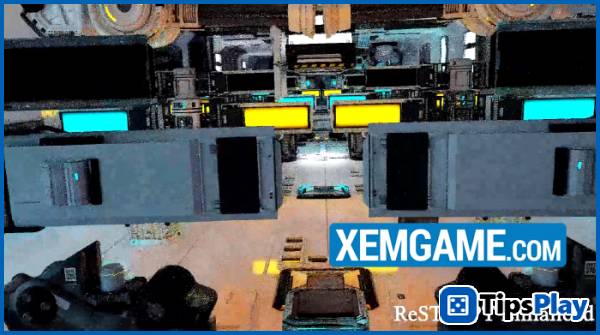
One such method was developed by Nvidia a few years ago, and it's called the Neural Network-Based Space-Time Importance Resampling (ReSTIR). Nvidia claims it can deliver performance improvements of up to 65 times compared to existing solutions. This new paper is a revision of that algorithm, delivering an additional 2-3 times performance increase and improved image quality. You can see a side-by-side comparison image showing the reduced rendering time (in milliseconds) and the difference in image quality.
In summary, path-tracing in games can be configured to significantly improve performance. However, the paper refers to 'a series of new ideas to enhance ReSTIR PT', not an entirely new implementation, so at this stage it remains unclear what the actual frame rate improvement will be, when it might begin to be implemented, and whether the new algorithm can be applied simply by updating drivers for existing GPUs and games or if new hardware and existing game updates are required.
Anyway, it's great to see progress in PC gaming graphics that no longer rely heavily on AI to compensate for performance gaps, even if you might need an RTX 6090 to experience that.
Update 28 April 2026
Marvin Fry
Marvin Fry is a game analyst who serves as a crucial link between data and game design, using in-game metrics and player behavior data to improve game quality, engagement, and monetization.