AMD's FSR 4.1 technology is disappointing.
Since its launch, AMD's FSR image enhancement technology has consistently lagged behind Nvidia's DLSS. Despite recent updates, FSR still lags behind in many aspects, and even the latest FSR 4.1 version hasn't delivered the breakthrough leap many users had hoped for.
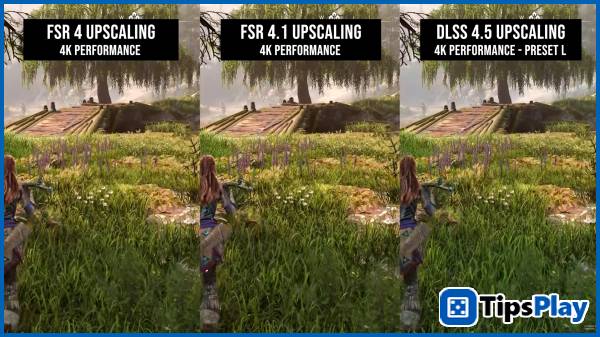
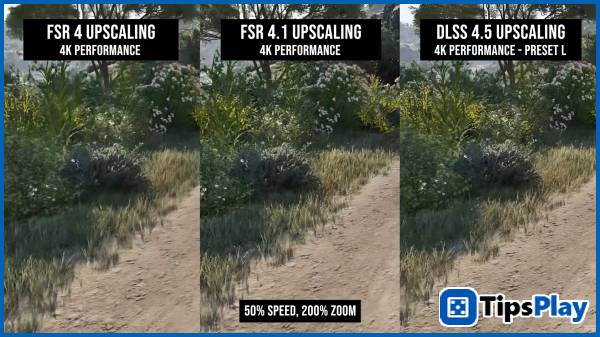
According to in-depth testing and analysis from Hardware Unboxed, FSR 4.1 does indeed help minimize ghosting. However, this improvement comes at an undesirable cost: reduced image stability and loss of detail. Despite these subtle upgrades, the overall image quality of FSR still cannot match that of its Nvidia competitors.
Furthermore, a major drawback of this update is that it's limited to exclusively supporting the new generation RX 9000 series graphics cards. This significantly narrows the user base that can access the technology, creating a major barrier for gamers using older hardware.
In this context, Nvidia's DLSS continues to prove its superior position, even becoming a decisive criterion when many consumers choose to buy a graphics card. Especially with the excellence of the current DLSS 4.5 version, AMD will have to work very hard to catch up.
Beyond core quality issues, FSR 4.1 also reveals a weakness in its lack of Vulkan API support. This means the technology will be disabled in a range of games that use Vulkan, a major drawback even if you own an expensive RX 9000 graphics card.
Furthermore, Nvidia offers maximum flexibility by allowing gamers to freely choose the DLSS version that suits their system. In contrast, AMD forces users to use a fixed FSR version pre-defined by the manufacturer, with no option to downgrade to an older version or change settings through the management application.
Overall, despite offering some minor improvements in certain areas, the lack of widespread compatibility and software stability issues leave FSR 4.1 still lagging far behind in the race.
Update 26 March 2026
Marvin Fry
Marvin Fry is a game analyst who serves as a crucial link between data and game design, using in-game metrics and player behavior data to improve game quality, engagement, and monetization.