Razer Viper V4 Pro ? Gaming Gear Review
Razer Viper V4 Pro – In the world of gaming peripherals, Razer's Viper series has always been considered the gold standard for performance-focused symmetrical mice. The launch of the Razer Viper V4 Pro is not just a numerical leap, but a reaffirmation of Razer's leading position in the esports equipment arms race.
Refined through close collaboration with top legends in the world of esports, this mouse carries the responsibility of solving the problem of extreme responsiveness and absolute precision.
In the context of increasingly demanding fast-paced shooter games like Valorant and CS2, the Viper V4 Pro emerges as the ultimate weapon, combining the best of sensor technology, wireless technology, and ergonomic design. This is not just a commercial product, but the result of thousands of hours of testing in professional competitive environments, where every millisecond and every gram of weight can determine victory or defeat.
Will Razer continue to assert its leading position in the world of competitive gaming mice? Let's find out with tipsplay.net in this article!
You will like it
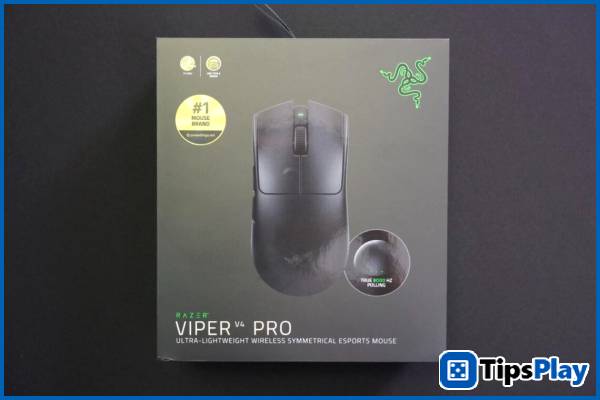
Razer Viper V4 Pro – Optimization down to the smallest detail
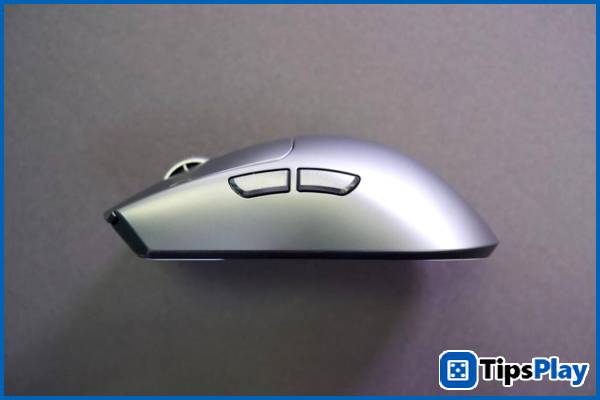
Overall, the Razer Viper V4 Pro maintains the Viper line's 'DNA' with its low-profile, symmetrical design, but it has been refined to be more complete than the Viper V3 Pro released in 2024, although these changes are subtle and difficult to notice from the outside. Razer didn't choose to completely change the appearance, but focused on subtle improvements within the shell: from the ultra-lightweight frame structure to the optimization of the mouse's center of gravity.
This makes the mouse not only physically lighter (around 5g lighter than the previous generation) but also provides a smooth, natural feel, like an extension of the player's arm, especially in intense battles, where every gram of lighter weight can 'relieve' the strain on the wrist after long mouse movements spanning miles in a short period of time.
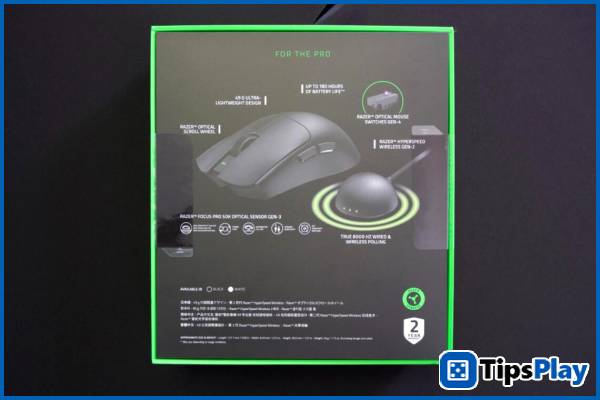
Going into the internal details, it must be said that the Razer Viper V4 Pro is equipped with Razer's most advanced sensor to date: the Razer Focus Pro 50K Optical Sensor Gen-3 , with a maximum speed of up to 50,000dpi and acceleration capabilities of up to 90G, far exceeding the usual standards of most gaming mice on the market today.
As an upgrade, this new generation sensor still inherits the strengths of the sensor equipped in the Razer DeathAdder V4 Pro gaming mouse released last year. The new processing chip (MCU – Micro Controller Unit) allows for simultaneous processing and signal transmission, enabling up to 8 signal transmissions and responses per millisecond (ms) instead of simply 'counting' the number of signal transmissions as in mice labeled '8000Hz' a few years ago.
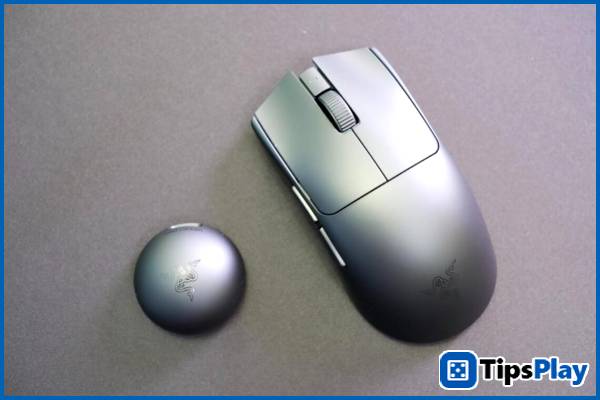
In addition to the enhanced specifications compared to its predecessor, the most notable feature of the Razer Focus Pro 50K Optical Sensor Gen-3 is FrameSync.
To put it simply, this feature is similar to NVIDIA's G-Sync or FreeSync image synchronization features, allowing mouse signals to synchronize with the display frame.
This is an upgraded version of Motion Sync from the previous generation, offering more impressive performance thanks to the intelligent control capabilities of the new generation MCU.
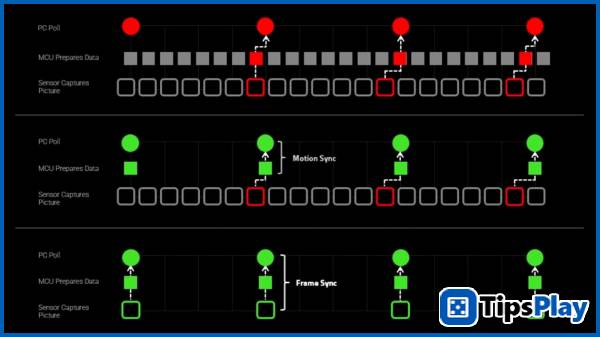
In the previous generation, Razer introduced Motion Sync technology to synchronize motion with the frame rate, avoiding discrepancies caused by frame skips. This technology works like most conventional wireless mice; however, the difference lies in the fact that the MCU 'prepares' a data packet closest to the frame data requested by the CPU from the numerous data that the mouse sensor continuously scans and transmits to the MCU.
In reality, this process involves both the MCU and the sensor operating continuously, leading to significant energy consumption, and even then, the data sent is only an 'approximate' position.
FrameSync takes a different approach, where the CPU prepares the frame data and sends it back to the MCU, which then 'commands' the sensor to scan the image and send the entire data packet back to the CPU. This process eliminates unnecessary operations from both the sensor and the MCU, resulting in more efficient power usage, better battery life compared to traditional methods, and lower latency, leading to a smoother experience.
Thanks to this technology, Razer claims that the Razer Viper V4 Pro has, in theory, a much longer battery life than its predecessor, reaching 180 hours at the standard 1000Hz response rate and 45 hours when operating in 8000Hz mode, almost three times longer than the 17 hours of the Razer Viper V3 Pro and Razer DeathAdder V4 Pro .
Due to the short testing period, the author cannot yet verify whether the maximum battery life reaches the advertised level, but with the ability to work continuously for 4 days at the highest speed without needing to recharge, the Razer Viper V4 Pro is more than capable of leaving previous generation products in the dust in terms of battery life.
Another notable upgrade is that the web-based Synapse application is now available in beta, allowing users to adjust mouse parameters and operating modes directly without needing to download any software.
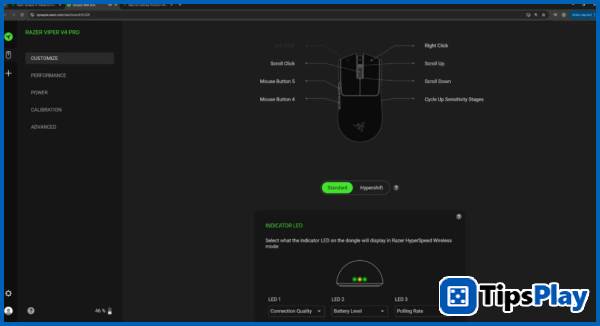
This allows users to easily use and control the mouse anywhere without installing any software. This is extremely convenient for athletes who frequently compete on pre-installed systems instead of using their own personal systems like most casual gamers.
You will hate it.
Razer Viper V4 Pro – High price tag!
With its significant technological and build upgrades, the Razer Viper V4 Pro deserves to be considered a top-tier gaming mouse for professional players, but it also comes with some issues you need to consider.
First of all, at a price of 4,490,000 VND, this mouse, although cheaper than the Razer DeathAdder V4 Pro which has older technology, shows Razer's effort to bring users the latest technology at the most reasonable price. However, the price is still significantly more expensive than the previous generation Razer Viper V3 Pro, which had a very competitive price.
For the vast majority of average users, the difference in technological experience between the two versions is not significant, so if you have a limited budget, the Razer Viper V3 Pro is still a more reasonable choice. Of course, if you have a generous budget, the Razer Viper V4 Pro remains the top choice for tech enthusiasts.
Furthermore, the 4th generation optical switches equipped in the mouse also produce a rather loud noise compared to some other mouse models on the market. Although this is the same switch used in the Razer DeathAdder V4 Pro , the author feels that the mouse shell design of the Razer Viper V4 Pro makes the click sound significantly louder, potentially annoying to those around when used in a quiet environment.
Update 31 March 2026
Isabella Humphrey
Isabella Humphrey is a Senior Game Analyst. This position is a high-level professional who acts as a bridge between raw data and game design to drive game success. Unlike lower-level positions that focus solely on basic reporting, a senior analyst proactively shapes data strategy, predicts player behavior, and directly influences core business decisions.