The Task Manager developer stated that it was previously 50 times lighter because being small and fast is best.
A veteran Microsoft expert noted that Task Manager now takes up approximately 4 megabytes, about 50 times more than when it was first released.
Task Manager is a piece of software you almost always open when a problem arises, and its creator, Dave Plummer, understands this better than ever. As he stated in his latest video: "If the system crashes, if an application freezes, if the computer is running slowly, Task Manager won't be late, it can't be sluggish under the weight of its dependent components."
He further explained, "It has to be present immediately and it has to function smoothly. It has to remain stable even when the rest of the system is unstable." Plummer said the software was under 80 kB when he first wrote it and it was "incredibly fast."
A veteran Microsoft expert noted that Task Manager now takes up about 4 megabytes, approximately 50 times more space. Of course, Task Manager doesn't need to be as small as it once was, as computing has advanced significantly since its introduction three decades ago.
Plummer said, "I'm not here to say that modern engineers are just unintelligent, because they're not. Their world is much more complex now." The task manager was supposedly only that small simply because "at that time and place, compactness meant speed, and speed was critical."
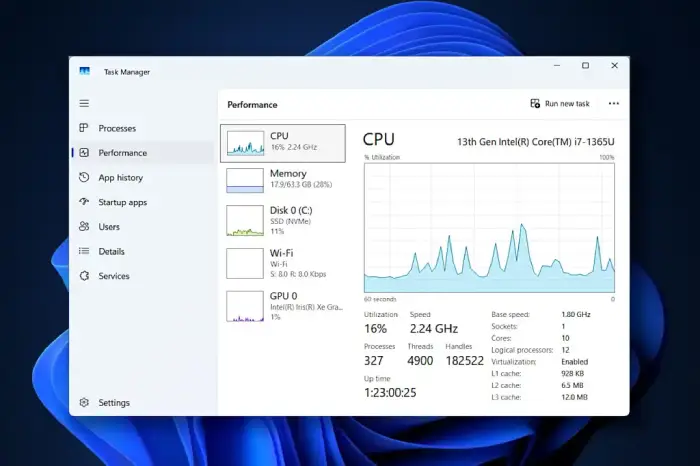
A veteran Windows expert describes that the first thing Task Manager does is communicate with other instances of Task Manager and check them. Instead of simply checking if a program is running, it communicates with the program and terminates it if it doesn't receive a response.
It is also only activated and active within a portion of the program if that portion is necessary to run. Now, Plummer argues that users 'pay all costs upfront, regardless of whether they benefit or not. Older code, like Task Manager, has the opposite bias. Nothing is put into the main path without going through contention.'
Notably, Plummer reflected on how he has changed as a programmer and designer since creating Task Manager. He stated that one of Task Manager's unique features is that it replaces runtime startup code with a custom snippet, avoiding the hassles associated with functioning as standard software. Plummer said, "It's the kind of thing you do when you're young and think that manually replacing runtime startup code is a sensible afternoon activity."
However, Plummer argues that Task Manager differs from many modern utilities in scope and purpose. According to Plummer, not only are modern programs larger, but they often 'lack the instinct to refuse.' They don't ask 'what benefit would the user get from this task right now?', but rather 'can the hardware do it?' and that's not the same question.
Admittedly, he also balanced this, arguing that source code shouldn't be romanticized, and he also acknowledged 'there were definitely parts of the old Task Manager where I could see young Dave swaggering around in the office, thinking he was smarter than he actually was'.
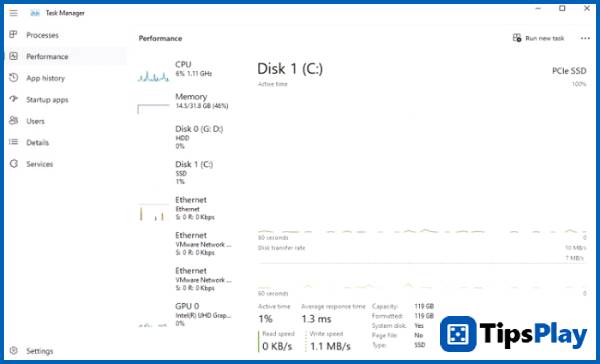
The creator of Task Manager left Microsoft in 2003, but he spoke extensively about his work on Task Manager, programming the Pinball game on Windows NT, and offered several complaints about the current state of Windows.
Update 14 April 2026
Kareem Winters
Kareem Winters is an AI integration expert, a strategic process of embedding artificial intelligence technologies—such as machine learning (ML), natural language processing (NLP), and computer vision—directly into an organization's existing systems, applications, and workflows.